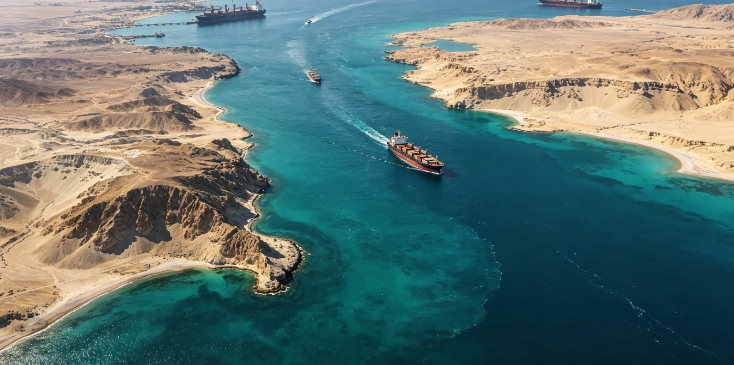
Following the entry into force of the ceasefire agreement, vessels have begun resuming transit through the Strait of Hormuz, though overall passage remains highly restricted, with large numbers of ships still stranded in Gulf waters.
Marine traffic data platform MarineTraffic shows at least two vessels have successfully transited the strait since the ceasefire announcement. The Greek bulk carrier NJ Earth was confirmed to have passed through the strait on Wednesday. Approximately two hours earlier, the Liberian-flagged bulk carrier Daytona Beach also entered the Gulf of Oman. Tracking data indicates both vessels took a route near Iran’s Larak Island.
Nevertheless, this progress remains limited compared to the backlog. Data shows hundreds of ships are still stuck inside the Persian Gulf, including 426 oil tankers, 34 liquefied petroleum gas (LPG) carriers, and 19 liquefied natural gas (LNG) carriers.
Although news of the ceasefire briefly pushed international oil prices sharply lower, the shipping industry remains cautious over whether the vital waterway can quickly return to normal operations. Under normal conditions, about 20% of global oil supplies are shipped through the Strait of Hormuz. Before the conflict, the waterway saw an average of roughly 130 vessel transits per day, according to UNCTAD data.
Security risks remain the main constraint. In an early morning statement on April 9, the naval force of Iran’s Islamic Revolutionary Guard Corps (IRGC) warned that anti-ship mines may be present in the strait’s main shipping lanes due to recent hostilities. It advised vessels planning to pass through to coordinate with the force in advance and follow designated alternative routes to avoid mine strikes.
The Secretary-General of the International Maritime Organization (IMO), Domínguez, welcomed the ceasefire progress and stressed that the top priority is to safely expedite the passage of stranded vessels as soon as possible. He noted that relevant parties have activated coordination mechanisms to facilitate the safe transit of ships through the strait.
The crisis originated from large-scale military operations launched by the United States and Israel against Iran on February 28, followed by Iranian retaliatory strikes against Israeli and U.S. military targets across the Middle East, which drastically reduced traffic through the Strait of Hormuz. On April 7, the United States announced a two-week suspension of military actions against Iran. On April 8, Iran stated it would gradually restore safe navigation through the strait over the coming two weeks, though no specific timetable has been provided.




China——Brazil Trajectory Tracking



+86 532-85066033/34






 中文简体
中文简体 ENGLISH
