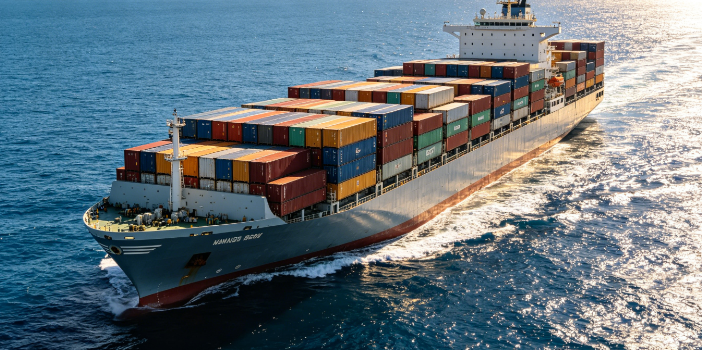
Container shipping serves as a barometer of global trade, where fluctuations in freight rates, capacity adjustments, and levels of port congestion directly reflect the state of the world economy. In the first quarter of 2026, this traditionally cyclical industry once again displayed its sensitive and complex dynamics: the aftermath of the Red Sea crisis persists, drought-related restrictions remain in place on the Panama Canal, while new vessel deliveries have reached record highs. Multiple games between supply and demand, geopolitics and natural forces, short-term disruptions and long-term trends are reshaping the operating logic of container shipping. Amid this transformation, the freight forwarding sector, as a pivotal link connecting shipping lines and shippers, is undergoing an unprecedented revaluation of its professional judgment and resource integration capabilities.
From the perspective of capacity supply, the container fleet is undergoing structural expansion. A wave of new orders placed between 2023 and 2025 was delivered in large numbers in 2026, bringing a fleet of ultra-large container vessels into service. However, the additional capacity has not led to the expected drop in freight rates. The reason lies in the Red Sea crisis, which forced vessels on Asia-Europe routes to sail around the Cape of Good Hope, adding 10 to 14 days to each voyage and effectively absorbing roughly 10% of global capacity. Meanwhile, water shortages on the Panama Canal have imposed transit restrictions, further tightening capacity on trans-Pacific routes. This “passive capacity absorption” has created a rare market paradox: rising supply alongside tight effective capacity. For freight forwarders, this means clients no longer need simple space inquiries, but precise forecasts based on real-time route updates and vessel deployment plans.
Port congestion remains a persistent challenge in container shipping. Rotterdam and Hamburg in Europe, Los Angeles and Long Beach in North America, and Singapore in Asia all experienced varying degrees of vessel delays in early 2026. The causes of congestion have shifted from labor shortages during the pandemic to structural contradictions between disrupted schedules and the capacity limits of infrastructure. When vessels cannot berth on schedule, container turnover efficiency drops sharply, and difficulties in repositioning empty containers further drive up leasing costs. In this environment, the value of freight forwarders is no longer found in offering the lowest rates, but in securing space for clients in advance, coordinating alternative ports, and designing distribution plans to reduce demurrage charges. Forwarders with diversified networks of carrier partnerships and on-the-ground port service capabilities are earning long-term client trust.
Freight rate trends have shown significant divergence. Major east-west trunk routes — Asia-Europe and trans-Pacific — have remained volatile at high levels, supported by longer voyages and congestion. By contrast, north-south routes, such as those from Asia to South America and Africa, have seen milder rate movements due to relatively abundant capacity. This divergence has forced freight forwarders to develop refined research capabilities for individual routes. Simple price comparisons have become irrelevant, replaced by comprehensive assessments of carriers’ on-time performance, destination service stability, and transparency of surcharges for each lane. Some leading forwarders have begun providing clients with three-dimensional decision-making tools integrating “rate, transit time, and risk”, helping shippers strike a rational balance between cost and certainty.
The digital transformation of container shipping is also accelerating. Technologies such as electronic bills of lading, blockchain document exchange, and real-time container tracking are moving from concept to large-scale application. These tools not only improve operational efficiency for forwarders but, more importantly, enhance supply chain visibility. When clients can track cargo location and estimated arrival times via mobile devices at any time, the role of freight forwarders evolves from information transmitters to exception management specialists — clients only reach out proactively in the event of delays, damage, or customs issues. Consequently, the core competitiveness of forwarders is shifting from “controlling information” to “managing exceptions”: providing human judgment and resource coordination in complex scenarios that systems cannot handle.
Looking ahead, container shipping will continue to seek balance amid volatility. Geopolitical tensions, extreme weather, and environmental regulations — including the shipping industry’s inclusion in the EU Emissions Trading System — will sustain uncertainty. For the freight forwarding industry, returning to its fundamentals may be the best strategy: in an era of high information transparency, what is truly scarce is a deep understanding of risks across supply chain segments and the ability to make optimal decisions for clients at critical moments. Every rise and fall in container shipping tests the professional competence of freight forwarders and redefines the new value boundaries of this time-honored industry.




China——Brazil Trajectory Tracking


+86 532-85066033/34






 中文简体
中文简体 ENGLISH
