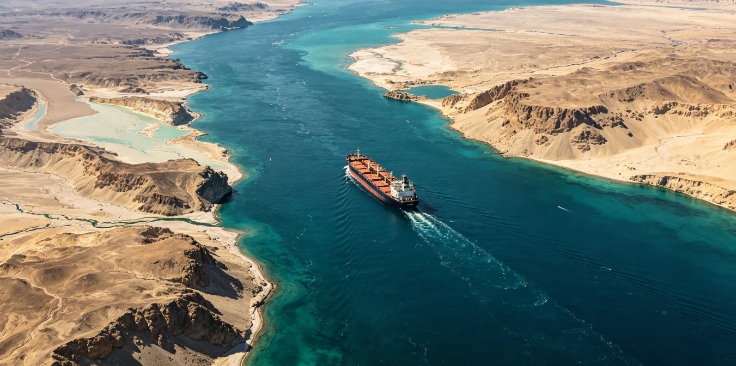
According to Iran's Fars News Agency, on the evening of April 8 (local time), Iran announced it was closing the Strait of Hormuz once again in retaliation for ongoing Israeli military strikes against Lebanon earlier that day.
In a statement, Iran's Foreign Ministry said Foreign Minister Seyed Abbas Araghchi had held a phone call with Pakistan's Chief of Army Staff, General Asim Munir, to discuss Israel's attacks on Lebanon and the breach of the ceasefire agreement.
Iran's Mehr News Agency reported that on the afternoon of April 8, Israel launched hundreds of airstrikes against multiple commercial districts and densely populated residential areas in Beirut, Lebanon's capital, killing at least 112 people and wounding hundreds more. Israel's Jerusalem Post reported that in response to Israel's targeting of the Iran-backed Hezbollah militant group in Lebanon, Iran had once again blocked oil tankers from passing through the Strait of Hormuz and issued warnings to vessels attempting to leave the area, stating that any ship continuing to sail could become a target.
Maritime traffic tracking systems showed that the oil tanker AUROURA, which had been heading towards the Strait's exit, abruptly changed course near the coast of Oman's Musandam Peninsula, executed a 180-degree turn, and returned to the interior of the Persian Gulf.
Several shipping agencies had stated earlier in the day that the Strait had briefly reopened following the announcement of a two-week truce between the U.S. and Iran. According to maritime traffic platform data, a Greek bulk carrier and a Liberian-flagged vessel had successfully transited the waterway after the ceasefire was declared. However, shortly after the attacks on Lebanon, Iran halted tanker traffic once again.
U.S. Vice President J.D. Vance stated on April 8 that Iran had pledged to keep the Strait of Hormuz open, and failure to uphold that commitment would terminate the ceasefire and could result in "serious consequences". White House Press Secretary Levitt also emphasized that the U.S. had previously made "unconditional opening" of the Strait a prerequisite for the ceasefire and would ensure the terms were enforced.
Meanwhile, a senior Iranian official revealed that if all parties could agree on a negotiating framework, the Strait of Hormuz might be reopened in the future under "limited and Iranian-controlled" conditions, with all transiting vessels subject to coordination and management by the Iranian military.
The Associated Press noted that Israel's airstrikes on Lebanon occurred just hours after the U.S., Israel, and Iran announced the two-week ceasefire. Israel maintains the truce does not apply to Lebanon and has stated it will continue military operations in southern Lebanon; however, Pakistan, the mediator, contends the ceasefire arrangement does cover Lebanon.
On the morning of April 8 (Beijing time), the U.S., Israel, and Iran reached a two-week ceasefire deal, ending 40 days of military conflict. Nevertheless, Iran, Lebanon, and some Gulf states still faced drone and missile attacks on the same day, leaving regional tensions high.






China——Brazil Trajectory Tracking



+86 532-85066033/34






 中文简体
中文简体 ENGLISH
