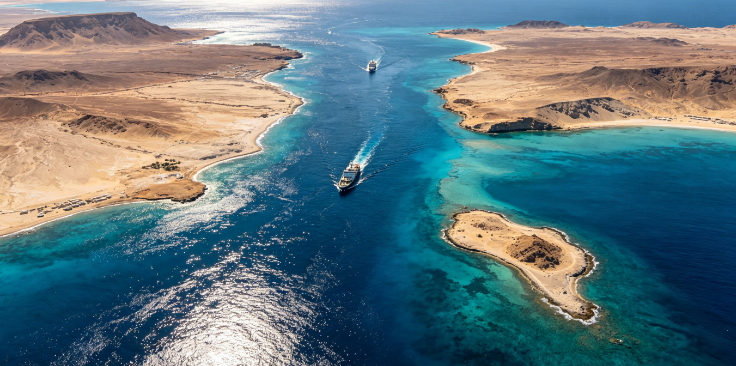
Amid rising regional tensions and US President Trump's deadline for a ceasefire, Iran has signaled limited de-escalation, according to reports from Taiwanese media.
In a statement delivered by Foreign Minister Seyed Abbas Araghchi on behalf of the Supreme National Security Council (SNSC), vessels will be permitted to transit the Strait of Hormuz over the next two weeks, but only under the coordination and control of Iran's armed forces.
As reported by foreign media outlets including the Associated Press, Araghchi stated that the move is a response to Pakistani Prime Minister Shehbaz Sharif's call for de-escalation. It also takes into account the 15-point negotiating proposal put forward by the United States and the Trump administration's expression of willingness to accept Iran's 10-point proposal as a basis for talks.
Iran emphasized that if attacks on its territory cease, its armed forces will also halt defensive military operations to create conditions for de-escalation.
Nevertheless, Iran has not fully relinquished control over the Strait of Hormuz. The statement explicitly stipulates that all navigation must be coordinated by the Iranian military and "take technical constraints into account," indicating that Tehran continues to view the strategic waterway as a critical bargaining chip.
The Strait of Hormuz is a vital chokepoint through which roughly one-third of the world's seaborne oil trade passes. Its operational status directly impacts the international energy market and geopolitical risk assessments.
The Iranian Foreign Minister confirmed that vessels will be allowed safe passage through the Strait of Hormuz under Iranian military coordination in the coming two-week window.
"For the next two weeks, vessels will pass through the Strait of Hormuz safely under the coordination of Iran's armed forces and with due consideration to technical limitations," Araghchi wrote in the statement.





China——Brazil Trajectory Tracking



+86 532-85066033/34






 中文简体
中文简体 ENGLISH
