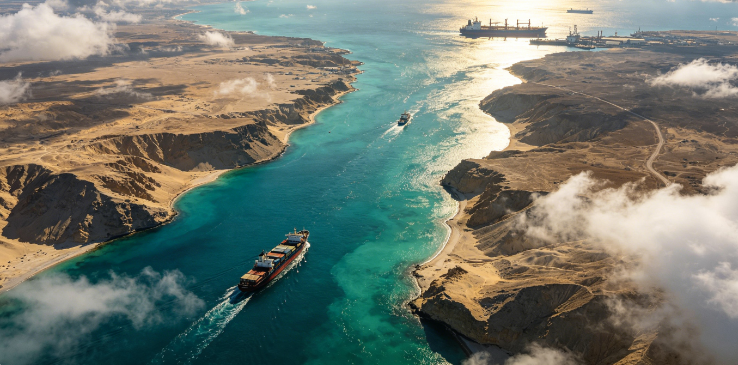
According to Taiwanese media citing sources familiar with the matter who spoke to Bloomberg, Iran is planning to levy tolls on vessels passing through the Strait of Hormuz, starting at approximately $1 per barrel of oil. Payments can be made in Iranian rials, Chinese yuan, or stablecoins.
A Very Large Crude Carrier (VLCC) typically carries around 2 million barrels of crude oil. Under this pricing standard, the toll for a single tanker could reach roughly $2 million.
The move is widely seen as an attempt by Iran to strengthen its control over the vital maritime chokepoint. Even if the current conflict ends, the toll system is likely to remain in place, offering preferential rates to vessels from friendly nations while restricting or denying passage to those from hostile countries. Although U.S. President Donald Trump has stated that the Strait of Hormuz would "automatically reopen" once the war ends, analysts warn that if the toll scheme is formally established, countries worldwide highly dependent on Middle Eastern oil could face long-term repercussions.
Iran's National Security and Foreign Policy Committee approved a new strait management plan on March 30, which proposes charging fees to all vessels transiting the Strait of Hormuz. According to the sources cited by Bloomberg, prior to passage, ships must contact intermediaries linked to the Islamic Revolutionary Guard Corps (IRGC) and submit detailed information, including vessel ownership, flag state, cargo manifest, destination, crew list, and Automatic Identification System (AIS) data. The IRGC will then conduct background checks to determine if the vessel has ties to the U.S., Israel, or other nations deemed hostile. Only after identity verification will toll negotiations commence.
Iran also plans to establish a 1 to 5-tier national rating system. Tier 1 countries, regarded as friendly (such as China), are expected to qualify for lower toll rates. Payments must be made in rials, yuan, or stablecoins; U.S. dollars are not accepted, primarily because Iran is unable to access the SWIFT U.S. dollar settlement system due to U.S. sanctions.
Upon completing negotiations and payment, vessels are required to fly a flag designated by the agreement, and in some cases, even re-register their flag state. As ships approach the strait, the IRGC will transmit a transit code via ultra-high frequency radio and provide escort by patrol boats.
In recent years, some vessels have begun avoiding the central shipping lane of the strait, instead taking a route closer to the Iranian coast, north of Larak Island.
Iran's semi-official Tasnim News Agency estimates that if fully implemented, the toll system could generate over $100 billion annually, equivalent to approximately 20% to 25% of Iran's Gross Domestic Product (GDP).
However, the plan has sparked controversy under international law. Under the United Nations Convention on the Law of the Sea (UNCLOS), international straits must guarantee the "right of transit passage" for vessels of all nations, and coastal states shall not impede navigation or impose tolls. Furthermore, conducting financial transactions with the IRGC, which remains under international sanctions, may involve anti-money laundering and other legal risks.




China——Brazil Trajectory Tracking



+86 532-85066033/34






 中文简体
中文简体 ENGLISH
