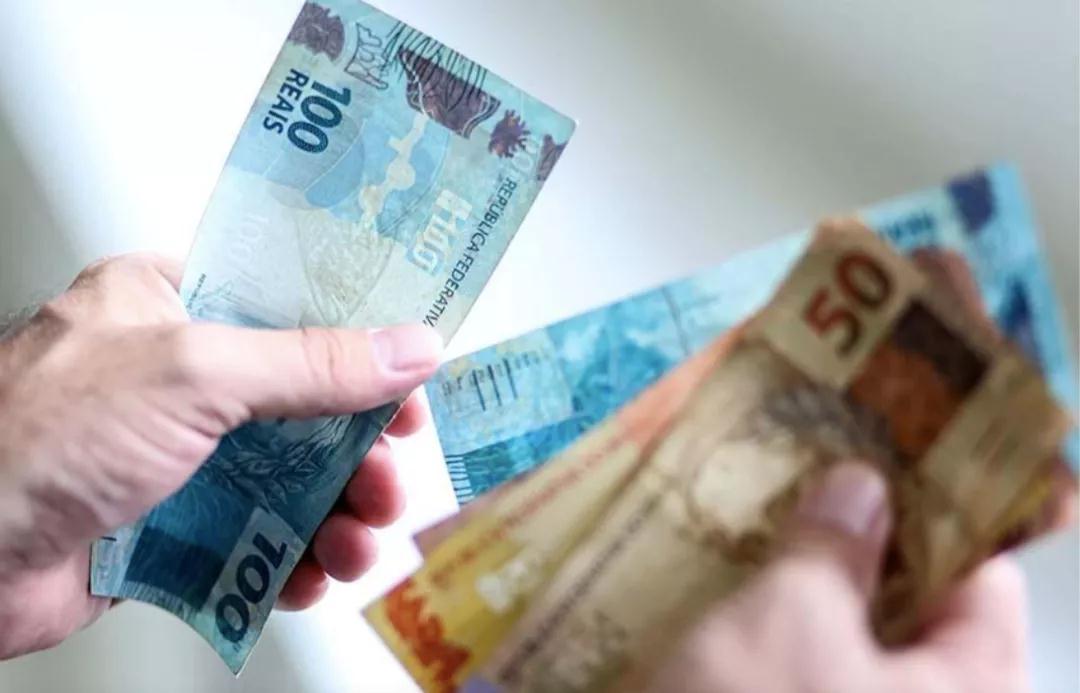
Brazil's central bank published the latest edition of its Focus Survey on April 13, which shows that amid market concerns triggered by the Middle East conflict, financial institutions have raised their 2026 inflation forecasts for the fifth consecutive week — pushing the expectation above the upper limit of the central bank’s target range.
According to the survey, the market projection for Brazil’s official inflation indicator, the Broad National Consumer Price Index (IPCA), for 2026 rose to 4.71% from 4.36% the previous week, an increase of 0.35 percentage points, exceeding the 4.5% upper bound of the central bank’s target range. As set by the National Monetary Council (CMN), the central inflation target is 3%, with a tolerance band of ±1.5 percentage points, meaning a range of 1.5% to 4.5%.
This extends a steady rise in inflation expectations since mid-March. The forecast stood at 3.91% on March 9 and has since increased by approximately 0.8 percentage points in total. Meanwhile, the market’s 2027 inflation forecast edged up slightly to 3.91% from 3.85%, while projections for 2028 and 2029 remained unchanged at 3.6% and 3.5% respectively.
The main driver behind rising inflation expectations is higher energy prices fueled by geopolitical conflicts. Military actions by the United States and Israel against Iran temporarily disrupted traffic through the Strait of Hormuz, pushing up international oil prices and significantly worsening market worries about energy inflation. Notably, the survey was completed last Friday, before the breakdown of U.S.-Iran negotiations and the U.S. announcement of further blockade measures.
In terms of actual inflation data, March prices rose 0.88% month-on-month, higher than February’s 0.7%, mainly driven by increases in transportation and food prices. According to Brazil’s Institute of Geography and Statistics (IBGE), cumulative inflation over the past 12 months reached 4.14%.
On monetary policy, the central bank primarily uses the Selic benchmark interest rate for macroeconomic adjustment. The rate is currently set at 14.75% by the Monetary Policy Committee (Copom). At its most recent meeting, the central bank cut the rate by a modest 25 basis points, whereas before the escalation of the conflict, markets had widely expected a 50-basis-point reduction.
Looking back at the previous cycle, the Selic rate was raised seven consecutive times to a high of 15% between September 2024 and June 2025 — the highest level since 2006 — and was then held steady for four straight meetings. Although markets once anticipated the start of an easing cycle, heightened uncertainty has led the central bank to adopt a more cautious stance on its future policy path. The next Copom meeting is scheduled for April 28–29.
Regarding the interest rate outlook, markets expect the Selic rate to fall to 12.5% by the end of 2026, declining further to 10.5% in 2027, 10% in 2028, and 9.75% in 2029.
On economic growth, the latest survey kept its 2026 GDP growth forecast unchanged at 1.85%, with a projection of 1.8% for 2027 and 2% for both 2028 and 2029. Data shows that Brazil’s economy expanded by 2.3% in 2025, marking the fifth consecutive year of growth, led particularly by strong performance in agriculture.
In foreign exchange markets, the U.S. dollar is expected to trade at 5.37 Brazilian reais by the end of 2026, rising slightly to 5.40 by the end of 2027.





China——Brazil Trajectory Tracking



+86 532-85066033/34






 中文简体
中文简体 ENGLISH
