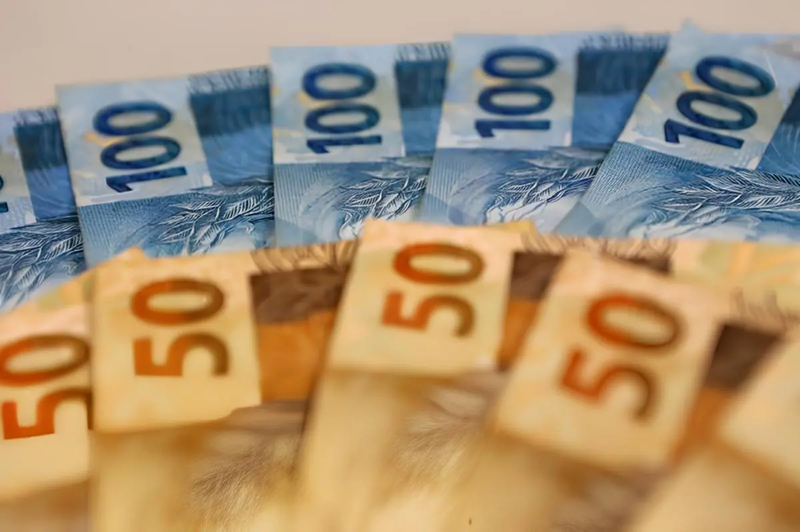
With its economic growth forecast revised upward, the International Monetary Fund (IMF) projects that Brazil is on track to rejoin the world’s top 10 economies by the end of 2026, surpassing Canada to reclaim 10th place globally.
Over the previous two years, although Brazil’s economy maintained growth, Russia’s GDP expanded boosted by a stronger ruble, allowing Russia to overtake Brazil in 2024. Brazil then fell behind Russia, Italy and Canada, ranking 11th worldwide for two consecutive years.
The IMF compares national GDP in US dollar terms, meaning rankings depend not only on economic growth but also on exchange rate fluctuations. A stronger local currency (i.e., a weaker US dollar) typically inflates dollar-denominated GDP. Russia’s rise in 2025 was largely driven by a robust ruble, while the Brazilian real’s steady appreciation since late 2025 has become a key factor behind Brazil’s expected rebound in economic size.
In its latest World Economic Outlook, the IMF raised Brazil’s 2026 GDP growth forecast from 1.6% to 1.9%. By contrast, the global economic outlook has weakened: the IMF cut its 2026 global growth projection from 3.3% to 3.1%, mainly due to higher oil prices and heightened uncertainty stemming from the Middle East conflict. Meanwhile, the IMF also lifted Russia’s 2026 growth forecast from 0.8% to 1.1%, noting that rising oil prices will benefit energy exporters including Brazil and Russia.
In the medium to long term, Brazil’s ranking is expected to climb further. The IMF forecasts Brazil’s GDP growth at 2% in 2027, slightly lower than previous estimates but still above the 2026 level. Under the current projection path, Brazil’s economic ranking is set for a sustained upward trend: 10th in 2026, 9th in 2027 (surpassing Russia), and potentially 8th in 2028 (moving ahead of Italy).
The IMF believes Brazil has moderate resilience against external shocks, including ample foreign exchange reserves, low reliance on foreign currency debt, large government cash buffers, and a flexible exchange rate regime.
However, in per capita terms, Brazil remains in the middle-income bracket. Its per capita GDP stood at around US$10,685 in 2025, lower than Albania but higher than Saint Vincent and the Grenadines, reflecting its classic profile of a large aggregate economy with a moderate per capita income.





China——Brazil Trajectory Tracking


+86 532-85066033/34






 中文简体
中文简体 ENGLISH
