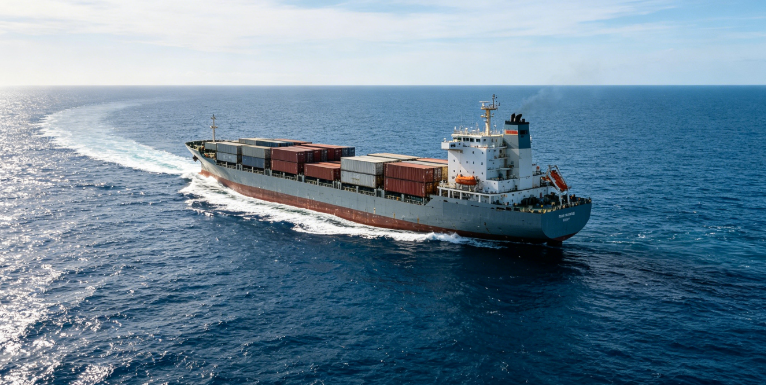
According to foreign media reports, the United Kingdom Maritime Trade Operations (UKMTO) stated that the master of a bulk carrier reported his vessel was struck by an unidentified projectile at 03:01 UTC on May 10, 23 nautical miles northeast of Qatar. The attack triggered a small-scale fire, which was quickly extinguished, with no injuries among the crew.
Maritime security firm Vanguard Tech indicated that the vessel involved is very likely the Marshall Islands-flagged Safesea Neha. Its Automatic Identification System (AIS) data showed it was anchored in the exclusive economic zone off northeastern Qatar at the time of the incident. This marks the second vessel owned by the New Jersey-headquartered shipping company to be targeted amid U.S.-Iran hostilities. Previously, on March 12, the oil tanker Safesea Vishnu was also struck while conducting ship-to-ship transfer operations in Iraqi waters.
Meanwhile, U.S. Central Command (CENTCOM) announced on May 8 that U.S. forces targeted two empty Iranian oil tankers in the Gulf of Oman — the very large crude carrier Sea Star 3 and the Suezmax tanker Sevda — to prevent them from breaking the maritime blockade on Iranian ports. An F/A-18 Super Hornet fighter jet from the aircraft carrier USS George H.W. Bush launched precision-guided munitions at the smokestacks of the two tankers, disabling their propulsion systems. According to U.S. sources, since imposing the blockade on Iranian ports on April 13, U.S. forces have forced more than 50 vessels to reverse course.
Despite ongoing attacks on commercial shipping, the fragile U.S.-Iran ceasefire has largely held. Nevertheless, the standoff has effectively closed the Strait of Hormuz, with only a small number of vessels making transits.
Per AIS data from Pole Star Global, Qatari LNG carrier Al Khairatiyat transited the Strait of Hormuz on May 9. It appeared to follow a new Iran-designated route near the northern waters of Larak Island, deviating from the standard traffic separation scheme. The LNG carrier briefly disappeared from radar before reappearing in the Gulf of Oman on May 10, en route to Karachi, Pakistan. It is the first LNG vessel to pass through the Strait of Hormuz since the outbreak of hostilities on February 28.







China——Brazil Trajectory Tracking



+86 532-85066033/34






 中文简体
中文简体 ENGLISH
