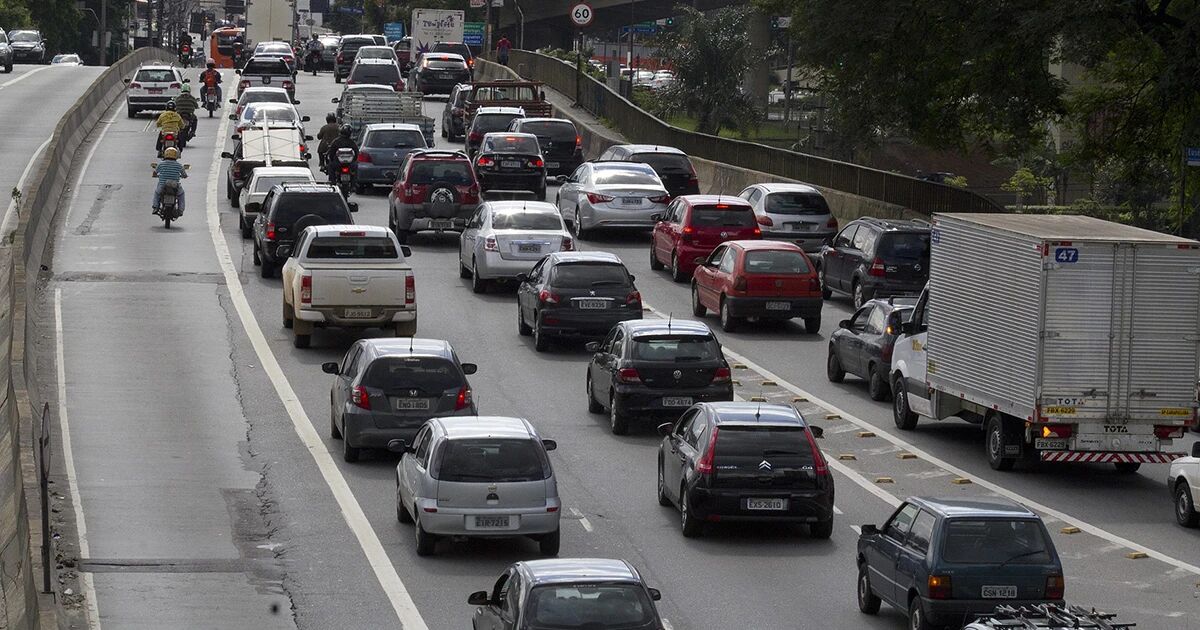
At present, the average age of vehicles on Brazil’s roads continues to rise, with vehicle aging becoming increasingly severe and the national car parc showing a marked aging trend.
Based on data covering approximately 48.8 million vehicles nationwide, 26% are aged over 16 years, while only 23% are new vehicles no older than five years. The national average vehicle age has climbed to 11 years, hitting a 30‑year high. In terms of regional distribution, Brazil’s vehicle stock is concentrated mainly in five states; São Paulo alone accounts for 28% of the national total.
Even so, Brazil’s automotive market is entering a new cycle of transformation. A latest report by consulting firm Bright Consulting projects that the share of electric and hybrid vehicles in Brazil’s car parc will surge from the current 1.4% to 24% within the next four years. This shift is driven not only by the global automotive electrification wave but also by the accelerated expansion of multiple automakers — especially Chinese brands — into the Brazilian market.
Last year, sales of hybrid and battery electric vehicles in Brazil rose 60.8% year‑on‑year to 285,400 units. This indicates that despite the rising average vehicle age, the market is gradually entering a new round of fleet renewal. Bright Consulting believes Brazil may repeat the rapid popularization of flex-fuel vehicles seen in past decades. First introduced in 2003, flex models that run on both gasoline and ethanol now make up 77% of Brazil’s vehicle stock. Going forward, flex vehicles integrated with hybrid technology are expected to become the new core growth driver of the market.
Brazil’s National Association of Automotive Parts Manufacturers (Sindipeças) points out that genuine fleet renewal requires not only stronger new-car sales but also accelerated scrappage of large numbers of overaged vehicles. The association argues that further economic improvement and falling benchmark interest rates in Brazil will help stimulate consumer vehicle demand. Meanwhile, stricter vehicle inspection regimes and the phasing-out of aging cars failing safety and environmental standards will also serve as key driving forces.
Cássio Pagliarini, principal at Bright Consulting, noted that a 20-year-old vehicle can emit around 40 times more pollutants than a modern model, underscoring the urgency of fleet renewal.
Beyond passenger cars, Brazil’s motorcycle market is also expanding rapidly. The national motorcycle parc now stands at 14.9 million units, up 4.1% year-on-year, with an average age of roughly 7 years and 8 months. The booming food delivery industry is regarded as a major driver of rising motorcycle demand.
In 2025, electric motorcycle sales in Brazil reached 8,500 units, a year-on-year increase of 17%, though overall volume remains far below that of traditional fuel-powered motorcycles. To meet market demand, Brazilian firm Grupo DBS plans to build a new factory in the Manaus Free Trade Zone this June, with an annual capacity of 30,000 electric motorcycles and 60,000 electric bicycles. Currently, DBS already manufactures electric motorcycles for rental startup Vammo on a contract basis. Vammo aims to deliver 15,000 electric motorcycles this year, primarily serving the food delivery sector.
Overall, as more electric and hybrid vehicles enter the market, Brazilian consumers are expected to spend less on fuel and vehicle maintenance in the future. The automotive industry is undergoing profound structural transformation, with electrification, fleet renewal and emission reduction set to define its core development trajectory. Policy incentives, improved vehicle inspection systems, and lower new-vehicle prices will remain the pivotal factors driving this transition.





China——Brazil Trajectory Tracking



+86 532-85066033/34






 中文简体
中文简体 ENGLISH
