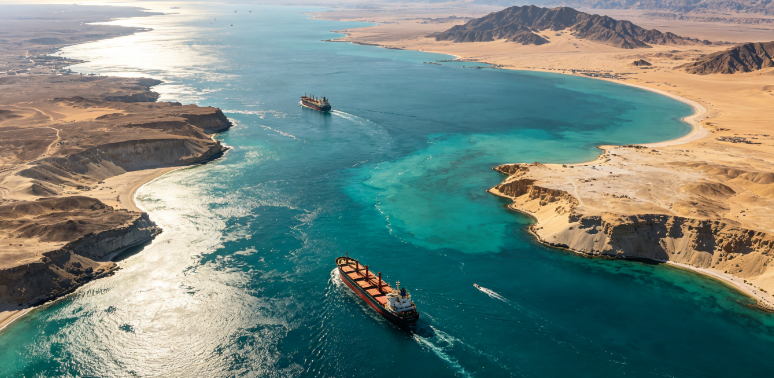
Maritime analytics firm Windward points out that security conditions in the Strait of Hormuz and surrounding waters remain tense. Fearing military conflict, electronic interference, and the risk of being targeted, many commercial vessels have turned off their Automatic Identification System (AIS) and gone dark.
According to Xinhua reports, the UK-headquartered Windward released a report on May 7 stating that dark vessel activity in the region surged by nearly 600% between April 19 and May 3. On May 5, satellite monitoring recorded 167 commercial vessels in the strait, among which 146 had their AIS signals switched off.
The report shows that numerous vessels have recently transited the strait with AIS disabled. On May 7, satellite imagery near Larak Island in the northern Strait of Hormuz detected nine commercial vessels over 150 meters in length operating without AIS broadcasts, including very large crude carriers, container ships, and chemical tankers. These vessels were sailing into and out of the Persian Gulf, indicating that shipping has not come to a complete halt but is gradually moving outside traditional visible monitoring systems.
Analysts believe some vessels disable AIS to conceal their routes amid ongoing U.S.-Iran maritime standoffs and de facto blockades. Other operators take such safety precautions to reduce the risk of being tracked, targeted, or attacked.
The report also noted that satellite images from May 6 showed a formation of 39 speedboats belonging to Iran’s Islamic Revolutionary Guard Corps sailing westward through the Strait of Hormuz. Amid declining maritime transparency, coordinated movements of speedboats on this scale reflect Iran’s tightening control over the strait.







China——Brazil Trajectory Tracking



+86 532-85066033/34






 中文简体
中文简体 ENGLISH
