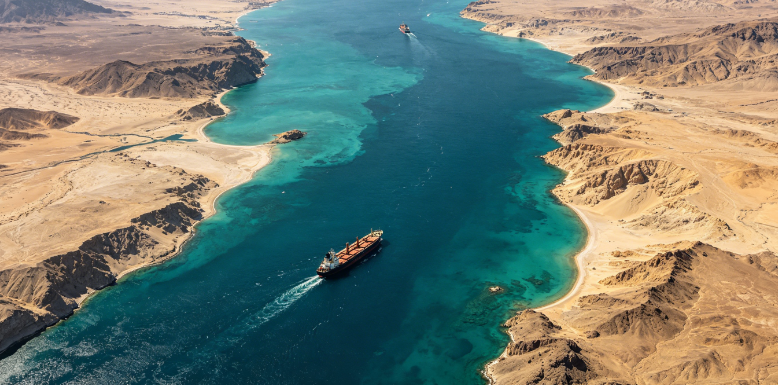
From the night of May 7 to the early morning of May 8 local time, tensions flared abruptly around the Strait of Hormuz, as the United States and Iran launched military operations against each other, leaving the international community worried about the prospects of a U.S.-Iran agreement.
According to a spokesman for Iran’s Khatam al-Anbia Central Headquarters of the Armed Forces, the United States had previously violated a ceasefire by attacking two Iranian oil tankers and another vessel entering the strait. In response, Iranian armed forces targeted U.S. military vessels. U.S. Central Command later confirmed that its ships had come under attack and retaliated against relevant Iranian military facilities. U.S. media reported that the U.S. carried out airstrikes on Iran’s Bandar Abbas and Qeshm Island.
U.S. President Donald Trump posted on social media that if Iran “does not sign an agreement soon,” the U.S. would take “more severe and violent” measures, while claiming that the U.S.-Iran ceasefire “remains in effect.” Analysts noted that the exchange of fire might be a pressure test before negotiations, but it also raised the risk of miscalculation. Iranian Foreign Minister Araghchi stated, “Whenever a diplomatic solution is on the table, the United States always chooses reckless military action”.
A New York Times report pointed out that the two sides disputed blame for the attacks, and it remained unclear who struck first. Iran’s Tasnim News Agency said the U.S. and some allies launched airstrikes on civilian areas and oil tankers near the Strait of Hormuz, prompting an Iranian response that inflicted “heavy losses” on U.S. vessels. Mehr News Agency reported that three U.S. destroyers were hit by Iranian missiles and drones and forced to withdraw from the area.
U.S. Central Command said in a statement that three U.S. destroyers came under fire from Iranian missiles, drones and small boats while transiting the Strait of Hormuz; the U.S. intercepted the attacks and retaliated against the Iranian military sites from which the strikes originated, including missile and drone launch sites and command-and-control centers新华网. The statement stressed that the U.S. had no intention of escalating tensions新华网. Fox News reported that the U.S. also targeted naval checkpoints in Bandar Abbas, Qeshm Island and Minab, Hormozgan Province, though U.S. officials said the strikes “do not mean a resumption of war or the end of the ceasefire.”
Trump said on social media that no U.S. ships were damaged but Iran suffered heavy losses, repeating his threat of tougher action if Iran did not sign an agreement quickly. At a White House press briefing, he sought to play down tensions, saying the ceasefire was still in place and the U.S. action was “a little warning.” Trump also claimed that the U.S. and Iran were “having good talks” and that a deal was likely, while acknowledging uncertainty, as an agreement could be reached or collapse on any given day.





China——Brazil Trajectory Tracking



+86 532-85066033/34






 中文简体
中文简体 ENGLISH
