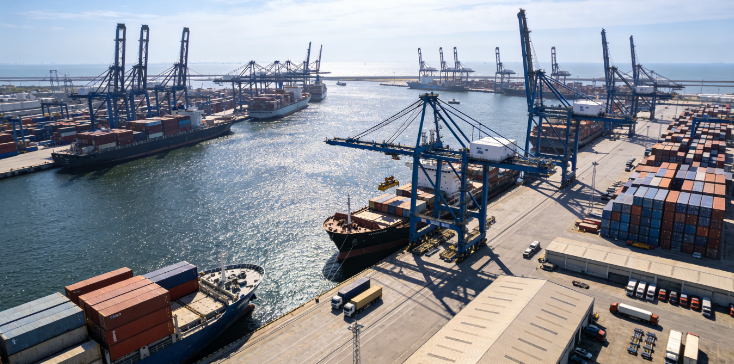
The recent escalation of military conflicts in the Middle East is casting a long shadow over the global supply chain's sensitive nerves. The blockade of the Strait of Hormuz, security threats along the Red Sea route, and the subsequent capacity constraints and cost surges are putting the international freight forwarding industry under one of the most severe stress tests in recent years. As the core coordinators connecting cargo owners and capacity, freight forwarding companies are forced to redesign logistics paths, manage customer expectations, and balance their own operational risks in a highly uncertain environment.
The most direct impact of war on the freight forwarding industry is the structural increase in logistics costs. Since the end of February, following the US and Israel's military strikes against Iran, major shipping companies have successively announced the suspension of services in the Red Sea and surrounding high-risk areas or imposed emergency war risk surcharges of up to thousands of dollars per container. Meanwhile, alternative routes around the Cape of Good Hope have extended the journey time on the Asia-Europe route by 10 to 14 days, leading to simultaneous increases in fuel and charter costs. These incremental costs ultimately trickle down from freight forwarders to import-export businesses, and freight forwarders themselves need to carefully manage their pricing strategies in the midst of drastic rate fluctuations—quoting too low may erode profits, while quoting too high risks losing customers. Small and medium-sized freight forwarders, lacking bargaining power and risk-hedging tools, face particularly acute operational pressures amid sharp rate volatility.
The forced restructuring of route networks poses another profound challenge. The war has effectively restricted traffic flow through the Strait of Hormuz, a critical passageway for global energy and bulk commodity transportation, directly impacting multiple main shipping routes from the Persian Gulf to Asia, Europe, and South America. For freight forwarders specializing in the Middle East and the Indian subcontinent routes, this means a significant contraction in their core business. The broader impact is reflected in the chain reaction of global capacity allocation—some vessels are stranded in high-risk areas or forced to take detours, reducing capacity supply on other routes and thereby increasing overall tension in the maritime shipping market. Freight forwarders must invest more effort in exploring alternative routes, such as land transit schemes via secure ports in Oman, the UAE, or adjusting the mix of transportation modes to balance efficiency and cost between maritime and air freight.
The complexity of insurance and risk management is also escalating. The imposition of war risk surcharges is just the tip of the iceberg; the deeper issue lies in the blurred lines of cargo security and liability definitions. When ships pass through high-risk areas, the coverage scope and claims conditions for war risk insurance become key terms that must be clarified between freight forwarders and clients. Some freight forwarding companies are beginning to enhance risk communication with clients and offer solution suggestions to help them make rational choices between higher insurance premiums and increased costs for detours. Meanwhile, freight forwarders face rising operational risks themselves—should cargo suffer loss or delays due to war-related reasons, even if not their fault, they may still face reputational damage or client claims.
The double squeeze of cargo backlog and financial pressure forms a dual assault. Decreased port efficiency in conflict zones, stricter customs inspections, and delays in cargo pickup due to foreign exchange shortages or safety concerns by some consignees result in a large amount of goods being stuck in transit ports or destination ports. This not only generates high demurrage and storage fees but also prolongs the recovery period for freight prepaid by freight forwarders. For small and medium-sized freight forwarders with relatively weak financial strength, this liquidity pressure can quickly evolve into a survival crisis.
The deeper impact comes from the long-term reshaping of trade flows by geopolitical factors. Sanctions and counter-sanctions resulting from the war, restrictions on the import and export of specific goods by some countries, and the enhanced "de-risking" awareness in enterprise supply chains are reshaping the global trade geography. As service providers in trade, freight forwarders must keenly grasp these structural changes, adjust market layouts and client structures in a timely manner. For example, import demand in some Middle Eastern countries may shrink due to the war, while logistics demand in alternative markets such as Southeast Asia and Latin America is expected to grow. Freight forwarding companies that can establish advantages in these emerging channels early on will have the opportunity to secure a more favorable position in the industry reshuffle.
Taking a broader perspective, the impact of war on the freight forwarding industry reveals a profound reality: in the context of the normalization of global geopolitical risks, the core value of freight forwarders is shifting from "arranging transportation" to "managing uncertainty." What customers need is not just optimal freight rates and reliable cargo space but also the ability to anticipate risks, respond quickly to unforeseen events, and provide professional judgments to stabilize situations in chaos. Freight forwarding companies that can build a network of multiple suppliers, strengthen data analysis capabilities, and maintain localized touchpoints at critical junctures are transforming this crisis into an opportunity to prove their value. As the shadow of war looms over shipping routes, freight forwarders are moving from the backstage to the forefront, becoming indispensable risk mitigators and resilience builders in the trade chain.




China——Brazil Trajectory Tracking


+86 532-85066033/34






 中文简体
中文简体 ENGLISH
