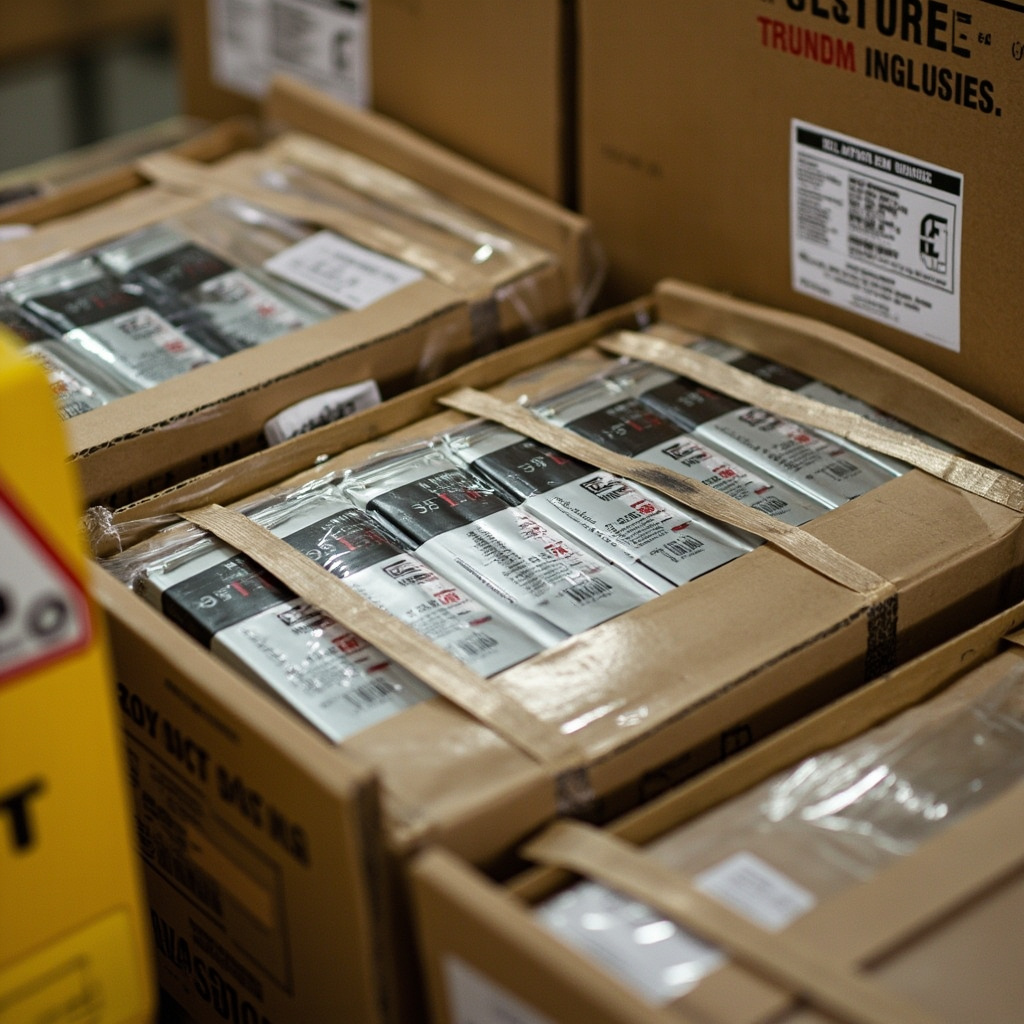
【Compliance Logistics】 As the core energy carrier of the new energy era, lithium batteries receive highly concentrated attention on their transport safety from global regulatory authorities. From manufacturing to end consumers, lithium batteries need to go through a multi-link logistics chain, and each link has strict regulatory constraints. A systematic understanding of these regulatory requirements is a basic skill that every lithium battery export enterprise and related logistics practitioner must master.
Lithium batteries are classified as dangerous goods, not because they have original sin, but because they have the risk of thermal runaway under certain conditions. When lithium batteries are affected by external factors such as compression, puncture, or high temperatures, internal chemical reactions may lose control, causing fires or even explosions. Multiple aviation accidents in history have been related to lithium battery thermal runaway, which has caused the civil aviation system to adopt extremely strict control measures for lithium battery transport.
According to the UN Committee of Experts on the Transport of Dangerous Goods classification standards, lithium batteries are divided into two categories: lithium-ion batteries (rechargeable) and lithium metal batteries (non-rechargeable). Different types and capacities of batteries correspond to vastly different transport conditions. In actual operations, accurately determining product classification is the first step in compliance and also one of the most error-prone links.
The UN38.3 test report is the most basic threshold for lithium battery exports. This test simulates various extreme conditions that lithium batteries may encounter during transport, including eight test items such as low air pressure at high altitude, extreme temperatures, mechanical shock, and vibration. Batteries passing the test need to submit complete test data and institutional qualification certificates.
Beyond the UN38.3 test report, different destination countries and regions have their own certification requirements. Exporting to the EU requires CE certification and Battery Directive compliance; exporting to the United States requires UL certification or ETL certification; air transport requires an air transport appraisal report issued by DGM, and sea transport requires a nautical transport appraisal report recognized by classification societies. In 2026, the verification of certification documents by major destination countries is strengthening, and the risk of forged or expired certifications has significantly increased.
The packaging requirements for lithium battery transport are extremely detailed. From the selection of packaging materials to the standardization of labels and markings, every detail may become an obstacle at customs clearance. Packaging needs to have three functions: short-circuit prevention, impact resistance, and flame retardancy. Measures for short-circuit prevention include separately insulating positive and negative terminals, using non-conductive inner packaging materials, etc.
In terms of labels and markings, requirements vary across different transport modes. Air transport requires Class 9 dangerous goods labels and Lithium Battery Handling labels; sea transport requires UN number markings and correct dangerous goods packaging markings. The updated IMDG Code in 2026 has put forward higher requirements for the durability of packaging markings. Labels printed with adhesive may not meet durability standards under sea transport conditions.
The complexity of lithium battery exports has given rise to a large number of professional dangerous goods freight forwarding enterprises. These enterprises are not only familiar with international and destination country regulatory requirements but also provide full-process services from dangerous goods packaging certificate applications and appraisal report processing to export declarations and transport insurance. The involvement of professional forwarders can help enterprises avoid a large number of potential risks.
In the dangerous goods logistics field, experience and professional accumulation are crucial. Experienced operation teams can identify potential compliance problems before goods arrive at ports and coordinate with factories and customers to complete corrections. The professionalism of dangerous goods warehouses and LCL services, as well as long-term cooperative relationships with airlines and shipping companies, are all manifestations of core competitiveness for freight forwarding enterprises.
---
配图:锂电池运输专用危险品包装箱,黄色危险品标签清晰粘贴,摄影
---
【图片信息】
- 正文图片:image-1---5e752b5c-2113-4a18-a892-6462d0b72374.png
- 缩略图:image-1---3b583634-e642-4744-8864-e013723098da.png







China——Brazil Trajectory Tracking



+86 532-85066033/34






 中文简体
中文简体 ENGLISH
