In 2026, Brazil's agricultural exports to China reached a record high — soybeans, beef, chicken, sugar, coffee. China has become the largest overseas market for Brazilian agricultural products. According to data from Brazil's Ministry of Agriculture, in the first half of 2026, Brazil's agricultural exports to China exceeded $35 billion, an 18% year-over-year increase, accounting for more than 35% of Brazil's total export revenue.
Behind this lies the massive demand driven by China's consumption upgrade, as well as Brazil's continuous expansion of agricultural production capacity. Brazil holds the world's largest arable land resources, its agricultural technology continues to improve, and port logistics infrastructure is accelerating its modernization. This "Brazilian Farmland to Chinese Dining Table" supply chain has become the most important artery in global agricultural trade.
### 2.1 Core Ports: Santos and Paranaguá
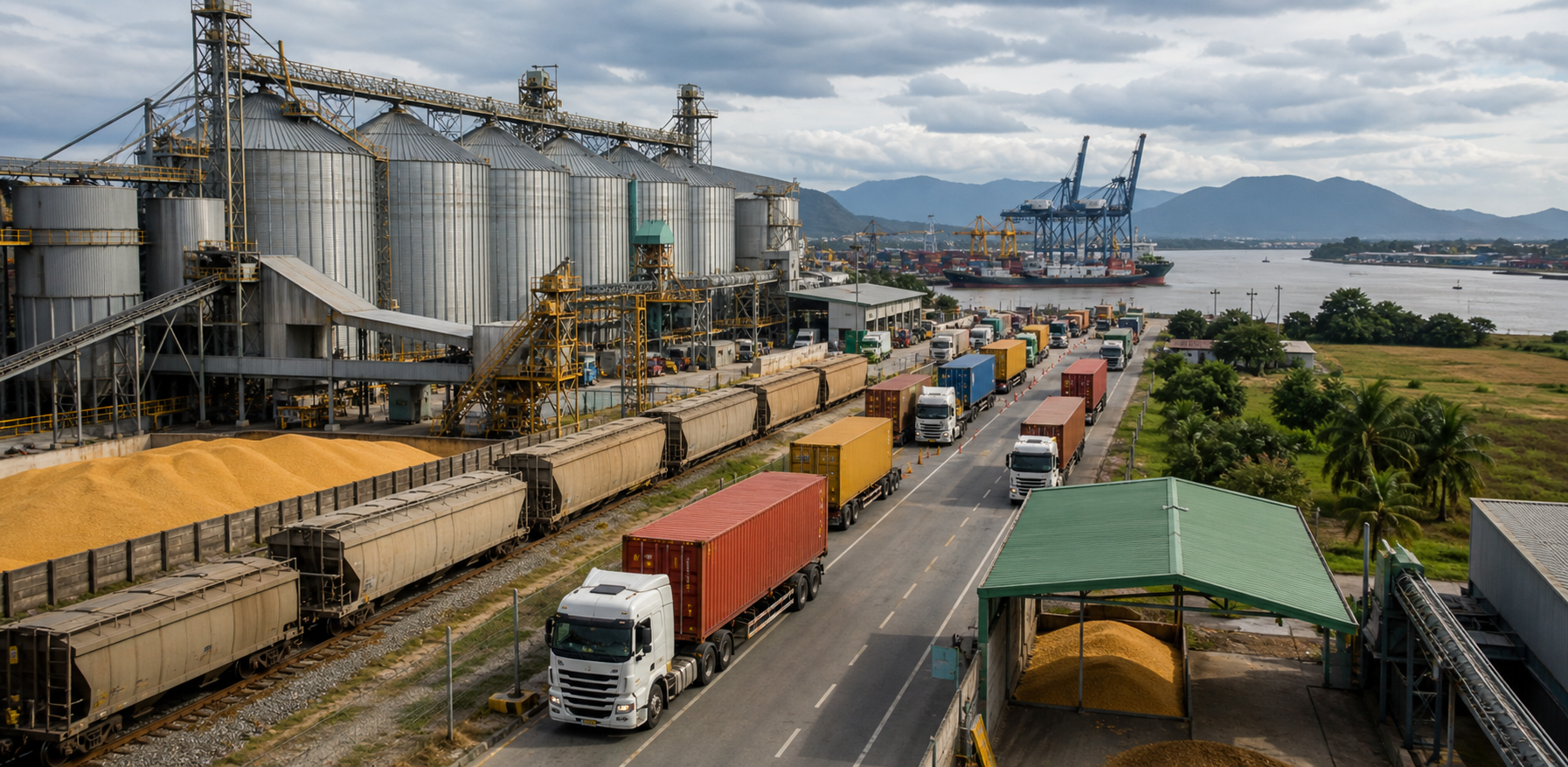
Brazil's agricultural exports rely heavily on two major ports: the Port of Santos and the Port of Paranaguá. Santos is Latin America's largest container port, handling approximately 40% of Brazil's total export cargo volume, with soybeans and sugar being the primary cargo types. Paranaguá serves as the core export gateway for grains and soybean meal.
The shared characteristic of both ports: throughput capacity remains chronically strained, congestion is the norm, and during each harvest season (March to June), the number of vessels waiting at anchor hits new highs. Brazilian port efficiency falls short of China's — average vessel waiting time at port is 5 to 7 days, making this the biggest bottleneck in the entire supply chain.
### 2.2 Bulk Carriers vs. Container Ships
Bulk commodities like soybeans and corn are primarily transported via bulk carriers, which offer ample cargo space but require long booking lead times — planning 1 to 2 months in advance is necessary. High-value agricultural products such as chicken, coffee, and fruits use container shipping lines, with higher requirements for cold chain and timeliness. The availability of refrigerated containers (RF boxes) is the key factor determining whether shipments can be dispatched smoothly.
### 2.3 Logistics Routes for Brazil's Imports from China
Worth noting is that goods Brazil imports from China are also growing rapidly — machinery and equipment, electronics, textiles, auto parts. These goods exported from China to Brazil travel via the South American East Coast route, with Santos and Rio Grande as the main discharge ports. The voyage takes approximately 35 to 40 days. In recent years, container import volume at Santos port has continued to rise, driving the expansion of Brazil's import logistics business.
### 3.1 Complex Tax System
Brazil has one of the most complex tax systems in the world. Import tariffs, ICMS tax, IPI tax, and PIS/COFINS tax are layered on top of each other, with vastly different tax rates across product categories. A professional customs broker (Despachante Aduaneiro) is an essential player in Brazil's import customs clearance. Local experienced customs brokers can effectively avoid tax disputes and clearance delays.
### 3.2 High Standards for Plant and Animal Quarantine
China implements a strict quarantine approval system for Brazilian agricultural imports. Brazilian soybeans require a quarantine certificate from the Ministry of Agriculture; beef requires a veterinary health certificate. Every batch of goods is under the supervision of quarantine departments in both countries. Any quarantine issue may result in the entire batch being returned or destroyed.
### 3.3 ANVISA Certification: A Prerequisite for Food Imports
Brazil's National Health Surveillance Agency (ANVISA) has strict import approval requirements for food, cosmetics, and medical devices. Imported food requires advance application for ANVISA certification, obtaining either a Cadastro (registration) or Licença (license). This process often takes 3 to 6 months, representing a hidden barrier to Brazil's imported food market.
### 4.1 The Rise of Two-Way Logistics Demand
China-Brazil trade is evolving from a one-way structure of "Brazil selling resources to China" to a "two-way logistics" model. China's exports of industrial goods to Brazil are increasing, driving the development of return cargo business for import containers. Shipping companies are beginning to focus on developing return cargo sources, offering more competitive freight rates and more reliable services.
### 4.2 Cross-Border E-Commerce Opens New Channels
With the rapid growth of Brazil's e-commerce market, a new trend has emerged: Chinese sellers directly mail small parcels to Brazilian consumers through cross-border e-commerce channels. Brazil Post's (Correios) international parcel business volume is growing rapidly, but slow customs clearance and difficult last-mile delivery remain major pain points. Sellers establishing overseas warehouses in Brazil need to stock inventory in advance at local Brazilian warehouses, which demands higher certainty in logistics.
First, build a local Brazilian network. Brazilian customs and logistics have strong local characteristics — foreign freight forwarders without local partnership networks find it very difficult to do business well in Brazil. Establishing long-term cooperative relationships with local customs brokers, freight forwarders, and trucking companies is the first step to entering the Brazilian market.
Second, pay attention to the rhythm of agricultural product logistics. Brazilian agricultural exports are highly seasonal — during peak season (March to June), you must book space, arrange trucking, and confirm warehouses in advance. Missing the window means waiting until the next season. Agricultural product logistics is a test of your ability to grasp timing.
Third, deeply specialize in specific product categories. Soybeans, beef, coffee, cotton — each category has different logistics requirements. Choose one category and build comprehensive service capabilities from origin to port to destination port. This gives you more competitive advantage than being a generalized freight forwarder.




China——Brazil Trajectory Tracking



+86 532-85066033/34






 中文简体
中文简体 ENGLISH
