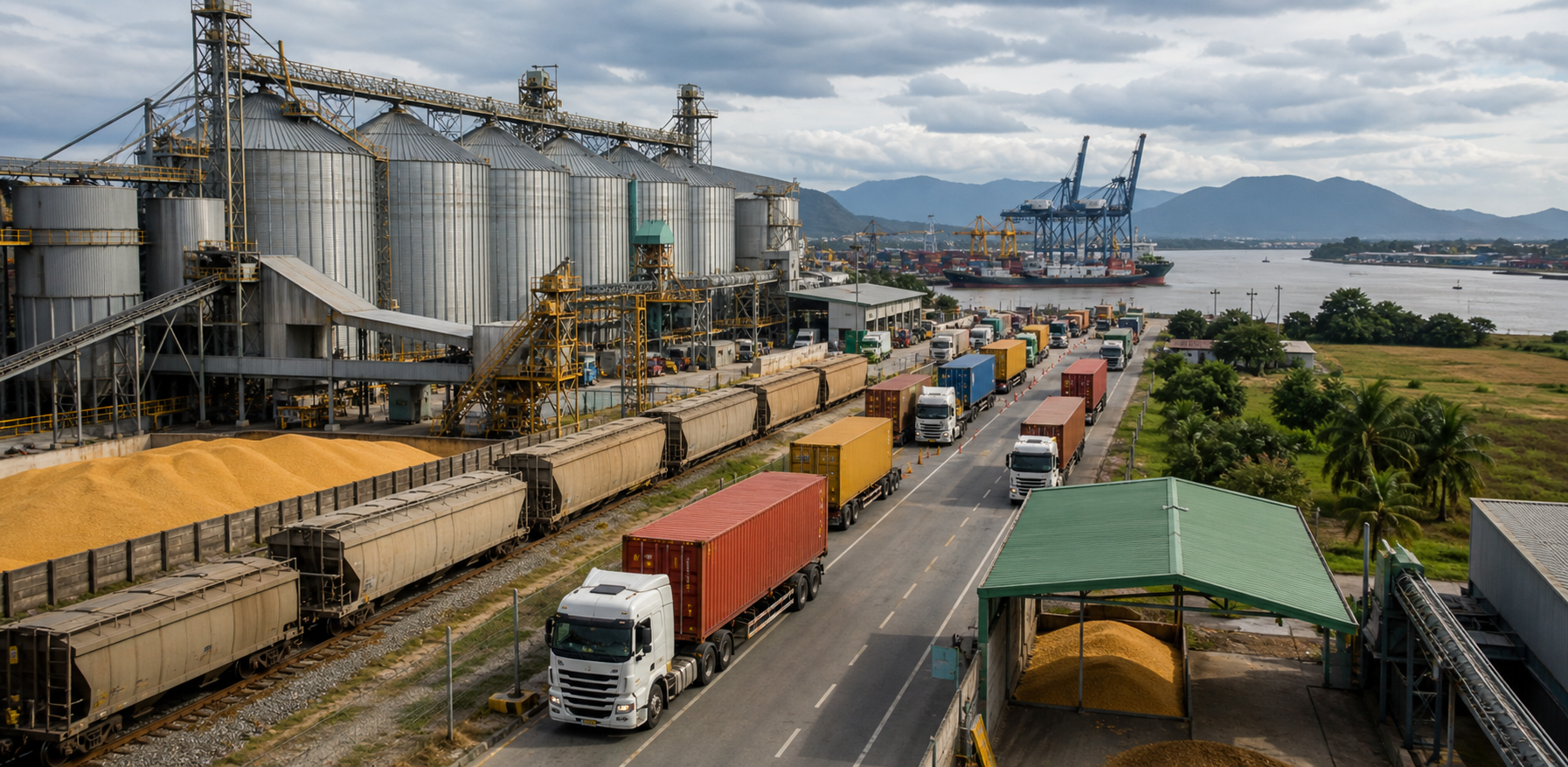
In the first half of 2026, Brazilian soybean exports reached a historic peak, with Santos Port—Latin America's largest agricultural cargo terminal—handling over 48 million metric tons of cargo, once again setting a new global grain logistics record. Against the backdrop of profound reshaping in global international logistics, Santos Port has achieved a leap in cargo handling efficiency through port automation upgrades and digital twin technology deployment, becoming one of the most resilient links in Brazil's agricultural export chain. This article provides an in-depth analysis of the port's core technology pathways for digital transformation, logistics efficiency improvement data, and its far-reaching impact on the global ocean freight and air freight landscape.
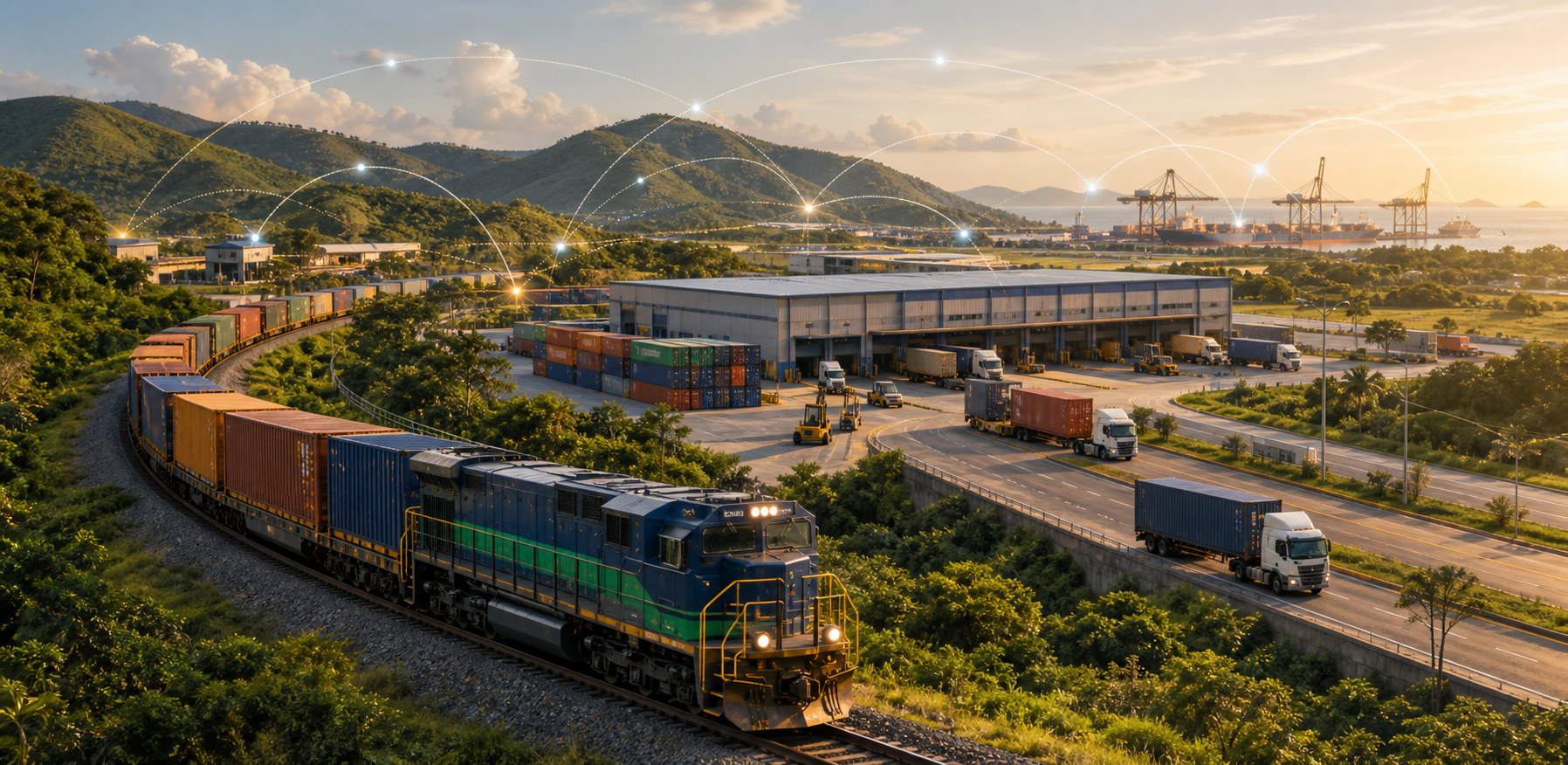
The digital transformation at Santos Port is not a single-point technology application, but rather a comprehensive freight forwarding intelligent system covering the entire port logistics chain. From 2024 to 2026, the port invested approximately 27 billion reais in automation upgrades, primarily covering three major areas:
The digital twin platform, jointly developed by Santos Port and Brazil's National Industrial Confederation, is the core of this transformation. The platform constructs a 1:1 scale three-dimensional dynamic model covering the entire port area, with data updated every 15 seconds, truly restoring the following key operational dimensions:
| Dimension | Data Source | Update Frequency | Application Scenario |
|-----------|-------------|------------------|----------------------|
| Vessel Dynamics | AIS + VTS Radar | Real-time | Intelligent Berthing Allocation |
| Yard Inventory | Drone Inventory + Geomagnetic Sensors | 5 minutes | Decongestion Warning |
| Equipment Health | PLC Edge Computing | 30 seconds | Predictive Maintenance |
| Container Truck Queue | Vehicle OBU + Video AI | Real-time | Global Dispatch Optimization |
| Weather & Tides | Maritime Bureau API | 10 minutes | Safety Limit Control |
Through this platform, port operators can monitor overall operational status in real time on large screens. When a soybean vessel is expected to arrive, the system can simulate the optimal berth allocation and cargo handling plan within 15 minutes, reducing average vessel waiting time from 72 hours in 2023 to less than 18 hours in 2026.
From January to May 2026, cumulative Brazilian soybean exports reached approximately 43.5 million metric tons, a year-on-year increase of approximately 17.3%, with approximately 68% shipped through Santos Port. The core factors driving export growth include:
The digital transformation at Santos Port is directly reflected in shipping cost optimization metrics. Taking a Capesize vessel loading 65,000 metric tons of soybeans as an example:
| Metric | 2023 (Pre-Transformation) | 2026 (Post-Transformation) | Improvement |
|--------|---------------------------|------------------------------|-------------|
| Berthing Waiting Time | Average 72 hours | Approximately 17 hours | 76% reduction |
| Loading/Unloading Efficiency | Approximately 900 tons/hour | Approximately 1,350 tons/hour | 50% increase |
| Total Vessel Port Time | Average 6 days | Average 3.2 days | 47% reduction |
| Per-Ton Logistics Cost | Approximately $28 | Approximately $19 | 32% reduction |
The above data demonstrates that the efficiency improvements brought by port digitalization have substantially translated into improved competitiveness in freight forwarding pricing. Using the 2026 Brazilian soybean FOB price of approximately $380/ton as a reference, logistics cost savings alone can create approximately $9 per ton of pricing adjustment space for exporters, significantly impacting export pricing strategy.
The Santos Port digital twin platform extends upstream to various segments of the agricultural supply chain, providing full-chain visibility services for major importing countries such as China. Exporters can query the following in real time through the platform:
The establishment of this system has substantially improved transparency in Brazil's agricultural international logistics chain, effectively reducing additional transportation costs caused by information asymmetry between buyers and sellers.
In March 2026, Santos Port signed a data interoperability agreement with China's General Administration of Customs. Cargo manifests, inspection certificates, and shipping schedule data from the port's digital twin platform can be directly pushed to China's International Trade "Single Window" system through standardized API interfaces. This initiative enables:
Despite the remarkable achievements in Santos Port's digital transformation, the following structural challenges warrant attention:
Based on the above challenges, Santos Port has announced its Phase 2 digital roadmap for 2027 to 2030, with main directions including:
Santos Port's digital transformation is a landmark event in the reshaping of Brazil's agricultural export competitiveness. Through the three core pillars of port automation, digital twin platforms, and full-chain data interconnection, the port's cargo handling efficiency has substantially improved, with significant shipping cost optimization results, providing more efficient and transparent freight forwarding service options for major buyers such as China. In the context of increasingly fierce global international logistics competition, Santos Port's practice demonstrates that digitalization is not merely a technology upgrade tool, but a strategic instrument for reshaping port core competitiveness and trade pricing power. With the advancement of Phase 2 transformation, Santos Port is expected to achieve the strategic goal of exceeding 600 million metric tons in annual cargo throughput before 2030, further consolidating its position as a global agricultural ocean freight and air freight hub.




China——Brazil Trajectory Tracking



+86 532-85066033/34






 中文简体
中文简体 ENGLISH
