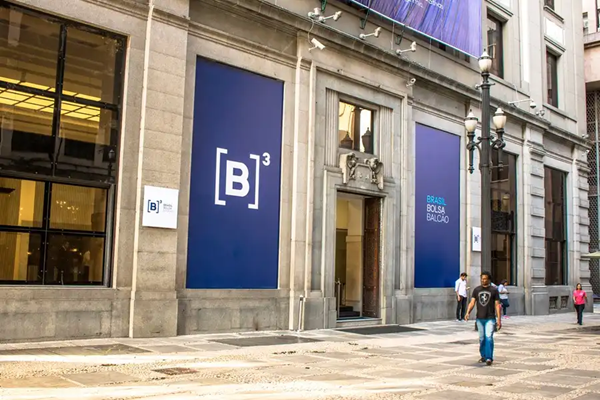
On January 28th, the commercial exchange rate of the Brazilian real remained relatively stable, closing at 5.20 reais per US dollar. At the same time, at 5:11 PM that day, the main index of the Brazilian stock market, the Ibovespa index, rose by 1.20% to reach 184007.90 points, with an intraday high of 185064.76 points.
In the early trading session, the US dollar briefly fell below 5.20 reais per dollar, but against the backdrop of investors awaiting the Brazilian Central Bank's benchmark interest rate decision later in the day, the dollar closed in the Brazilian market at a level similar to the previous day's close, slightly higher than that level.
The domestic US dollar exchange rate in Brazil is trending towards stability, contrasting with global markets where the dollar has been strengthening against most major currencies. Since the beginning of 2026, the US dollar has cumulatively fallen by 5.12% against the real.
The movements in the currency and stock markets on that day occurred as investors closely monitored global economic data, the Federal Reserve, and the Brazilian Central Bank's Monetary Policy Committee in anticipation of future adjustments to benchmark interest rates. Market expectations regarding the benchmark interest rate decision directly impact capital flows, market liquidity, and risk appetite, significantly affecting export-oriented companies, agreements priced in dollars, and the domestic fixed-income market.
The Ibovespa index closed slightly higher that day, holding near recent highs, primarily supported by bank stocks, commodities sectors, and foreign inflows. Overall, the index continues to be influenced by economic indicators, corporate performance, and the external environment. The market performance indicates that investors are still closely monitoring the currency policy directions in the United States and Brazil.






China——Brazil Trajectory Tracking



+86 532-85066033/34






 中文简体
中文简体 ENGLISH
