Introduction
As the global international logistics industry moves toward high-quality development, digital transformation has evolved from an "optional choice" to a "must-answer question." Especially since 2024, with breakthrough progress in generative AI technology represented by large language models, the freight forwarding service industry stands at the threshold of intelligent transformation. Core processes that traditionally relied on human experience—freight rate inquiries, space matching, customs declaration, and supply chain visualization—are being systematically reshaped by AI technology. This article focuses on AI technology application frontiers in the international logistics field, exploring the paths, challenges, and prospects of digital freight forwarding transformation.
1. Industry Background of Freight Forwarding Digital Transformation
1.1 Traditional Freight Forwarding Pain Points and Transformation Pressure
For a long time, the freight forwarding service industry has exhibited characteristics of high dispersion, intense competition, and relatively lagging digitalization. Taking China's international freight forwarding and logistics industry as an example, there are over 30,000 registered freight forwarding enterprises nationwide, but industry concentration is low, with significant capability gaps between leading enterprises and small-medium companies. Core pain points of traditional freight forwarding operations include: freight rate information is scattered and frequently updated, with high manual maintenance costs and frequent errors; space resource allocation depends on experience-based judgment, making global optimization difficult; documentation processing is cumbersome, with import-export customs declarations involving multiple regulatory bodies and high error rates; supply chain visualization is low, with clients lacking real-time perception of cargo in-transit status.
1.2 Market Environment Driving Digital Upgrade
The 2026 market environment has raised higher requirements for freight forwarding company service capabilities and operational efficiency. Route restructuring and freight rate volatility caused by the Red Sea crisis demand that freight forwarding service providers possess real-time market analysis and dynamic route optimization capabilities; the booming development of cross-border e-commerce has created logistics service demands with smaller batches, higher frequencies, and time sensitivity that traditional operation models struggle to support; client expectations for freight forwarding price transparency and end-to-end supply chain visualization continue to increase, with "price advantage + service elevation" becoming the new standard for industry competition. Driven by multiple factors, digital transformation for freight forwarding companies has shifted from optional to mandatory.
1.3 Policy Support and Industry Standardization Progress
National and local authorities have issued a series of policy documents supporting digital upgrades in the international logistics field. The "14th Five-Year Modern Logistics Development Plan" issued by the State Council explicitly proposes key tasks for promoting digital transformation of logistics enterprises, and the international trade "single window" construction jointly advanced by the Ministry of Commerce and other departments has covered major national ports. Smart port construction simultaneously advanced by major ports and customs provides infrastructure support for digital freight forwarding operations. In industry standardization, the "International Freight Forwarding Terminology" national standard and "International Freight Forwarding Service Quality Requirements" industry standard issued by the Standardization Administration of China have laid the foundation for standardized development of digital freight forwarding services.
2. Core Technology Applications of AI Empowering Freight Forwarding Services
2.1 Intelligent Freight Rate Engines and Dynamic Pricing
Freight rate management is one of the core functions of freight forwarding services and also the area where AI technology has penetrated most deeply. Traditional freight rate management relies on operators manually collecting data from shipping company websites, freight forwarding peers, and industry platforms, with low efficiency and poor timeliness. Intelligent freight rate engines build real-time multi-source freight rate databases by connecting to shipping company API interfaces, aggregating industry platform quotes, and cleansing historical transaction data. On this basis, machine learning models can dynamically generate personalized quotations for different customer groups based on historical freight rate trends, seasonal factors, space tightness levels, and competitive dynamics.
More forward-looking applications combine natural language processing technology with freight rate Q&A. Customer service personnel or clients of freight forwarding companies can use natural dialogue interfaces to query freight rates for specific routes, cargo types, and transit time requirements. AI systems automatically parse query intent and return optimal quote plans. According to industry observation, leading freight forwarding companies have sequentially launched intelligent freight rate inquiry robots during 2025 to 2026, improving freight forwarding price response efficiency by approximately 40% and reducing manual query workload by approximately 30%.
2.2 Intelligent Space Matching and Route Optimization
Space resource allocation is another core capability of freight forwarding services. AI technology applications in this area are reflected on two levels: First, space forecasting—using historical shipment data, macroeconomic indicators, and industry trends to predict future space demand on specific routes, helping freight forwarding companies lock space with shipping companies in advance; second, intelligent matching—performing global optimized matching of client multi-dimensional needs (destination port, cargo volume, transit time requirements, budget constraints) with available space resources, outputting comprehensively optimal solutions.
In route optimization, AI algorithms can comprehensively consider multiple objectives including transit time, transportation cost optimization, transit risks, and carbon emissions to provide clients with personalized intermodal solution recommendations. Using China-Europe Express train and shipping connection plans as an example, AI systems can automatically generate multiple solutions such as "rail + shipping," "rail + air freight," or pure shipping detours based on client cargo attributes (type, weight/volume, time sensitivity), along with freight rate, transit time, and carbon emission comparisons for each solution to assist client decision-making.
2.3 Intelligent Documentation Processing and Compliant Customs Declaration
Import-export freight forwarding services involve extensive documentation—invoices, packing lists, bills of lading, certificates of origin, various permits requiring entry, review, and submission—traditionally highly dependent on manual operations with high error rates and low efficiency. AI technology provides a systematic solution for this: optical character recognition (OCR) technology automatically identifies and extracts key documentation information; natural language processing technology performs information verification and logic consistency review; knowledge graph technology correlates regulatory policies and compliance requirements to automatically determine cargo classification and declaration specifications.
Practices from leading international logistics enterprises indicate that intelligent documentation processing systems can reduce manual customs declaration document review time by approximately 60% to 70%, with document error rates dropping from traditional 3% to 5% to below 0.5%. For freight forwarding companies, this means not only direct labor cost savings but also improvement in service quality and customer satisfaction, plus effective compliance risk control.
2.4 Supply Chain Visualization and Intelligent Early Warning
Cargo in-transit visualization is a core element of customer experience and an important dimension of freight forwarding service differentiation. Traditional visualization depends on shipping company AIS signals, port terminal operating systems, and customs release information, with scattered data sources and inconsistent standards, creating significant integration challenges. AI technology-driven supply chain visualization platforms can integrate the aforementioned multi-source data, using predictive algorithms to estimate cargo estimated time of arrival and node operation durations, providing clients with more precise in-transit status perception.
Intelligent early warning functionality is the value-added extension of visualization platforms. Systems can automatically identify abnormal events during transportation—vessel delays, port congestion, cargo inspection—based on preset rules and AI model analysis, and promptly push warning information to freight forwarding operations personnel and clients, along with alternative solution recommendations. According to industry feedback, intelligent early warning functionality can reduce customer-perceived response time for abnormal events from the traditional several hours to within minutes, significantly improving customer experience and emergency handling efficiency.
3. Paths and Practices of Freight Forwarding Digital Transformation
3.1 Technology Architecture and Data Infrastructure Construction
The first step in freight forwarding digital transformation is to consolidate technology architecture and data infrastructure. Mainstream technology approaches include: First, building freight forwarding business operating systems based on cloud-native architecture to achieve modular business, flexible scaling, and elastic expansion; second, building unified data middle platforms integrating data from shipping companies, ports, customs, and peers to construct enterprise-level data asset systems; third, deploying AI capability platforms encapsulating core AI capabilities such as freight rate engines, route optimization, and intelligent documentation, serving front-office business systems in API service form.
Data governance is the core issue in technology architecture construction. Freight forwarding companies need to establish standardized data collection, cleansing, storage, and application specifications to ensure data accuracy, consistency, and timeliness. For small and medium enterprises, the initial approach can be adopting mature SaaS freight forwarding management systems for quick deployment, then gradually building independent technology and data capabilities as business scale expands.
3.2 Organizational Capability and Talent Transformation
Digital transformation is not merely the introduction of technology but a systematic upgrade of organizational and talent capabilities. Freight forwarding companies need to promote organizational change at the following levels: First, management's strategic understanding of digital transformation and determination for sustained investment—digital transformation requires medium-to-long term investment with difficult short-term financial returns; second, business team digital skill improvement—frontline operations personnel and customer service staff need to learn to use digital tools and understand data-driven decision logic; third, recruitment and development of data analysis and application talent—freight forwarding service enterprises need composite talents with data analysis, business understanding, and system development capabilities.
3.3 Customer Experience and Service System Remodeling
The ultimate test standard of digital transformation is improvement in customer experience and commercial value realization. Practices from leading freight forwarding companies show that the introduction of digital capabilities is reshaping the value delivery model of freight forwarding services: transitioning from the traditional model of "providing freight rate quotes and booking operations" to the value-added model of "providing supply chain solutions and intelligent decision support." Clients can independently complete the full process of freight rate inquiry, booking application, document upload, and cargo tracking through digital service platforms, with freight forwarding company value shifting from operational execution to solution design, risk management, and resource integration.
4. Challenges and Risk Prevention
4.1 Data Security and Privacy Protection
Cargo information handled by freight forwarding companies involves commercially sensitive data, making data security and privacy protection a risk point requiring high attention during digital transformation. Enterprises need to establish comprehensive data security management systems, implementing hierarchical classified management of core customer data, cargo information, and commercial data; technical measures include encrypted storage, access control, and audit traceability; in compliance, they must adhere to requirements of laws and regulations such as the Data Security Law and Personal Information Protection Law to ensure all data processing is legally compliant.
4.2 Technology Dependence and Self-Controllability
During the digital transformation process, some enterprises have formed deep dependence on third-party technology service providers, with core business systems and technical capabilities controlled by others. To reduce technology dependence risk, freight forwarding companies should focus on self-controllability of core capabilities—key business logic, data assets, and customer relationships should be independently controlled by the enterprise; at the same time, they can establish strategic cooperation alliances with technology partners to build an open ecosystem, achieving both capability leverage and joint construction.
Trends and Outlook
AI technology is penetrating every segment of international logistics at an unprecedented speed, and the digital and intelligent transformation of the freight forwarding service industry has entered the fast lane. Intelligent freight rates, intelligent space management, intelligent documentation, and intelligent visualization constitute the technology foundation of the new-generation core competitive advantage for freight forwarding companies. Looking ahead, the application prospects of AI Agent technology in the freight forwarding field deserve high attention—evolving from single-function-point intelligent assistance to end-to-end automated service process execution, ultimately achieving full-chain AI-driven from customer demand reception to logistics solution delivery.
For freight forwarding companies, digital transformation is no longer a选择题 of "whether to do it," but rather a思考题 of "how to do it, how to do it faster." The ultimate realization path for transportation cost optimization will largely depend on AI technology's systematic improvement of freight resource allocation efficiency. Only by embracing technological change with an open mindset and advancing organizational transformation with strategic resolve can companies stand out in the new round of industry reshuffling and become core participants in the new international logistics ecosystem. The era of digital freight forwarding has lifted its curtain, and the industry's excitement is just beginning.
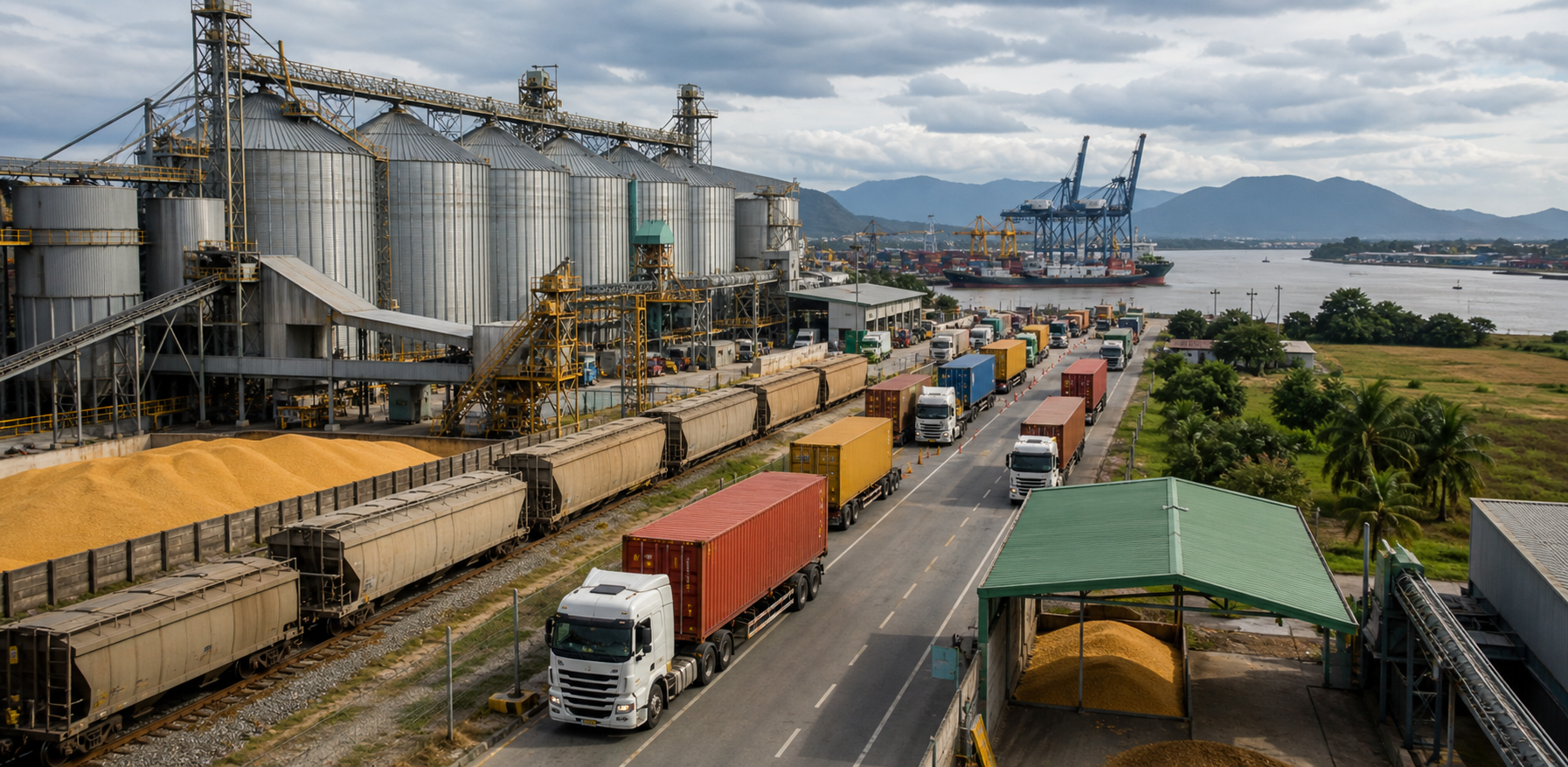

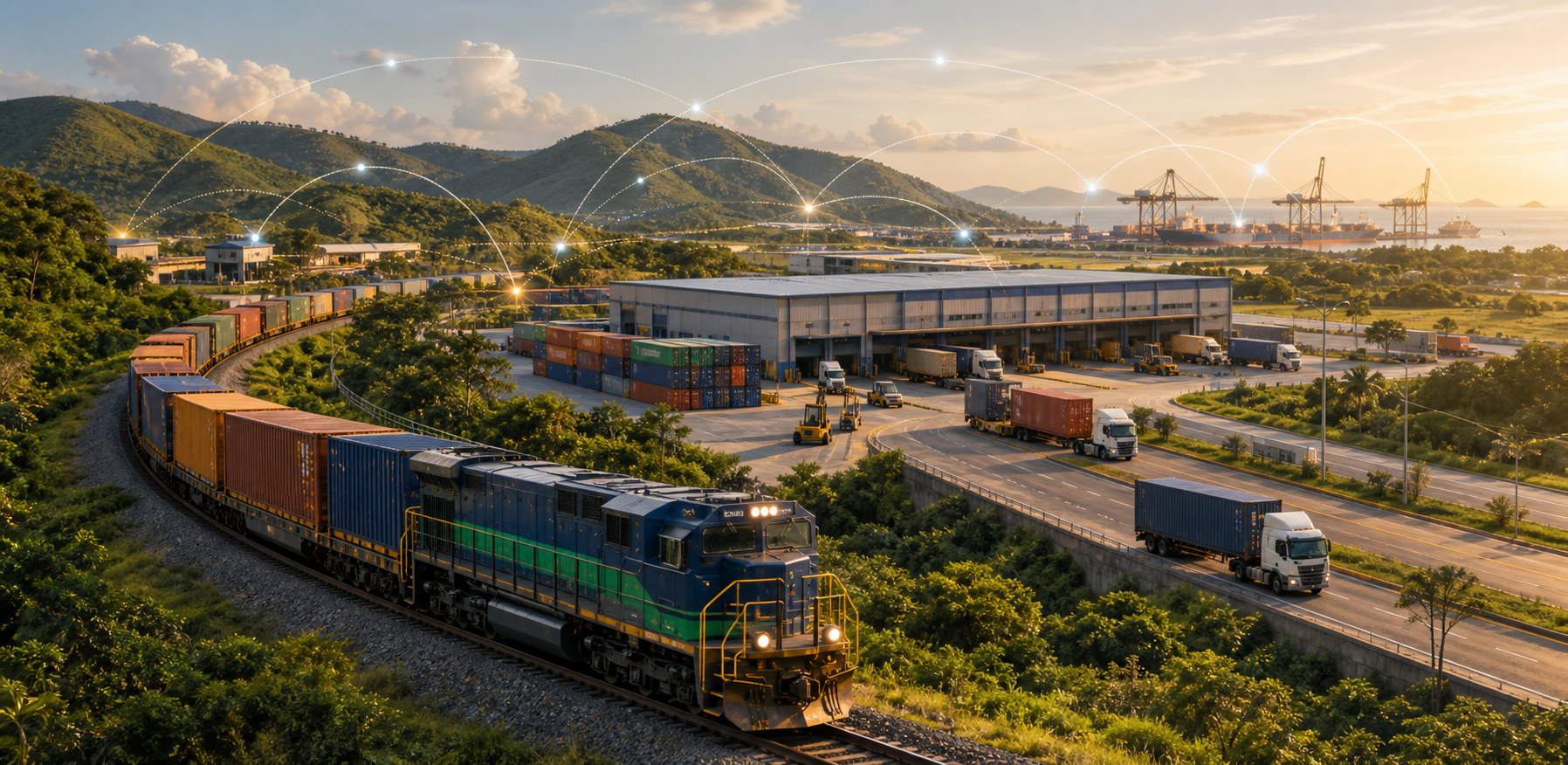




China——Brazil Trajectory Tracking



+86 532-85066033/34






 中文简体
中文简体 ENGLISH
