Introduction
In 2026, global supply chains stand at a turning point of deep restructuring. The Red Sea crisis continues to impact Asia-Europe shipping channels; hub ports such as Singapore and Los Angeles face normalized congestion; geopolitical risks reshape trade flows; and extreme climate events increasingly disrupt logistics node operations. Amid the interplay of multiple uncertain factors, supply chain management's strategic upgrade from "efficiency first" to "resilience first" has become industry consensus. Boston Consulting Group's latest survey shows that over 70% of global multinational corporations have elevated supply chain resilience building to their highest-priority management agenda, with over 40% planning to significantly increase investments in supply chain resilience over the next two years. For the freight forwarding and international logistics industry, this trend presents both serious challenges and strategic opportunities to reshape competitive advantage. This article systematically proposes five core strategies for supply chain resilience building, providing practical operational guidance for freight forwarders seeking strategic breakthroughs.
Strategy 1: Diversified Network Layout to Break Single-Point Dependency
1.1 Hub Port Redundancy and Alternative Channel Development
Traditional supply chain networks highly depend on the concentrated effects of a few super hub ports (such as Singapore, Hong Kong, and Rotterdam). When hub ports experience congestion or disruption, network-wide vulnerability becomes severely exposed. Freight forwarding service enterprises should assist clients in constructing "hub redundancy" networks, reducing dependency on any single hub through regional deployment of multiple alternative transshipment nodes.
Taking Southeast Asia-to-Europe routes as an example, traditional paths heavily depend on Singapore transshipment. Against the backdrop of normalized Singapore Port congestion, freight forwarders can provide clients with alternative transshipment solutions via Malaysia's Port Klang, Tanjung Pelepas, or Colombo Port in Sri Lanka. While these alternative ports still fall short of Singapore in schedule density and route coverage, they can, through advance container gathering and route optimization, disperse waiting risks while guaranteeing transit times. Freight forwarding enterprises possessing multi-path service capabilities are emerging as important partners in clients' supply chain resilience building.
1.2 Transportation Mode Combinations and Flexible Switching
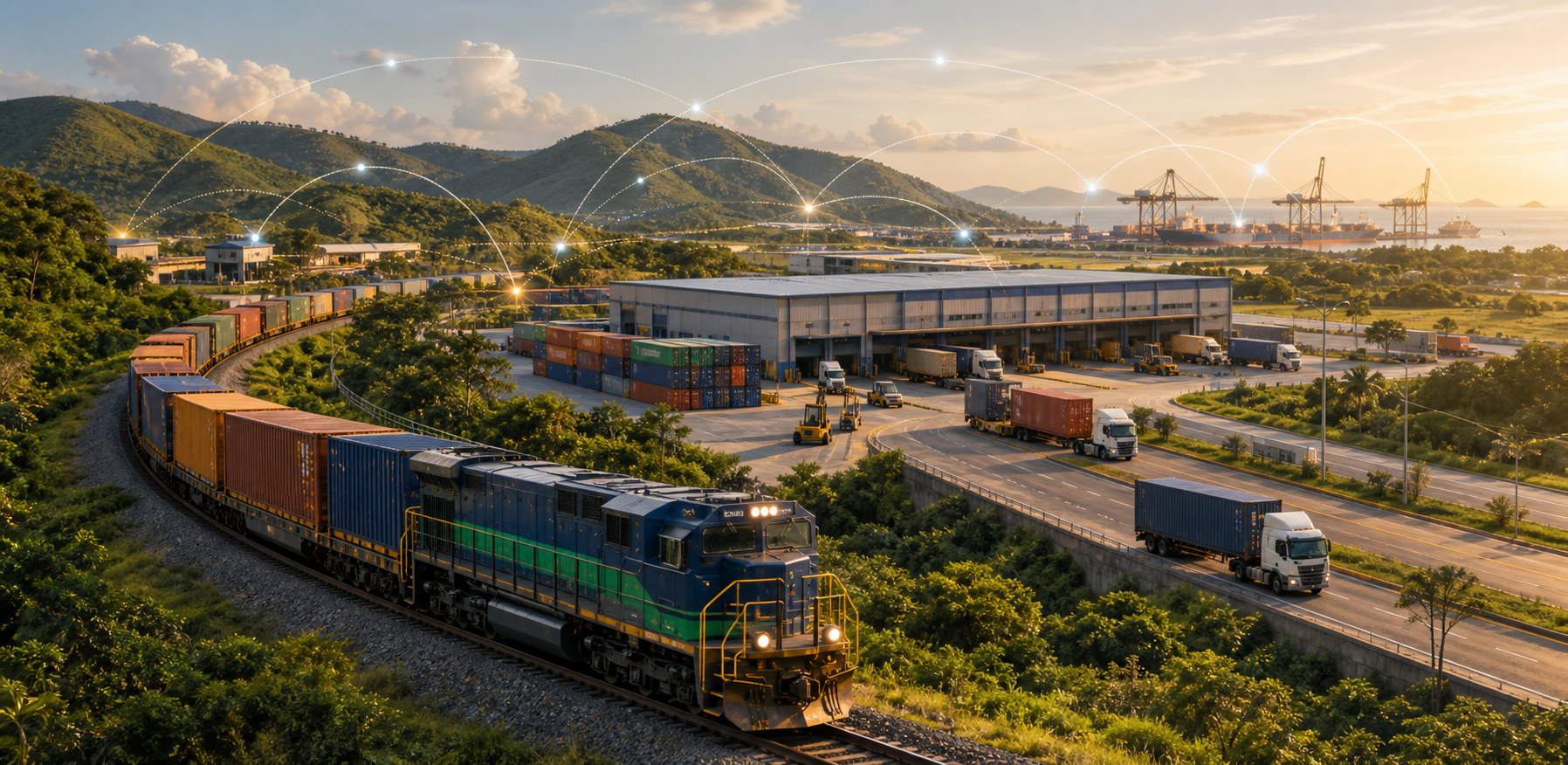
High concentration in a single transportation mode constitutes another vulnerability in supply chain resilience. Pure ocean shipping modes lack buffer capacity when facing channel blockades, port congestion, or severe weather disruptions. Freight forwarding enterprises should help clients establish "sea-land-air-rail" multimodal transport flexible combination capabilities: when ocean shipping channels are blocked, they can rapidly switch to China-Europe rail or Central Asia rail corridors; when ocean shipping transit times cannot satisfy urgent replenishment needs, air freight channels can be activated as supplements.
In the first half of 2026, affected by the Red Sea crisis, substantial cargo originally transiting via Suez redirected to China-Europe rail services. According to data from China State Railway Group, China-Europe rail cargo volume in Q1 2026 grew approximately 22% year-over-year, reaching a historic seasonal peak. Freight forwarding enterprises possessing rail transport service capabilities clearly benefited during this round of modal switching. Comprehensive service capabilities in international logistics—simultaneously offering ocean freight, air freight, rail freight, and multimodal transport solutions—are emerging as core barriers to differentiated competition in the freight forwarding industry.
Strategy 2: Supply Chain Visibility and Real-Time Intelligent Early Warning
2.1 Full-Chain Cargo Tracking Capability Building
The second line of defense for supply chain resilience building is information transparency. Under traditional models, shippers' visibility into cargo in-transit status is often limited to shipping line-published schedules and freight forwarder periodic reports—information that is滞后 and fragmented. Once delays or anomalies occur, shippers often only receive notification days after cargo has arrived at port, missing remediation windows.
Leading freight forwarding service enterprises are investing in building full-chain visualization platforms that integrate customs data, Automatic Identification System (AIS) data, port operations data, and warehouse management system data, achieving end-to-end real-time tracking from origin port to destination port. Visualization platforms not only present cargo locations but also proactively send early warning alerts to clients through intelligent algorithms that predict delay risks. For example, when the system monitors that a vessel's waiting time at the destination port exceeds historical averages, it can automatically push delay warnings and alternative plan recommendations to shippers.
2.2 Data-Driven Intelligent Decision Support
Supply chain visibility is not merely an information presentation tool—it serves as a data-driven intelligent decision support platform. Through deep learning applied to historical data, freight forwarding enterprises can build transit time prediction models, port congestion early warning models, and freight rate trend forecasting models, providing data support for clients' shipment planning and route selection decisions.
Taking shipment planning optimization as an example, freight forwarding enterprises possessing intelligent forecasting capabilities can recommend optimal shipment windows to clients based on port congestion indices, lane freight rate trends, and schedule reliability forecasts for the coming two weeks. During freight rate upturn cycles, clients are advised to lock slots and rates in advance; during downturn cycles, clients are advised to appropriately defer shipments to reduce costs. Data-driven intelligent decision support is redefining the value proposition of freight forwarding services—upgrading from traditional "operational agency" to "supply chain advisory."
Strategy 3: Supplier Relationship Management and Capacity Elasticity Assurance
3.1 Diversified Shipping Line Partnerships
Capacity constitutes the core carrier of freight forwarding service supply capabilities. The traditional model of deeply binding relationships with a single shipping line may face inadequate slot guarantee risks when markets fluctuate drastically. Freight forwarding enterprises possessing supply chain resilience capabilities typically maintain strategic partnerships with multiple shipping lines, possessing comprehensive capabilities to coordinate slots from multiple channels when markets tighten.
Specifically, freight forwarding enterprises can deepen supplier relationship management along the following dimensions: First, establish annual or quarterly framework agreements with shipping lines to lock in advance capacity allocations and preferential rates. Second, engage in cross-partnerships with multiple shipping lines on specific lanes (such as trans-Pacific and Asia-Europe) to avoid single-source dependency. Third, during high blank-sailing periods, maintain high-frequency communication with shipping lines to advocate for priority slot guarantees for core clients.
3.2 Smaller Shipping Lines and Regional Lane Capacity Supplementation
Beyond leading container lines, smaller shipping companies and regional lane carriers constitute an important component of capacity elasticity assurance. While these carriers' capacity scale and global network coverage remain limited, they possess differentiated advantages on specific regional routes or for special cargo types (such as bulk cargo and specialized containers). By integrating multi-tiered capacity resources, freight forwarding enterprises can provide clients with more flexible transportation solutions.
Strategy 4: Inventory Strategy Optimization and Supply Chain Finance Coordination
4.1 Scientific Design of Safety Stock and Buffer Inventory
The core operational issue for supply chain resilience at the execution level is inventory strategy. In a highly uncertain environment, safety stock level settings must seek balance between "resilience premium" and "efficiency cost." Insufficient safety stock leads to stockout risk and customer churn; excessive safety stock creates capital tie-up and warehousing cost increases.
Freight forwarding service enterprises can help clients optimize safety stock levels through data sharing and collaborative forecasting. Specifically, freight forwarders can, based on analysis of transit time historical data, provide clients with safety stock recommendations under different service level scenarios. Taking ocean freight as an example: if normal ocean transit time is 22 days but there exists a 15% probability of delay, clients can set buffer inventory levels equivalent to 7–10 days of sales. This ensures sales remain uninterrupted when ocean transit experiences delays.
4.2 Supply Chain Finance and Capital Turnover Efficiency
Inventory strategy and supply chain finance are deeply interconnected. High inventory levels imply greater capital occupation, and capital costs directly impact total supply chain holding costs. Against the backdrop of still relatively elevated global interest rate environments, optimization of capital turnover efficiency holds significant meaning for supply chain cost control.
Value-added service directions for freight forwarders in this domain include: assisting clients in managing the allocation structure between in-transit inventory and in-warehouse inventory to reduce total-chain capital occupation; collaborating with banks and factoring institutions to provide clients with trade financing services based on in-transit cargo, accelerating capital recovery; and exploring freight forwarding service-anchored supply chain finance products such as freight payment installment plans and slot deposit financial services.
Strategy 5: Digital and Technology-Empowered Organizational Capability Upgrade
5.1 Digital Transformation Pathways for Freight Forwarders
The foundational support for supply chain resilience building is digital and technological capability. The freight forwarding service industry has long operated in a "labor-intensive" model, with document processing and manual dispatching constituting primary operational costs. The goal of digital transformation is to replace low value-added repetitive labor with technological means, liberating human resources for high-value client services and business development.
Specifically, freight forwarding enterprises can pursue digital transformation along the following pathways: First, automate document processing—introducing Optical Character Recognition (OCR) and intelligent document generation systems to achieve automatic generation and review of bills of lading, invoices, and packing lists. Second, intellectualize transportation dispatching—introducing route optimization algorithms and vessel stowage models to improve loading efficiency and dispatching decision quality. Third, digitize client service platforms—constructing one-stop digital service platforms enabling client self-service order placement, real-time tracking, and online reconciliation.
5.2 Exploration of Artificial Intelligence and Blockchain Technology Applications
Cutting-edge technology applications are bringing new possibilities to the freight forwarding service industry. Artificial Intelligence (AI) has already demonstrated significant value in demand forecasting, freight rate forecasting, and anomaly early warning. Taking demand forecasting as an example, AI models can integrate macroeconomic data, manufacturing PMI, retailer inventory data, and historical cargo volume data to project cargo volume trends over the next three to six months, providing more precise support for freight forwarding enterprises' capacity procurement and pricing decisions.
Blockchain technology's application prospects in electronic documents and supply chain finance are equally worthy of anticipation. Blockchain's tamper-proof nature and traceability can provide credible registration and transfer records for negotiable documents such as electronic bills of lading and warehouse receipts, reducing document fraud risk and banks' risk control costs. Although relevant technical standards and regulatory frameworks remain under refinement, freight forwarding enterprises should deploy technology reserves in advance and explore cooperation models with blockchain platforms.
Trends and Outlook
Supply chain resilience building constitutes a profound management transformation and capability upgrade, posing requirements on freight forwarding service enterprises that far exceed the scope of traditional freight forwarding business. Freight forwarding enterprises possessing supply chain resilience service capabilities must not only establish systematic competitive advantages across dimensions including network layout, visibility capabilities, supplier relationships, inventory management, and digital technology—but must also deeply embed the philosophy of balancing resilience and efficiency into client services and product design.
From the perspective of industry evolution trends, freight forwarding services' value creation logic is migrating from "operational agency" to "supply chain empowerment." In this progression, freight forwarding enterprises capable of helping clients design resilient supply chains, collaboratively optimizing inventory and transportation costs, and providing real-time visualization with intelligent early warning services will earn clients' deep trust and long-term loyalty. Future freight forwarding price competition will increasingly focus on service value rather than operational costs. Head freight forwarding enterprises possessing comprehensive service capabilities are expected to further expand their leading advantages in the industry consolidation wave.
Global supply chain resilience restructuring will remain a sustained theme over the next five to ten years. Freight forwarding service enterprises can only, with strategic vision, examine this trend and through pragmatic action advance capability building, truly create irreplaceable value for clients in a highly uncertain global trade environment, and achieve sustainable competitive position amid industry transformation.




China——Brazil Trajectory Tracking



+86 532-85066033/34






 中文简体
中文简体 ENGLISH
