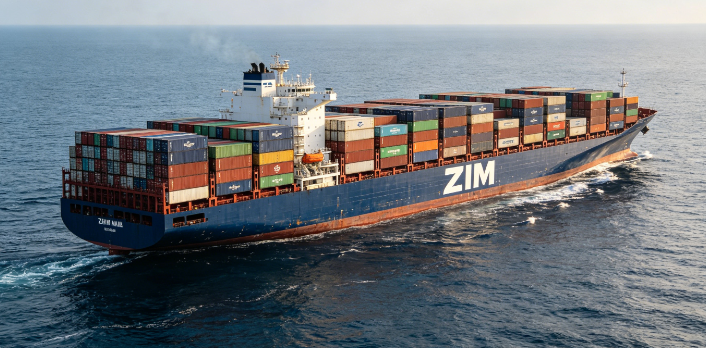
ZIM Integrated Shipping, Israel’s largest shipping company, has recently been hit by a large-scale labor action. Around April 16, roughly 900 of the company’s employees launched a strike in Israel, bringing almost all local operations to a standstill and severely disrupting supply chain activities.
According to Israeli media outlet CTech, the strike comes at a critical juncture as ZIM advances a proposed sale and enters a new round of collective bargaining. The main grievance of employees and trade unions centers on uncertainty over labor arrangements amid the planned sale of ZIM to German shipping giant Hapag-Lloyd. Unions fear Hapag-Lloyd may replace large numbers of senior staff through early retirement schemes, raising the risk of mass layoffs.
The deal is valued at approximately $4.2 billion, under which Hapag-Lloyd and Israeli investment fund FIMI Opportunity Funds will jointly acquire all outstanding shares of ZIM and delist the company from the New York Stock Exchange. Under the transaction structure, Hapag-Lloyd will retain most of ZIM’s global route network and leased vessel capacity, while FIMI will take over Israel-related routes and the owned fleet to preserve the company’s strategic role in national security and emergency transport.
However, the deal has faced sustained controversy since its announcement. As a core part of Israel’s maritime infrastructure, ZIM has long been regarded as a vital pillar of national security and supply chain stability. Some critics argue that the split would leave the domestic business too scaled-down to sustain long-term growth, while the transition could bring layoffs and operational contraction.
The strike has affected nearly all ZIM employees in Israel, including key roles in port operations and cargo unloading, directly paralyzing local activities. Some vessel operations have been suspended, causing noticeable disruptions to logistics chains. This marks the second labor action since the deal was unveiled. In mid-February, ZIM workers staged a “warning strike” also over potential job cuts, backed by the Histadrut labor federation. The two sides eventually reached an agreement on $300 million in severance packages for around 500 affected employees, temporarily ending the walkout.
At the time, the Histadrut stated clearly: “ZIM Integrated Shipping is not just a company – it is a national strategic asset. Any action that weakens the company’s stability or harms workers’ rights will undermine national interests.”
Against the backdrop of ongoing deal negotiations and escalating labor disputes, the company’s management has also seen a shake-up. ZIM Chief Executive Officer Eli Glickman has announced he will resign after a six-month notice period. Glickman had participated in a rival bid for the company but was unsuccessful. In his resignation statement, Glickman said he personally disagreed with the sale plan: “Over the past few months, the board has continued to advance the merger process with Hapag-Lloyd. While I respect this decision, after careful consideration, I do not believe I can continue in my role under this direction.”
With corporate control set to change, unions will now have to negotiate with new management, further heightening uncertainty in labor relations.
At present, the acquisition and restructuring of ZIM represent more than a corporate transaction – they bear on the security of Israel’s maritime system and regional supply chains. The combination of an escalating strike, disrupted domestic operations, and management turnover has left the situation’s future trajectory highly uncertain.
For the global shipping market, this sudden incident underscores once again that shipping companies face unprecedented stability challenges amid the interplay of geopolitics and capital restructuring.







China——Brazil Trajectory Tracking



+86 532-85066033/34






 中文简体
中文简体 ENGLISH
