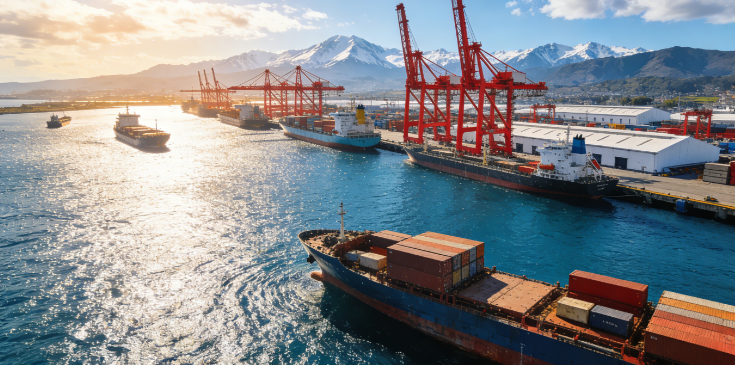
Recently, according to reports from multiple foreign media outlets, a large-scale wildfire has erupted in the southern region of Chile, causing serious impacts on the country. The Chilean government has declared a "state of disaster" nationwide.
This wildfire has not only destroyed communities and transportation infrastructure but has also directly affected the operations of several important ports. Coupled with unfavorable weather conditions in some maritime areas, Chile's national port network is facing significant challenges.
In the most severely affected areas, port operations have been directly disrupted. Port Lirquén has ceased operations completely, while Ports San Vicente and Port Talcahuano continue to operate but with limited functionality and significantly reduced efficiency.
The operational status of other coastal ports varies due to geographical location and weather influences, presenting an uneven situation:
Northern ports: The operations of Angamos in the Port of Mejillones are restricted due to heavy waves. However, ports such as Arica, Iquique, Antofagasta, and Coquimbo are currently operating normally.
Central ports: Two docks at the Port of Valparaíso have been affected by adverse sea conditions (large waves), limiting operations. Meanwhile, the Port of San Antonio in the central region remains unaffected by weather disturbances and is operating normally.
Ports operating normally: Despite the widespread disaster, some ports are maintaining normal operations, such as Port Coronel and the southern Port Punta Arenas.
Chile's forestry agency has stated that firefighting teams are battling multiple active fires across the country. Strong winds and high seasonal temperatures have greatly increased the difficulty of controlling the fires.
The current situation indicates that Chile is facing a dual challenge of wildfires and adverse maritime conditions, posing a continued test to the country's emergency response capabilities and logistics supply chain. The comprehensive recovery of port operations will depend on the effective control of the fires and improvements in weather conditions.




China——Brazil Trajectory Tracking



+86 532-85066033/34






 中文简体
中文简体 ENGLISH
