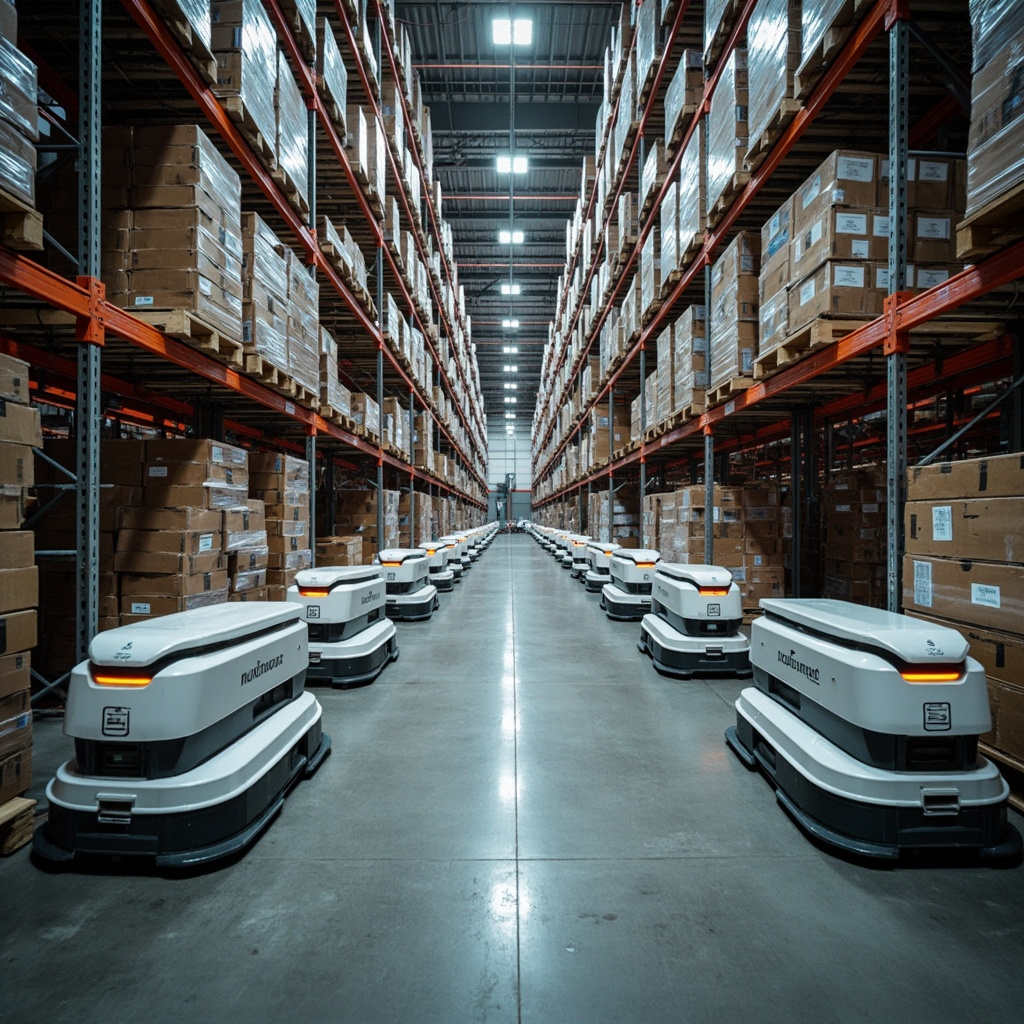
【Warehousing Logistics】 Overseas warehouses have become an important infrastructure for cross-border e-commerce to enhance consumer experience. Amazon FBA (Fulfillment by Amazon) and third-party overseas warehouses each have their own characteristics, suitable for sellers of different types and development stages. A thorough understanding of the differences between the two in cost structure, service capabilities, platform policies, and operational flexibility helps sellers make more rational warehousing decisions.
FBA's core advantage lies in its deep binding with the Amazon platform. Items using FBA can automatically receive Prime member badges and enjoy platform traffic tilt, significantly improving conversion rates on product pages. Amazon's fulfillment system covers the entire process of picking, packaging, delivery, and customer service, allowing sellers to focus more energy on product development and marketing operations.
However, FBA's cost structure requires careful calculation. Storage fees are charged by volume and time, and storage fees surge during peak seasons. After the evaluation cycle for long-term storage fees was shortened from 180 days to 365 days, inventory management has put forward higher requirements for sellers' refined operational capabilities. Additionally, Amazon has strict packaging and labeling specifications for FBA items, and customized goods and special-specification items may encounter obstacles during warehouse entry.
Third-party overseas warehouses provide a different service experience from FBA in multiple dimensions. In terms of cost, overseas warehouse storage rates and fulfillment costs are usually lower than FBA, especially for large-volume, heavy-weight goods where the gap is even more pronounced. Sellers can flexibly adjust restocking strategies according to seasonal sales characteristics—moving inventory to Amazon FBA for fulfillment before peak seasons and returning to overseas warehouses for storage during off-seasons.
Service flexibility is another prominent advantage of third-party overseas warehouses. Sellers can perform value-added operations at overseas warehouses such as re-labeling, re-packaging, and combined sales, handling returns due to labeling issues or minor damage. Some overseas warehouses also provide drop-shipping services, supporting unified fulfillment of multi-platform orders. This multi-channel fulfillment capability is particularly important for sellers who are also operating on platforms like Shopify and eBay beyond Amazon.
Sellers' choice between FBA and third-party overseas warehouses should not be based solely on cost but requires comprehensive evaluation combined with their own business characteristics. Mature sellers can consider a hybrid strategy paralleling FBA and third-party overseas warehouses: core products and main SKUs use FBA to ensure traffic conversion, while auxiliary products and long-tail SKUs use overseas warehouses to control costs.
Product characteristics are also an important consideration. Products with high standardization, stable sales, and long life cycles are suitable for FBA, fully utilizing the platform's traffic dividends. Products with high customization, non-standardized, or requiring special handling are more suitable for third-party overseas warehouses with flexible services. Seasonal products with concentrated peak periods and limited usual sales are more economical with third-party overseas warehouses' flexible billing models.
The overseas warehouse industry is undergoing intelligent upgrades. Some leading overseas warehouse operators have already introduced automated sorting equipment and intelligent warehouse management systems, improving fulfillment efficiency while reducing labor costs. The network interconnection between overseas warehouses is also helping sellers achieve cross-warehouse inventory transfer and defective product circulation.
For Chinese cross-border e-commerce enterprises, selecting overseas warehouse partners with strong compliance capabilities requires focusing on their qualification certifications, warehouse security, and emergency response capabilities. Those service providers that can offer transparent inventory visualization, real-time order tracking, and rapid problem resolution will occupy advantageous positions in competition.
---
配图:海外仓内部一景,自动化货架,工人操作叉车,摄影
---
【图片信息】
- 正文图片:image-1---78b169e8-cff2-433c-b764-0511f3c2f6e0.png
- 缩略图:image-3---1b501ffc-0f1f-42ac-907b-f8a2a225042d.png




China——Brazil Trajectory Tracking



+86 532-85066033/34






 中文简体
中文简体 ENGLISH
