Introduction
Structural adjustments in agricultural trade between China and Brazil over the past five years have seen bilateral agricultural trade volume grow from approximately $32 billion in 2021 to over $56 billion in 2026, with a compound annual growth rate of approximately 11.8%. Behind this lies a logistics restructuring quietly changing the game rules, driven by railway infrastructure construction, supply chain digitalization, and multimodal transport system restructuring. This article focuses on the core logic of supply chain transformation in Brazilian agricultural product exports to China, analyzes how railway transportation has become a key variable in reducing shipping cost optimization, and assesses its profound impact on the freight forwarding service market landscape.
I. China-Brazil Agricultural Trade Scale and Structure
1.1 Trade Scale Continues to Climb
Brazil is China's largest agricultural import source country. Data for the first half of 2026 shows that Brazilian agricultural product exports to China have increased their share of total agricultural exports from approximately 30% in 2020 to approximately 38%. Main export categories include:
| Category | 2026 Export Value (Estimated) | Year-on-Year Growth | Share of Exports to China |
|----------|------------------------------|--------------------|---------------------------|
| Soybeans | Approximately $28 billion | Approximately 14% | Approximately 50% |
| Beef | Approximately $8.5 billion | Approximately 8% | Approximately 15% |
| Chicken | Approximately $3.2 billion | Approximately 12% | Approximately 6% |
| Cotton | Approximately $4.8 billion | Approximately 22% | Approximately 9% |
| Nuts and Coffee | Approximately $2.2 billion | Approximately 35% | Approximately 4% |
1.2 Trade Structure Change Trends
In recent years, Brazilian agricultural product exports to China have shown a clear trend of transformation from single-category to diversified structure:
- Declining Soybean Dependence: As China promotes diversified import sources, the proportion of Brazilian soybeans in total imports from China has dropped from approximately 72% in 2020 to approximately 65% in 2026, but absolute volume continues to grow.
- Rapid Growth in Meat Exports: China's continued relaxation of restrictions on Brazilian beef and chicken imports has made Brazil China's largest beef import source country.
- Rising High-Value-Added Products: Growth rates for refined agricultural products such as nuts, coffee, and propolis are significant, reflecting the pull effect of China's consumption upgrade on Brazilian origin brands.
II. Railway Infrastructure Construction: From Bottleneck to Artery
2.1 North Rio Grande Railway (EF-151) Construction Progress
The Brazilian government officially launched the construction of the North Rio Grande Railway (Estrada de Ferro 151) in 2023. This is a key infrastructure project connecting midwestern agricultural production areas with northern ports. The railway has a total designed length of approximately 1,100 kilometers, connecting the core agricultural belt of Mato Grosso State withItaqui Port, with completion expected in 2027.
The core strategic value of this railway lies in:
- Shorter Transport Distance: The railway distance from Mato Grosso to Itaqui Port is approximately 760 kilometers, shortening the current road transport route by approximately 220 kilometers
- Increased Capacity: Designed annual capacity of approximately 45 million tons can compress the shipping cost optimization space for soybeans from production areas to ports by approximately $25-30/ton
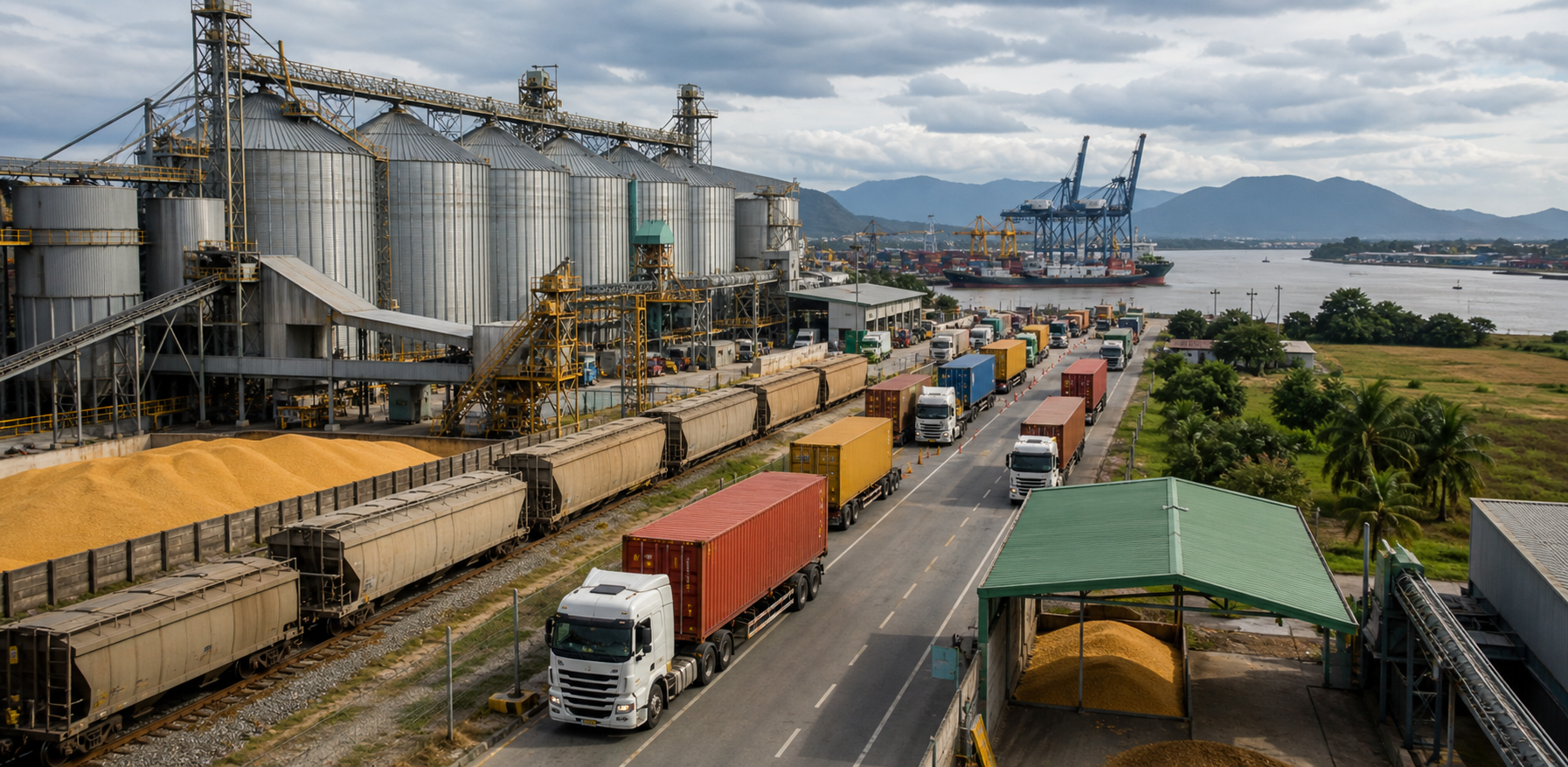
- Releasing Road Pressure: Currently, Brazilian agricultural logistics highly depends on the BR-163 highway, with truck transport accounting for approximately 80% of total agricultural logistics volume. After the railway's completion, it is expected to divert approximately 40% of port-direction freight
2.2 East-West Trans-Ocean Railway (FIOL) Construction Progress
The FIOL railway east-west corridor connecting Bahia State to Tocantins State is another strategic project in the Brazilian federal government's planning. With a total length of approximately 1,527 kilometers, it reaches directly to Ilhéus Port on the Atlantic coast. In April 2026, Phase 1 construction (approximately 520 kilometers) officially commenced commercial operations, becoming a new artery connecting Brazilian northeastern agricultural production areas with Atlantic export channels.
The significance of the FIOL railway for agricultural product exports to China is reflected in:
- Bahia is an important soybean and cotton production area. FIOL has shortened its transport time to ports from approximately 48 hours by road to approximately 18 hours by railway
- Ilhéus Port thereby gains direct railway collection capacity. Port soybean exports are expected to increase by approximately 40% by 2027
2.3 Quantitative Impact of Capacity Increase on Supply Chain Costs
The shipping cost optimization effect brought by railway capacity increases can be intuitively presented through the following comparative data:
| Transport Mode | Mato Grosso → Santos Port | Cost Per Ton | Cost Reduction vs. Baseline |
|---------------|---------------------------|--------------|------------------------------|
| All Road | Approximately 2,050 km | Approximately $85 | Baseline |
| Road + Railway Multimodal | Approximately 1,830 km | Approximately $58 | Approximately 32% |
| All Railway (After EF-151 Completion) | Approximately 1,780 km | Approximately $42 | Approximately 51% |
The improvement of railway infrastructure is fundamentally changing the cost structure of Brazilian agricultural logistics. Using Brazilian soybean exports to China of approximately 55 million tons in 2026 as a baseline, if the average full-chain shipping cost is reduced by approximately $15/ton, this can save approximately $825 million in combined freight forwarding service comprehensive costs for Brazilian exporters and Chinese buyers throughout the year.
III. Supply Chain Digitalization: From Information Islands to Full-Chain Visibility
3.1 Agricultural Product Logistics Digital Platform Construction
Brazil's agricultural department, together with major freight forwarding service enterprises, logistics technology platforms, and railway operators, has jointly established a digital platform for agricultural product logistics called "AgroLog." Core functions of this platform include:
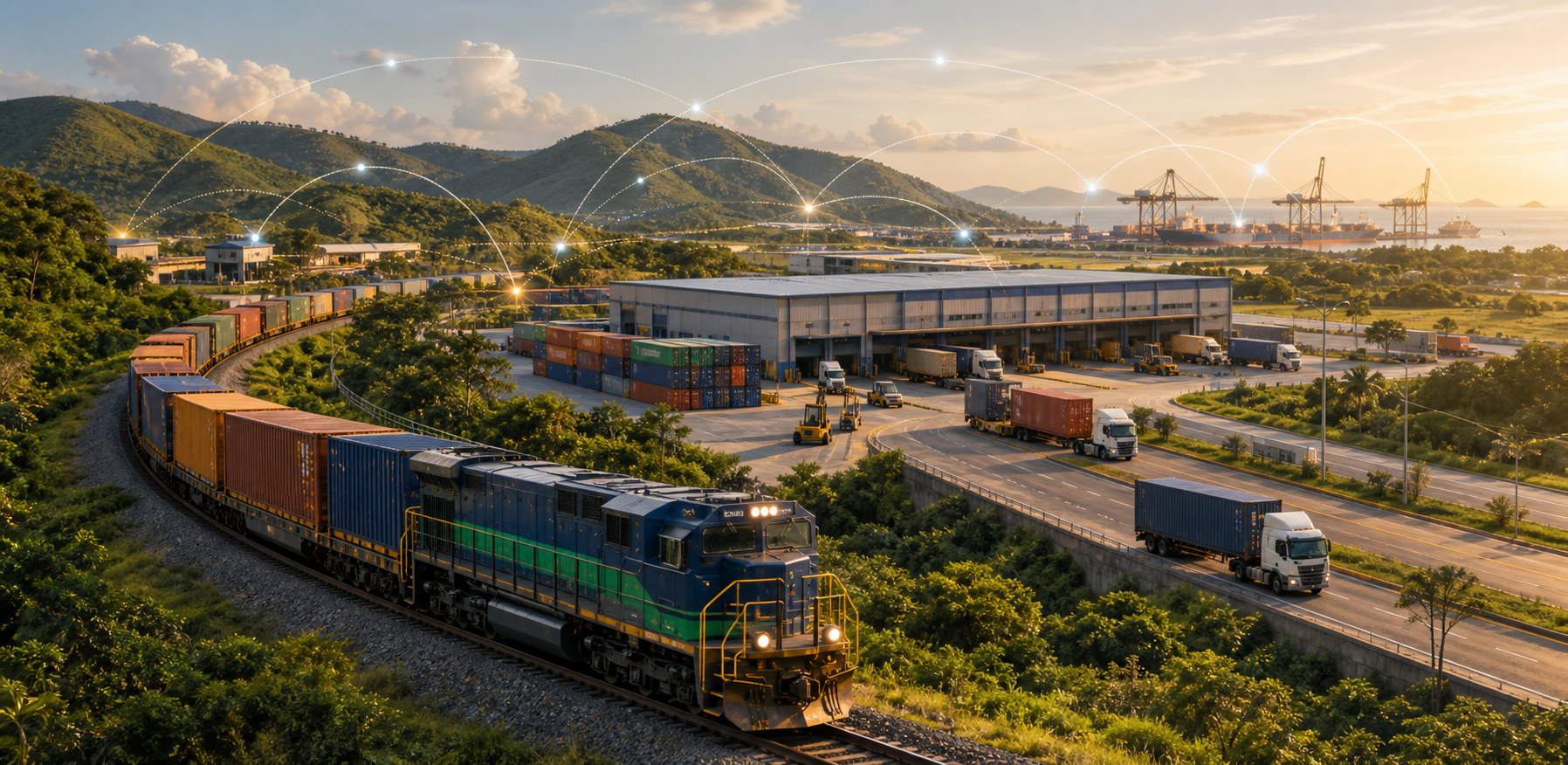
- Multimodal Intelligent Planning: Integrating railway, road, inland waterway, and port data to provide shippers with optimal transport route recommendations and real-time freight rate queries
- Railway Capacity Real-Time Visibility: Access to real-time position, available space, and scheduling information for all trains of Brazilian National Railways
- Cargo Tracking: Real-time updates on cargo status throughout the full chain from farm harvest to ship loading and export
- Electronic Documents: Supporting online circulation and cross-border mutual recognition of electronic bills of lading, packing lists, and inspection certificates
3.2 Blockchain Traceability System
In the field of agricultural product exports to China, China's customs have increasingly strict traceability requirements for imported food. Major Brazilian agricultural product exporters have fully promoted blockchain-based soybean and beef traceability systems:
- Each batch of exported agricultural products is attached with a unique "digital passport," recording farm location, harvest date, storage conditions, inspection reports, and transport routes
- Data is written to the Brazilian Federal Police blockchain network and cannot be tampered with, meeting Chinese customs' regulatory requirements for traceability
- Chinese importers can verify cargo sources online in real time, reducing trade dispute risks
IV. Freight Forwarding Service Market Landscape Reshaping
4.1 Traditional Freight Forwarders Transforming into Integrated Supply Chain Service Providers
The improvement of railway capacity and the popularity of digital platforms are profoundly changing the competitive landscape of the Brazilian agricultural freight forwarding service market:
- Traditional freight forwarders (with core businesses of booking and customs clearance) face profit margin compression of approximately 20-30%. The era of competing solely on price is ending
- Integrated supply chain service providers (integrating railway transport, warehouse management, last-mile delivery, and financial supply chain services) are rapidly expanding market share
- Digital freight forwarding platforms (such as Freightos and Tender (formerly CargoX)) are rapidly penetrating the spot freight rate inquiry and online booking fields, with freight forwarding price transparency substantially improving
4.2 Major Enterprise Layout Trends
Major freight forwarding service providers show clear differentiation in their Brazilian market strategies:
| Enterprise Type | Representative Enterprises | Core Strategy |
|---------------|---------------------------|---------------|
| Global Freight Giants | Kuehne+Nagel, DSV | Investing in railway multimodal transport solutions, layout of origin direct-ship capabilities |
| Chinese Logistics Enterprises | COSCO Shipping, SF Express International | Strengthening São Paulo to Shanghai air freight and ocean freight dual-channel construction, deeply cultivating cross-border e-commerce track |
| Local Freight Forwarders | Nippaku, TAG log | Focusing on Mato Grosso origin service capabilities, establishing full-chain coverage from farm to port |
| Digital Freight Forwarding Platforms | Freightos, CargoX | Compressing intermediate links through digitalization, providing transparent freight forwarding prices |
V. Challenges and Future Outlook
5.1 Existing Structural Challenges
Although railway infrastructure improvement and digital transformation have brought significant efficiency improvements to the Brazilian agricultural product exports to China supply chain, the following challenges still need to be addressed:
- Long Railway Construction Period: Large railway projects often require 8-12 years from planning to completion. Short-term capacity release is still constrained
- Railway Capacity Allocation Mechanism: A considerable proportion of Brazilian railway capacity is allocated to bulk commodities such as iron ore. Whether agricultural products can obtain stable railway space remains uncertain
- Port Handling Capacity Differentiation: Santos Port has a high degree of automation, but emerging ports such as Ilhéus still have gaps in loading and unloading efficiency compared to São Paulo hub ports, potentially forming new logistics bottlenecks
- Exchange Rate Volatility Risk: Real/dollar exchange rate fluctuations significantly impact Brazilian exporter pricing power, increasing difficulty in freight forwarding service cost accounting
5.2 Future Outlook
Looking ahead to 2030, the Brazilian agricultural product exports to China supply chain will continue to evolve under the following trends:
- Railway Capacity Release: By 2030, Brazilian agricultural logistics railway分担率 (share rate) is expected to increase from the current approximately 15% to approximately 30%, approaching the level of U.S. agricultural logistics railway share rate
- Deepening Digitalization: The AgroLog platform is expected to achieve comprehensive data integration with China's International Trade Single Window system, enabling one-click document processing
- Cold Chain Logistics Upgrade: Growing demand for cold chain from high-value-added products such as beef and tropical fruits will accelerate cold chain infrastructure investment
- Multimodal Transport Normalization: Railway-inland waterway-ocean freight "door-to-door" multimodal transport products will become more mature, further opening up shipping cost optimization space
Conclusion
Brazilian agricultural product exports to China are in a window period of profound supply chain restructuring. The combined forces of railway infrastructure construction, digital platform construction, and multimodal transport system upgrading are fundamentally changing the cost structure and service quality of Brazilian agricultural logistics. For Chinese buyers, this means more stable supply, lower freight forwarding prices, and more transparent full-chain visibility; for Brazilian exporters, this means stronger international competitiveness and more efficient capital turnover; and for the global freight forwarding service industry, this means a new competition for transformation from single-segment services to full-chain integrated solutions. In this round of restructuring, whoever first builds a "Railway + Digital + Multimodal Transport" three-in-one supply chain capability will seize the first-mover advantage in the Brazilian agricultural product exports to China super track.











 中文简体
中文简体 ENGLISH
