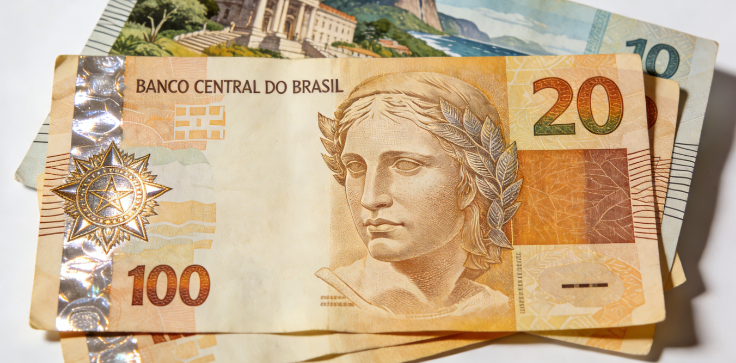
Since the beginning of this year, the Real has been one of the currencies with the second-highest appreciation against the US Dollar. According to data from the consulting firm Elos Ayta, the Real has appreciated by 5.9% since the beginning of the year, second only to the Chilean Peso.
The Brazilian magazine "EXAME" reported that the consulting firm monitored the movement of the US Dollar in 28 economies from January 1st to the 29th. The Chilean Peso recorded the highest appreciation (+6.2%). Following the Real, the Norwegian Krone (+5.77%), the Australian Dollar (+5.63%), and the South African Rand (+5.34%) have also performed quite well.
Not only in Brazil, but also in other regions, there has been a depreciation of the US Dollar. The survey shows that out of the 28 monitored economies, 22 experienced a depreciation of the US Dollar in January, indicating a general weakening of the US Dollar.
It was reported that the Real experienced such a significant appreciation last in January 2025, when the Brazilian currency rose by 6.21%.
In March 2020, due to the impact of the COVID-19 pandemic, the Real experienced its largest monthly depreciation in history (-13.46%). The second-largest depreciation occurred in June 2022 (-9.72%).
The consulting firm stated, "The performance in January 2026 suggests a significant change in market sentiment." Elos Ayta believes that the Real's appreciation is at the forefront globally, which is rare in recent history.
On Thursday (the 29th), the US Dollar against the Real exchange rate fell by 0.22%, closing at 5.1940 Reais, marking the lowest closing price since May 2024. This week, the US Dollar has accumulated a 1.75% decline against the Real, and a 5.37% decline for the month.
In addition, Brazil's main stock index, Ibovespa, reached a new high of 186,000 points intraday before ultimately falling by 0.84% to close at 183,134 points. This week, the stock market has accumulated a 2.39% increase, and a 13.66% increase for the month.
In Brazil, the agenda for the day includes data from the Labor and Employment Register (Caged). According to information released by the Brazilian Ministry of Labor and Employment, Brazil added 1.279 million formal job positions in 2025. These data help adjust expectations for economic activity at the beginning of 2026 and indicate whether there is room for the Central Bank to lower the benchmark interest rate (Selic).
In the United States, the day after the Federal Reserve decided to keep interest rates unchanged, President Trump once again pressured the Federal Reserve. Additionally, investors closely monitor the weekly initial jobless claims and trade balance data releases, as these indicators help gauge the speed of economic growth in the United States.







China——Brazil Trajectory Tracking



+86 532-85066033/34






 中文简体
中文简体 ENGLISH
