On June 4, 2026, the Tianjin Port Trade & Logistics Platform officially launched operations, marking a milestone step for Tianjin in advancing the digital transformation of the freight forwarding industry. Jointly built by Tianjin Port (Group) Co., Ltd. and multiple technology enterprises, the platform focuses on core functions such as data sharing, blockchain traceability, and port cargo tracking, aiming to provide more efficient, transparent, and intelligent one-stop services for freight forwarding enterprises and import-export customers. Against the backdrop of accelerating digital transformation in the global logistics industry, the launch of the Tianjin freight forwarding platform holds important demonstrative and leading significance.
For a long time, information silos have been a pain point troubling the development of the freight forwarding industry. Information systems of shippers, freight forwarders, shipping lines, ports, and customs have operated independently from one another, with non-uniform data standards, closed interfaces, resulting in low efficiency in logistics information transmission and difficulties in real-time cargo status tracking.
The core design philosophy of the Tianjin freight forwarding platform is precisely to break down information barriers and achieve data sharing. Through standardized data interfaces, the platform has achieved deep integration with the Tianjin Port terminal operating system, vessel dynamics system, customs supervision system, and insurance company system, enabling real-time sharing and interconnectivity of logistics data across the entire chain.
Specifically, platform users can query all types of data — vessel arrival and departure schedules, terminal container dynamics, customs release status, cargo insurance information — on a single interface, without the need to log into multiple systems for repeated queries as in the past. Platform managers state that this function can improve freight forwarders' information query efficiency by over 60%.
Building upon data sharing, the Tianjin freight forwarding platform innovatively introduced blockchain technology to construct a logistics traceability system. The entire process of every cargo shipment — from order receiving, stuffing, customs clearance, loading, transportation, unloading, to delivery — is recorded on the blockchain, forming an tamper-proof electronic trail.
This design addresses the issue of information credibility in traditional logistics models. Under traditional models, shippers often have doubts about the information provided by freight forwarders — Was the container truly loaded onto the vessel? Did it depart on time? With blockchain traceability, all this information becomes transparent and credible. Shippers can check their cargo's "digital identity" at any time, understanding the complete history of their shipments.
More importantly, the blockchain traceability system helps establish an industry credit mechanism. The platform generates a "credit profile" for freight forwarding enterprises based on data such as their fulfillment records, service quality, and customer reviews using blockchain technology. Enterprises with strong credit will receive more display opportunities and priority recommendations, while enterprises with poor credit will face platform restrictions. This mechanism will effectively promote industry self-regulation and survival of the fittest.
Users simply need to enter a waybill number or container number to clearly see on a dynamic map where the cargo is currently located — whether it is in an export warehouse awaiting stuffing, en route to the terminal, waiting at the terminal yard for loading, or already loaded onto a vessel in transit. Status updates for each shipment have a latency of no more than 5 minutes, truly achieving "port logistics at your fingertips."
According to Tianjin Port Group's calculations, after the platform launched, the average operation time per shipment for freight forwarding enterprises was reduced by over 40%, and comprehensive logistics costs were reduced by 8% to 12%. For freight forwarding enterprises with large business volumes, this translates to considerable efficiency improvements and cost savings.
From the perspective of service experience, the platform's digital capabilities empower freight forwarding enterprises, enabling them to provide higher-quality services to customers. The realization of functions such as real-time cargo tracking, anomaly alerts, and electronic documents allows shippers to check cargo status anytime and anywhere, without repeatedly calling freight forwarders for inquiries.
The platform also includes an intelligent customer service system, capable of answering customer inquiries 24/7, handling common needs such as order queries, document downloads, and complaint handling. This function not only improves service response speed but also reduces freight forwarding enterprises' customer service labor costs.
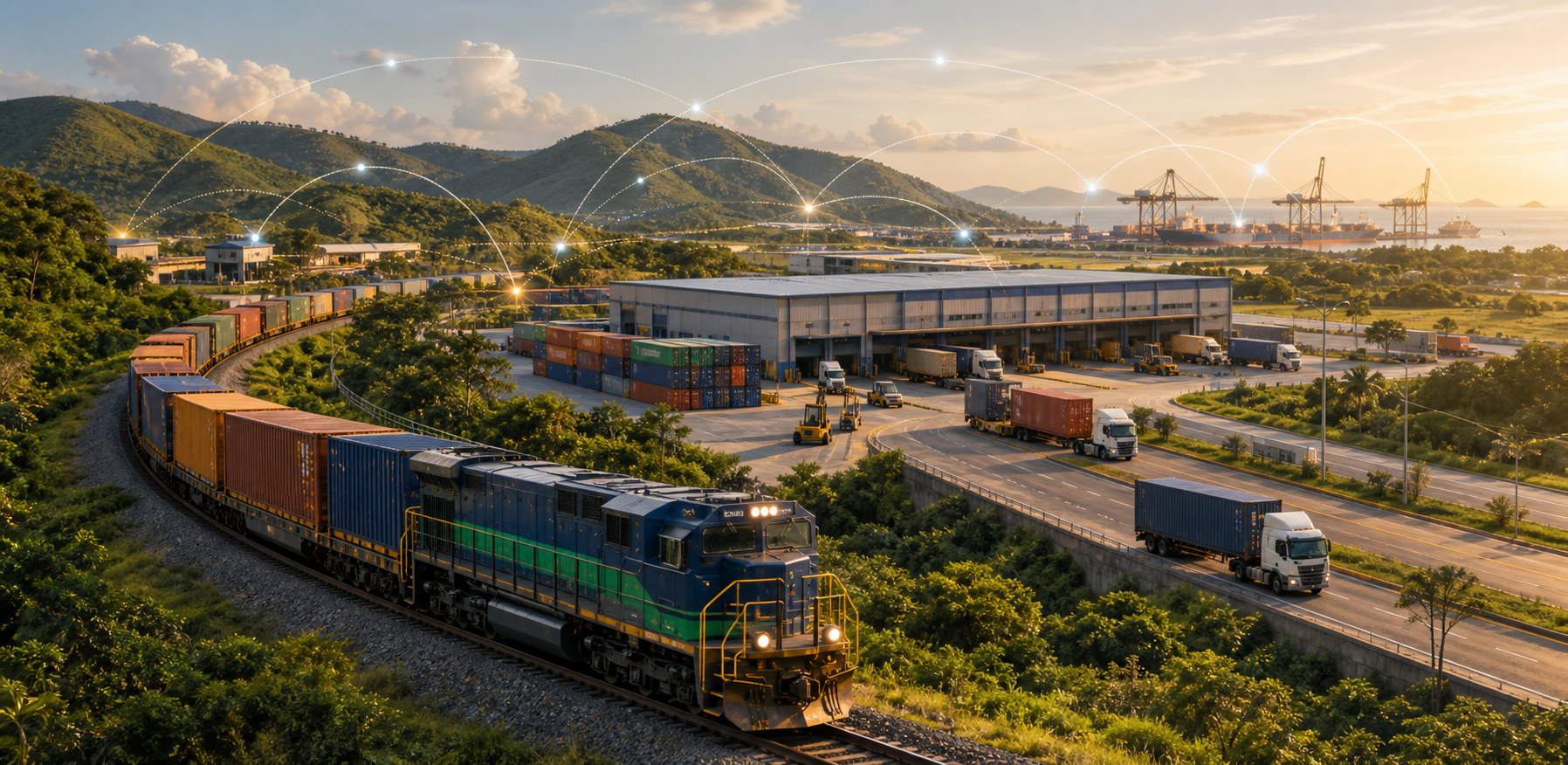
The more far-reaching significance lies in the fact that the Tianjin freight forwarding platform is building a digital logistics ecosystem. The platform is not merely a single enterprise's digital tool but a collaboration platform connecting freight forwarders, shippers, shipping lines, ports, customs, insurance, and other participants.
Through the platform, all parties can collaborate efficiently under unified data standards and collaborative workflows. Taking export cargo as an example: the freight forwarder submits customs declaration materials through the platform, and the customs system receives and processes them in real time. Once cargo is released, the terminal system automatically receives loading instructions. After the vessel berths, loading operations are fed back to freight forwarders and shippers in real time. The entire process is tightly interlocked, with information flowing seamlessly and collaboration efficiency greatly improved.
The launch of the Tianjin freight forwarding platform provides an important lever for traditional freight forwarding enterprises' digital transformation. For a long time, large numbers of small and medium-sized freight forwarding enterprises have suffered from weak digital foundations, insufficient system investment, and a lack of talent reserves, placing them at a disadvantage in industry competition.
The Tianjin freight forwarding platform adopted a lightweight, cloud-based design philosophy. Freight forwarding enterprises need not invest large amounts of capital in building their own information systems — they simply register for a platform account and connect to platform services to enjoy the benefits of digitalization. The platform's SaaS (Software as a Service) model has greatly lowered the barrier to digital transformation, allowing small and medium-sized freight forwarding enterprises to compete on the same starting line as large ones.
During the platform's trial operation period, a batch of freight forwarding enterprises took the lead in trying it out and achieved positive results. A responsible person from a Tianjin international freight forwarding company stated: "Our company is not very large, and we had limited investment in information system construction in the past. A lot of work was done manually. After accessing the Tianjin freight forwarding platform, our business processing efficiency improved significantly and customer satisfaction also noticeably increased. What surprised us most was that the platform's blockchain traceability function helped us win trust orders from several major clients."
Another freight forwarding enterprise noted that the platform's intelligent matching function brought them new business opportunities. The platform recommends matching cargo information based on the freight forwarding enterprise's service specialties, historical performance, and customer reviews, helping enterprises expand their customer channels.
The Tianjin freight forwarding platform was built using a microservices architecture and cloud-native technology, featuring high availability, high elasticity, and ease of scaling. The platform is deployed on the Tianjin Port proprietary cloud platform, fully leveraging the elastic computing power and resource pooling advantages of cloud computing to handle high-concurrency access during peak business periods with ease.
In data processing, the platform introduced big data and artificial intelligence technologies, achieving advanced functions such as intelligent analysis, intelligent early warning, and intelligent recommendation. For example, the platform can predict terminal operation peak periods based on historical data, providing freight forwarding enterprises with optimal container gathering time recommendations. It can also provide decision support for vessel scheduling based on weather and sea condition data.
Particularly worth mentioning is that the platform adopts a distributed storage and multi-backup strategy for data storage. All business data is synchronized to multiple physical nodes in real time, preventing data loss risks caused by single-point failures. The platform has also passed the National Level Protection Level3 certification, reaching a high standard of security performance.
The launch of the Tianjin freight forwarding platform is of significant importance for promoting industry standardization. The standards established by the platform in areas such as data interfaces, document formats, and process specifications are expected to become industry reference standards, promoting interoperability between different systems.
A responsible person from the Tianjin Municipal Transportation Commission stated at the platform launch ceremony that the Tianjin freight forwarding platform is an important achievement of Tianjin's advancement of "Smart Port" construction. In the future, experience will be summarized and gradually promoted to enhance the digital level of the freight forwarding industry across the city and even the Beijing-Tianjin-Hebei region.
According to the platform operator, the Tianjin freight forwarding platform will continuously proceed with function iteration and optimization. The next-phase upgrade plan includes: introducing large language model technology to build an intelligent logistics assistant; developing multimodal transport integrated service functions to achieve intelligent connection of road, rail, and sea transport; and expanding cross-border e-commerce logistics service modules to provide more convenient logistics solutions for cross-border trade.
Additionally, the platform will also explore interconnectivity with the Xiong'an New Area logistics system and the Beijing-Tianjin-Hebei logistics information platform, promoting integrated regional logistics information development and supporting the implementation of the Beijing-Tianjin-Hebei coordinated development strategy.
The launch of the Tianjin freight forwarding platform is a milestone event in Tianjin's advancement of digital transformation in the international logistics industry. Building on data sharing, featuring blockchain traceability, and highlighted by full-chain visualization, the platform provides powerful digital tools for freight forwarding enterprises and a quality service experience for import-export customers. Looking ahead, as more innovative functions are launched and wider promotion is achieved, the Tianjin freight forwarding platform is expected to become an important force driving digital upgrading in China's international logistics industry, contributing strength to building a more efficient, intelligent, and transparent modern logistics system.





China——Brazil Trajectory Tracking



+86 532-85066033/34






 中文简体
中文简体 ENGLISH
