Causes and Current Status of the Canal Crisis
The Panama Canal stands as one of the world's most critical international trade corridors, connecting the Pacific and Atlantic Oceans, with annual transit cargo volume accounting for approximately 6% of total global maritime trade. In the first half of 2026, the canal's transit capacity faced severe challenges: sustained drought conditions drove the water level of Gatun Lake to its lowest point in nearly seven decades, vessel draft restrictions were repeatedly tightened, and a large number of container ships were forced to transit with reduced loads, resulting in a significant decline in transit efficiency.
Currently, the daily number of vessels transiting the Panama Canal has dropped from the previous 35 ships per day to fewer than 25, with average waiting times extending from the typical 1-2 days to 5-8 days, and some ultra-large container ships waiting even longer than two weeks. The canal authority has adjusted vessel draft restrictions multiple times, and currently, large Post-Panamax vessels have been forced to reduce their actual cargo capacity by approximately 20% to 30%, directly increasing the per-unit shipping costs for shippers.
The deeper issue lies in the long-term trajectory of climate change. The Panama Canal's dependence on Gatun Lake's freshwater levels renders it highly vulnerable during extreme climate years. The 2026 drought is not an isolated event but rather a manifestation of regional climate abnormalities. For customers highly dependent on the Panama Canal on Central America-to-U.S. trade routes, the stability of this critical infrastructure is facing fundamental challenges.
Direct Impact on Chinese Import and Export Enterprises
The Panama Canal transit obstruction has multidimensional and far-reaching effects on Chinese foreign trade enterprises. As the world's largest goods trading nation, the U.S.-China trade route is one of the most important foreign trade channels, and the Panama Canal is a mandatory passage for routes from China to the U.S. East Coast and from China to the East Coast of South America.
Significant Rise in Logistics Costs
Extended vessel waiting times directly drive up charter costs. Current daily charter rates for container ships have risen more than 40% compared to the same period in 2025. Combined with the per-unit cost increase from reduced-load transits, the comprehensive shipping cost per TEU has increased by 25% to 35%. For low-value-added commodity trades, this cost increment has approached the margin of profitability.
Increased Supply Chain Lead Time Uncertainty
Under traditional maritime shipping modes, transit time from China to the U.S. East Coast is approximately 25-30 days. Currently, due to the canal bottleneck, transit time volatility has significantly increased, with actual port arrival times for some cargo potentially extending to 35-40 days or even longer. For time-sensitive e-commerce goods, production raw materials, and seasonal merchandise, this uncertainty poses major challenges for inventory management.
Route Structure Adjustment Pressure
Faced with canal transit constraints, some shippers have begun shifting to alternative routes. Although the Suez Canal route involves a longer voyage, its stable transit capacity has made it a new choice for some high-value-added cargo. Additionally, international logistics channels between China and the U.S. are diversifying, including multimodal routes via Canadian ports and supplementary air freight options.
Deep Logic: Why the Canal Bottleneck Continues to Ferment
The Panama Canal navigation crisis is not merely a weather issue; it reflects the systemic risk of highly concentrated global trade corridors.
From the supply-demand structure, approximately 70% of the global container fleet has already exceeded the Panama Canal's maximum transit restriction (Panamax vessel size limit), and the new generation of ultra-large container ships (ULCC) cannot use the canal at all. This means there is a structural mismatch between global trade growth and the canal's transit capacity.
From a climate risk perspective, the Panama Canal's capacity bottleneck problem exhibits long-term trends. Intensifying El Niño phenomena have altered precipitation patterns in the Central American region, making freshwater supply uncertainty a permanent condition rather than an exception. This means shippers must incorporate canal risk into routine shipping cost optimization considerations.
From a geopolitical perspective, the sensitivity of Panama Canal control has always existed. Amid U.S.-China trade friction, the strategic security of shipping channels has garnered increasing attention. This further drives Chinese enterprises to reassess route planning and freight forwarding service strategies.
Response Strategies for Freight Forwarding Enterprises
Faced with the Panama Canal navigation crisis, the value of professional freight forwarding service enterprises is fully demonstrated. An experienced international logistics service provider can offer enterprises the following critical support:
1. Rapid Route Plan Reconfiguration
Quality freight forwarders possess the capability to track global route dynamics in real time, enabling them to swiftly recommend alternative routes for customers when canal congestion intensifies. Whether redirecting to the Suez Canal route or adjusting to Canadian port transshipment, professional freight forwarding service teams can comprehensively weigh transit time, cost, and risk to customize optimal solutions for customers.
2. Flexible Utilization of Freight Rate Windows
Increased freight rate market volatility presents both opportunities and risks. Professional freight forwarders, through deep collaboration with mainstream shipping companies, can forecast freight rate trends and lock in favorable rates during market corrections, helping customers achieve shipping cost optimization. The flexibility of freight forwarding pricing is particularly critical during periods of market volatility.
3. Multimodal Transportation Solution Design
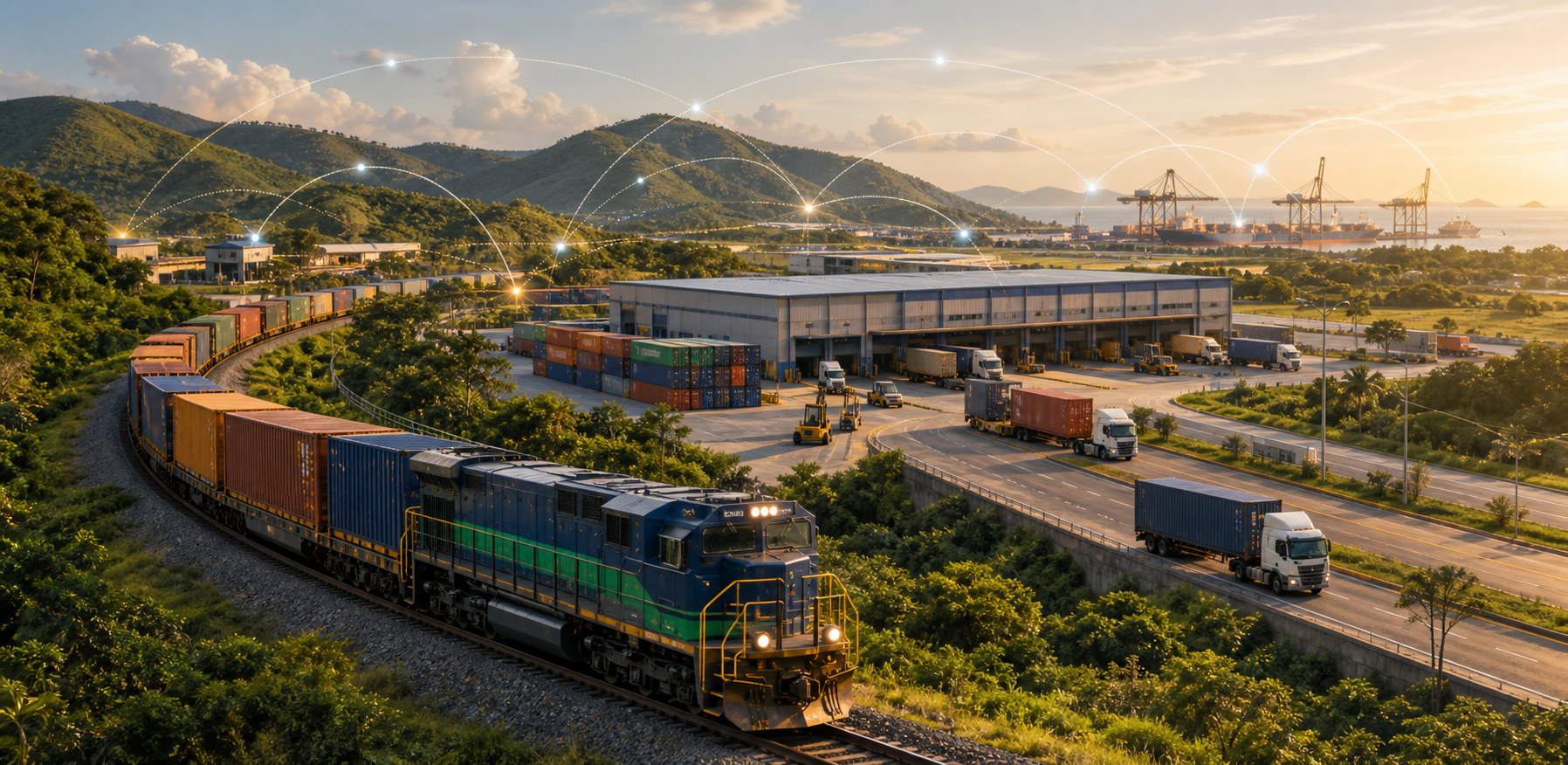
When a single maritime channel is constrained, freight forwarding enterprises can integrate railway, road, and maritime resources to design composite multimodal transportation solutions. For example, shipping from Chinese ports to the U.S. West Coast, then distributing eastward via railway to the East Coast—while total costs are similar, transit times are more stable and risks are lower.
4. Coordinated Inventory and Logistics Management
For large import-export enterprises, freight forwarding enterprises can also assist in optimizing overseas warehouse布局, positioning partial inventory in bonded warehouses in Mexico or Canada to address shipping uncertainty during canal bottleneck periods. This inventory pre-positioning strategy requires professional international logistics network support, which is precisely the core competitive advantage of large freight forwarding service enterprises.
Industry Impact and Market Structure Changes
The Panama Canal crisis has accelerated the reshaping of the global international logistics landscape. The strategic importance of the Suez Canal route continues to rise, the strategic value of China-Europe block trains remains prominent, and the North American railway multimodal transportation market is embracing new development opportunities.
For the freight forwarding industry, this round of crisis tests enterprises' service capabilities and resource integration capabilities under extreme market conditions. Enterprises that can maintain service stability and respond quickly to customer needs during the crisis will earn greater customer trust and market reputation.
From the maritime market structure perspective, the canal bottleneck will further slow the trend toward vessel enlargement. More shipping companies may reassess their newbuilding size strategies to maintain route flexibility.
Trends and Outlook
Looking ahead to the second half of 2026, Panama Canal transit conditions remain highly uncertain. If La Niña phenomena bring increased precipitation to the region, canal capacity may recover阶段性ly; however, from a medium-to-long-term perspective, the coexistence of climate risk and structural bottlenecks means the reliability of the canal corridor is no longer what it once was.
For Chinese shippers, building a more resilient supply chain system has become urgent. This includes: strengthening diversified route planning to reduce dependence on single corridors; establishing long-term strategic cooperation with quality freight forwarding service enterprises; creating routine shipping cost optimization mechanisms; and deploying more flexible inventory strategies in key markets.
Freight forwarding enterprises with global network coverage and digital capabilities will play an increasingly critical role in helping shippers navigate supply chain changes. Amid crisis, the value of quality freight forwarding services will be redefined—not merely as intermediaries, but as essential pillars of enterprise supply chain resilience.




China——Brazil Trajectory Tracking


+86 532-85066033/34






 中文简体
中文简体 ENGLISH
