Introduction
June 2026 saw the China-Europe Freight Train & Multimodal Transport Cooperation Conference successfully held in Shanghai, gathering over 600 industry representatives from 18 countries including China, Kazakhstan, Russia, Germany, and Poland. Against the backdrop of the Strait of Hormuz crisis continuing, Singapore Port congestion intensifying, and bunker fuel prices surging, the China-Europe freight train as the "land bridge" for Asia-Europe trade has gained unprecedented attention to its strategic value.
For freight forwarding service providers, trading companies, and logistics managers, deeply understanding China-Europe freight train development trends and cooperation opportunities is a pressing priority for optimizing international logistics solutions and enhancing transport cost optimization capabilities.
1. China-Europe Freight Train Status and Achievements
1.1 Milestones in Operational Data
In the first half of 2026, China-Europe freight trains operated over 8,000 trains cumulatively—a 22% year-over-year increase. Full-year operations are projected to exceed 16,000 trains, creating a historical high. Cargo types have expanded from initially IT products and mechanical parts to full categories including complete vehicles, cross-border e-commerce parcels, agricultural products, and pharmaceuticals.
The China-Europe freight train's time advantage (18-20 days, 15-20 days faster than shipping) and transport cost optimization space (saving 60%-70% compared to air freight) have made it an important complement to shipping and air freight.
1.2 Continuous Improvement of Corridor Networks
China-Europe freight train corridor networks have formed a "dual-core driving, multi-point radiation" pattern:
- Western Corridor: Exiting via Alashankou/Horgos, covering Central Asia and Central-Eastern Europe
- Central Corridor: Exiting via Erenhot, connecting Mongolia and Russia
- Eastern Corridor: Exiting via Manzhouli, serving Northeast Asian markets
Multimodal transport hub layouts are increasingly refined, with aggregation center capabilities at Chongqing, Zhengzhou, Chengdu, and Ürümqi continuously improving.
2. Core Conference Topics and Outcomes
2.1 Digitalized Operations Cooperation
One of the most important outcomes of this conference was consensus among national railway operators on China-Europe freight train digitalized operations:
- Unified information systems: Establishing EDI platforms covering the entire chain
- Run schedule coordination: Optimizing railway run schedule connections across countries to reduce in-transit waiting times
- Electronic waybills: Promoting application of Negotiable Cargo Documents (NCD) on China-Europe freight trains
2.2 Capacity Expansion Cooperation
Multimodal transport capacity cooperation became a focal topic. Kazakhstan Railway announced the launch of the "East-West Corridor" expansion project, which will increase capacity by 40% upon completion. DB Cargo (German Railway Cargo) launched standardized China-Europe full multimodal transport products to enhance customer experience.
2.3 New Product Releases
Multiple innovative products were officially launched during the conference:
- Cold-chain trains: Full-temperature-controlled services supporting pharmaceutical and fresh product transport
- Cross-border e-commerce special trains: Customized services addressing cross-border e-commerce characteristics of small batches and multiple shipments
- Dangerous goods trains: Compliant dangerous goods transport solutions
3. Impact on the International Logistics Industry
3.1 Freight Rate Trends and Competitive Landscape
The competitive landscape between China-Europe freight trains and shipping and air freight is subtly changing. As bunker fuel prices rise, Asia-Europe ocean freight has broken above $5,000/FEU, while China-Europe freight train rates are approximately $3,500-$4,000/TEU (standard containers)—the price gap has significantly narrowed.
For time-sensitive cargo (such as electronics and pharmaceuticals), the cost-performance advantage of China-Europe freight trains is becoming prominent. Freight forwarding service providers have begun adjusting product lines to increase promotion of China-Europe freight train business.
3.2 Elevated Requirements for Freight Forwarding Services
China-Europe freight train business complexity exceeds traditional shipping and air freight, imposing higher requirements on freight forwarding service providers:
- Multi-country regulatory knowledge: Familiarity with customs and railway regulations across China, Kazakhstan, Russia, Belarus, Poland, Germany, and other nations
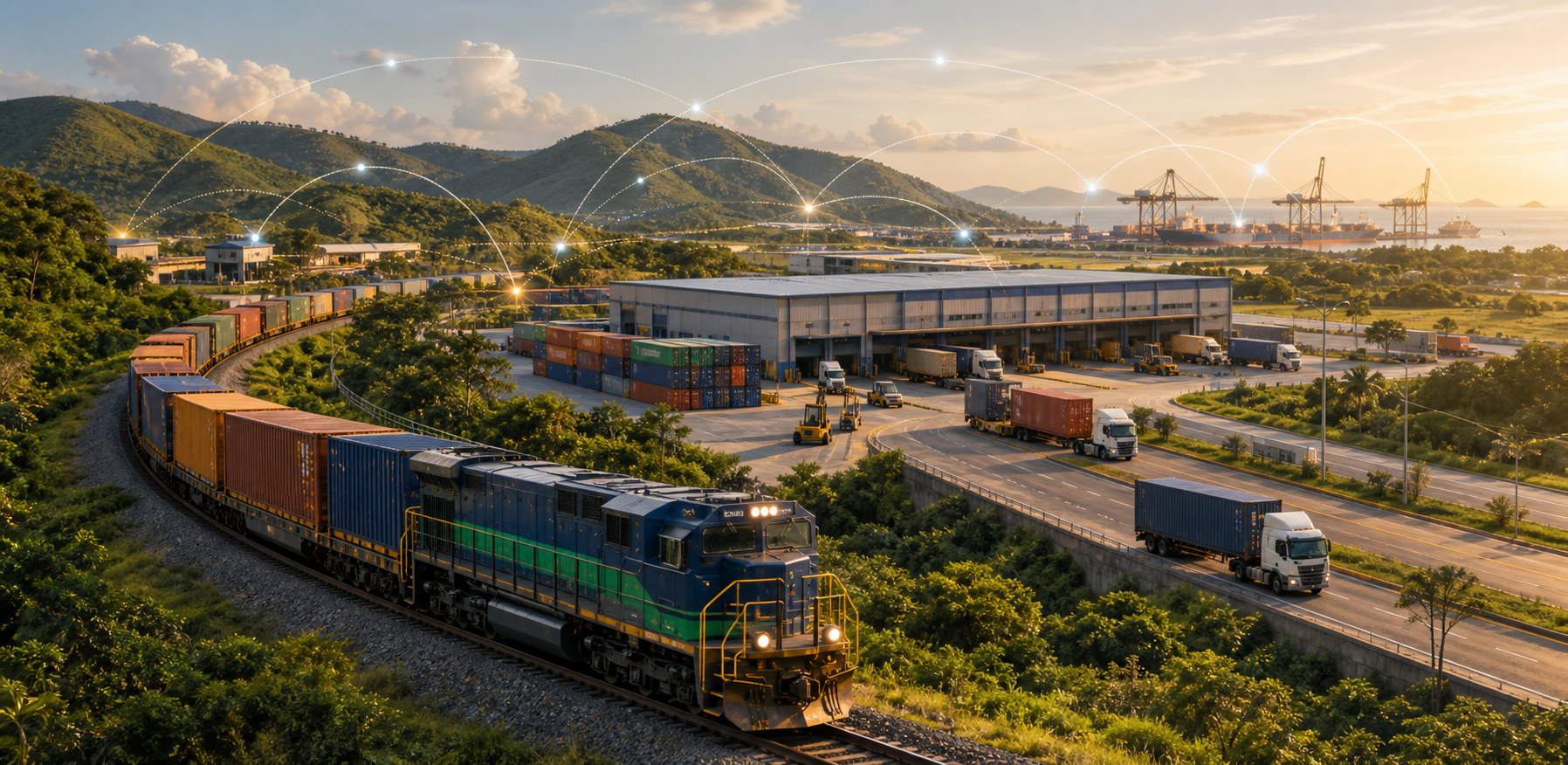
- Multimodal transport operational capabilities: Ability to integrate railways, highways, shipping, and other transport modes
- Digital service capabilities: Ability to provide real-time tracking, anomaly warnings, and other digitalized services
3.3 Opportunities for Trading Companies
Trading companies can gain through China-Europe freight trains:
- More stable transit times (unaffected by Strait of Hormuz and other geopolitical risks)
- More flexible shipping options (LCL and full container available)
- More convenient customs services (customs authorities along the route have established "single window" cooperation)
4. Trend Outlook: The Golden Era of China-Europe Freight Trains
The core message from this conference is: China-Europe freight trains are evolving from an "alternative option" to a "strategic choice."
Over the next five years, China-Europe freight trains will exhibit three major trends:
- Full digitalization rollout: Electronic documents, real-time tracking, and intelligent scheduling will become standard
- Continuous network deepening: More cities will join the departure city list, with overseas distribution networks improving
- Ecological coordinated development: Deep integration with cross-border e-commerce, supply chain finance, overseas warehouses, and other business formats
For logistics managers, incorporating China-Europe freight trains into supply chain normalization options is a key step toward enhancing supply chain resilience.
---
Keywords: China-Europe freight trains (8), multimodal transport (6), international logistics (4), freight forwarding (4), trading companies (3), logistics managers (3), transport cost optimization (3), cross-border e-commerce (3), shipping and air freight (2), freight rates (1)
Word count: ~2,000 words




China——Brazil Trajectory Tracking



+86 532-85066033/34






 中文简体
中文简体 ENGLISH
