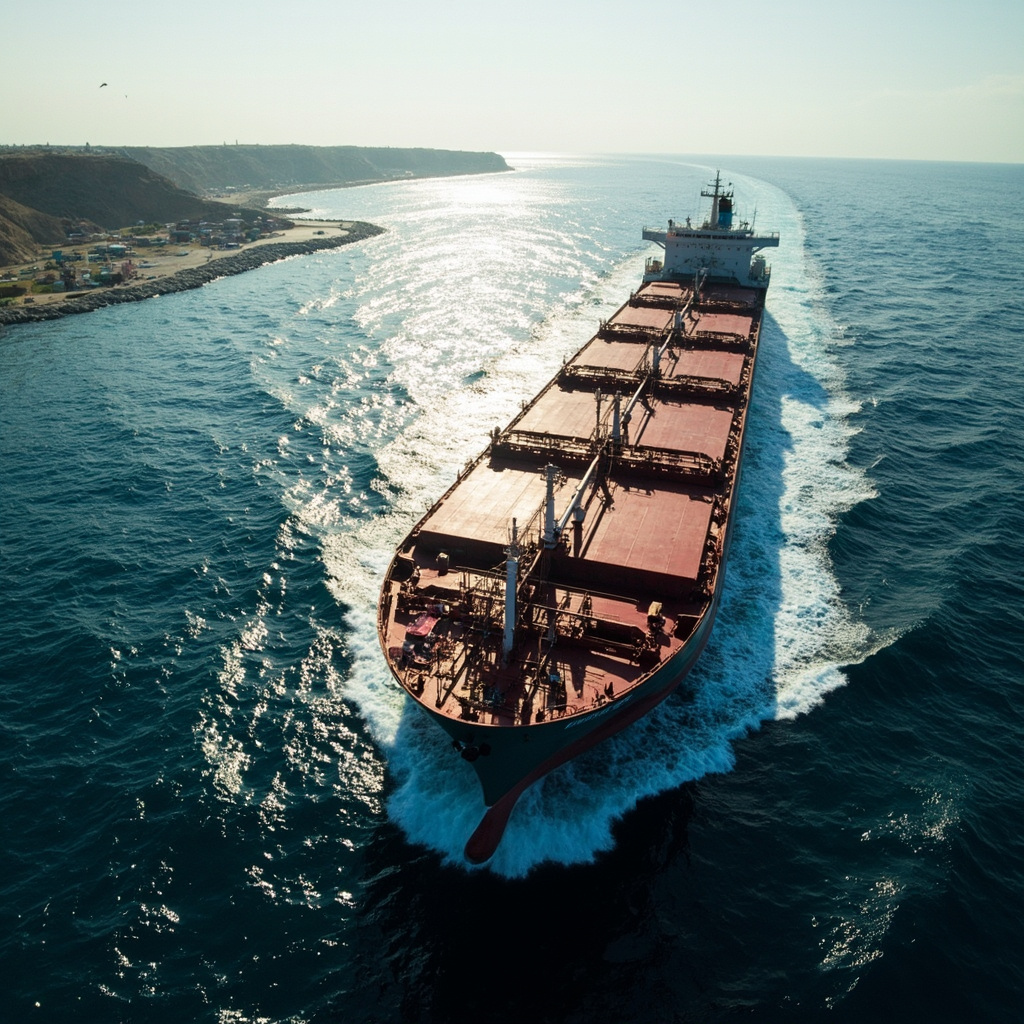
In mid-May 2026, geopolitical risk in the Middle East sharply escalated, once again tightening the nerves of the global energy market. Britain and France led more than 40 nations in urgent London consultations on the security situation in the Strait of Hormuz. Israel threatened possible resumption of military strikes against Iran in the near term, while Iran responded that it does not fear force and will launch a full-scale counterattack if necessary. For a time, the Strait of Hormuz — the world's most critical oil transportation waterway — once again found itself at the center of the storm.
Against this backdrop, WTI crude oil prices returned to above $101 per barrel, with Brent crude stabilizing around $105 per barrel. For the international logistics industry, rising oil prices mean the unavoidable reality of increased transportation costs. How to control logistics costs under oil price shocks has become the most pressing concern for freight forwarding companies, foreign trade companies, and import-export enterprises.
This article combines the current Hormuz situation to provide logistics managers and freight forwarding professionals with practical cost control strategies.
The Strait of Hormuz is located between Iran and Oman, serving as the sole waterway connecting the Persian Gulf to the Indian Ocean. Approximately 20% of the world's oil supply passes through this strait, including virtually all exported crude oil from major producing nations such as Saudi Arabia, Iraq, Kuwait, and the United Arab Emirates.
The significance of the Strait of Hormuz to international logistics is reflected in three dimensions:
When the Hormuz situation heats up, rising oil prices are only the first step; the subsequent across-the-board increases in freight rates, war risk insurance, and fuel surcharges mean the entire international logistics supply chain's cost structure will be impacted.
Many companies only see rising oil prices without understanding how they progressively transmit to logistics costs. Here are the main cost transmission pathways:
Shipping fuel (VLSFO) is one of the largest operating costs for shipping companies, typically accounting for 30%–50% of route freight rates. For every 10% increase in oil prices, ocean freight rates rise by approximately 3%–5%. At the current Brent crude price of $105 per barrel, fuel costs have risen substantially compared to the 2025 average.
The Strait of Hormuz is regarded by the insurance industry as a high-risk waterway. When tensions escalate, insurance companies impose additional war risk surcharges. Data from May 2026 shows that war risk surcharges for oil tankers transiting the Strait of Hormuz have reached a multi-year high, and this cost is ultimately borne by cargo owners.
If actual passage through the Strait of Hormuz becomes restricted, shipping companies must reroute via the Cape of Good Hope, substantially extending transit times (adding approximately 10–14 days per journey) and fuel consumption, with freight rate increases potentially reaching 2–3 times the normal level.
Extended transit times mean increased in-transit inventory, slower capital turnover, and rising warehousing demand across all supply chain stages. These hidden costs are often underestimated but become particularly pronounced when oil prices are high.
Professional freight forwarders are not powerless to pass on costs during oil price shocks — they can create value for clients in the following ways:
Experienced freight forwarders should proactively plan alternative routes for clients. For example:
| Route | Via Hormuz | Around Cape of Good Hope | Notes |
|-------|-----------|------------------------|-------|
| Persian Gulf → China | ✅ Primary | ✅ Alternative | Reroute early when tensions rise |
| Persian Gulf → Europe | ✅ Primary | ✅ Alternative | Notify rerouting >15 days in advance |
| Persian Gulf → US East Coast | ✅ Primary | ✅ Alternative | Transit time difference ~12 days |
Core freight forwarding value includes helping clients assess risks in advance and plan optimal routes, avoiding costly surcharges from forced last-minute rerouting.
For import-export companies and foreign trade enterprises with long-term transport needs, freight forwarders can assist clients in locking contract rates when freight rates are relatively low, or use financial instruments to hedge oil price volatility risks. Long-term relationships that professional freight forwarders have built with shipping companies can typically secure more stable freight rate terms for clients.
Although air freight is expensive, it can serve as a supplementary solution to ocean freight in urgent situations. For high-value, time-sensitive cargo, freight forwarders can help clients evaluate multimodal solutions such as sea-air or rail-sea combinations, finding the optimal balance between cost and transit time.
During oil price upswings, Less-than-Container Load (LCL) costs typically rise more than Full Container Load (FCL) cargo. Capable freight forwarders can help clients consolidate shipments, combining multiple small orders into full container loads, significantly reducing per-ton freight costs.
Geopolitical crises often trigger a "space-grabbing" effect. Booking space before peak seasons effectively avoids peak period surcharges. Freight forwarders should leverage professional forecasting abilities to remind clients to arrange shipping plans as early as possible.
As purchasers of freight forwarding services, foreign trade companies and logistics managers can also proactively take the following measures to reduce oil price shocks:
Companies are advised to formulate emergency logistics plans for oil price increase scenarios in advance, including: alternative supplier lists, confirmed alternative routes, and price adjustment clauses in contracts.
When oil prices are high, appropriately increasing safety stock levels and reducing "frequent small-order" shipping patterns can effectively lower per-unit logistics costs.
Renegotiate freight rate contracts with freight forwarders, striving to include fuel surcharge (FAS) linkage clauses or price adjustment caps to protect company interests during sharp oil price fluctuations.
Ensure cargo insurance covers geopolitical risks and war risks, avoiding coverage gaps during periods of heightened Hormuz tensions. Professional freight forwarders can provide relevant consulting services.
The current round of Hormuz tensions is superficially a May 2026突发事件, but from a longer-term perspective, Middle Eastern geopolitical risk exhibits常态化 characteristics. For the international logistics industry, this means:
Short-term (1–3 months): Oil prices and freight rates will remain elevated, and war risk surcharges are unlikely to decline. Import-export companies are advised to lock in freight rate contracts and arrange shipping plans ahead of schedule.
Medium-term (6–12 months): If regional tensions persist, routes rerouting around the Cape of Good Hope may gradually become normalized, driving a restructuring of the global shipping network. This will bring increased port infrastructure investments and the rise of new logistics hubs.
Long-term: Under pressure from the energy transition, crude oil demand growth will slow, but the Strait of Hormuz will remain the world's most critical oil transport corridor for the foreseeable future. Logistics companies should proactively layout diversified energy vessels and green shipping solutions to address sustained geopolitical risks and environmental compliance pressures.
For Chinese foreign trade companies, the current period also represents a window for adjusting logistics supply chain layouts — expanding energy import sources beyond the Middle East and building a more resilient international logistics network will be key to withstanding future similar shocks.
Rising Hormuz tensions are neither the first nor the last occurrence. Controlling logistics costs under oil price shocks is essentially a comprehensive test of information forecasting, plan flexibility, and supply chain resilience.
The value of professional freight forwarding companies lies precisely in helping clients find certainty within uncertainty — whether it is advance route planning, freight rate locking, or adjusting transport modes and optimizing cargo consolidation, all represent core value that freight forwarding services create for clients.
If you are troubled by logistics cost pressures caused by rising oil prices, welcome to collaborate with experienced freight forwarding companies to jointly develop response plans. In volatile markets, a professional logistics partner is the best cost defense line.
Keywords: freight forwarding services, international logistics, ocean and air transport, transport cost optimization, freight forwarding rates, Strait of Hormuz, oil prices, logistics costs, rising oil prices, shipping insurance




China——Brazil Trajectory Tracking



+86 532-85066033/34






 中文简体
中文简体 ENGLISH
