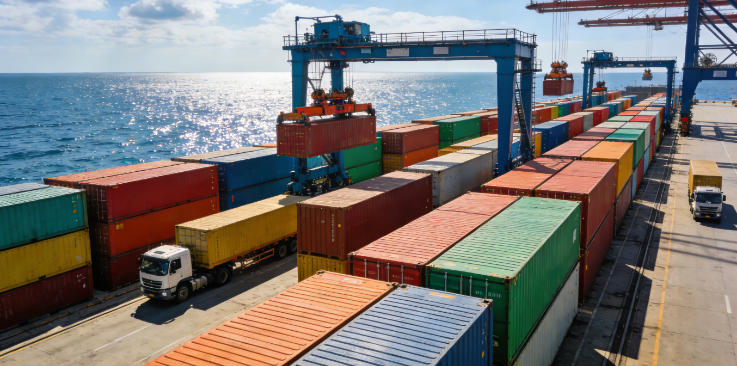
At five in the morning, the lights at Shenzhen Yantian Port have not completely dimmed, but veteran freight forwarder Li Ming has already begun his day's work in the study at home. On the left side of his screen are real-time fluctuations in global shipping data, while on the right are dashboards showing the supply chain health of three clients – this scene may reveal the fundamental change in the freight forwarding industry in 2026: freight forwarders are no longer just people arranging cargo space but are becoming living, breathing data nodes in the supply chain.
In 2026, technology is showing a subtle polarization. Standard operations are nearly fully automated, with shipping companies interfacing directly with customer systems, but this has actually unleashed the capability of freight forwarders to handle complexity. A recent case handled by Li Ming is quite representative: a batch of precision instruments needed to be transported from Suzhou to Stuttgart, with the client requesting that the vibration frequency throughout the journey not exceed 3Hz and the temperature control error to be within 0.5 degrees Celsius. The system can provide ten route options, but Li Ming supplemented key information with historical data: while option three is cheaper, it often encounters heavy waves in the strait during winter; a segment of the road in option seven is under construction, potentially leading to specific frequency vibrations. This experiential knowledge beyond publicly available data is becoming a new professional barrier for freight forwarders.
Even more disruptive is the evolution of data service models. A medium-sized freight forwarding company in Ningbo no longer charges based on container volume but provides customers with a "supply chain resilience index" subscription service. By analyzing logistics data from the past three years, they identify the seven most vulnerable nodes for each customer and design three-tier response plans for each node. When the Suez Canal is blocked again, the system automatically initiates Plan B and simultaneously sends different response suggestions to the customer's procurement, production, and sales departments. The role of freight forwarders has shifted from transport executors to the nervous system of the supply chain.
The industry ecosystem is silently undergoing a reconfiguration. The freight forwarding market in 2026 has a three-tier structure: at the base are platform companies that cover small and medium customers with standardized services; in the middle are specialized companies like where Li Ming works, deeply involved in specific industries or routes; at the top are the emerging "supply chain diagnostic agencies" transformed by seasoned freight forwarders, which do not handle physical goods but provide optimization solutions. What's intriguing is that these three tiers do not compete but form a symbiotic relationship – diagnostic agencies recommend execution partners, and platform companies channel technology tools to specialized firms.
Customer relations are being redefined. The logistics director of a household appliance company in Guangdong said, "Our freight forwarder is more like a supply chain consultant. Last time they suggested adjusting the arrival rhythm of our Mexico factory to coincide with the upgrade schedule of the robot system in the US warehouse. This single adjustment increased our turnover efficiency by 18%." This deep involvement in customer operations has shifted the value measurement standard of freight forwarders from "savings on freight costs" to "optimization of total supply chain costs."
Perhaps the most profound change is occurring in knowledge transfer. The traditional "master and apprentice" model is being replaced by "scenario simulation training systems." New employees no longer start with booking cargo but handle various emergencies in virtual systems: port strikes, sudden changes in customs policies, vessel breakdowns, and more. The value of the experienced mentor is reflected in designing these training scenarios and judging processing logic. Li Ming now spends eight hours a week refining the decision tree of the system, which he calls "turning thirty years of experience into reusable algorithms."
The core contradiction in the freight forwarding industry has become clear in 2026: the more advanced the technology, the more valuable the ability to handle exceptional situations; the more transparent the data, the rarer the professional ability to interpret the data; the more standardized the processes, the higher the value of customized solutions. When algorithms can handle 90% of routine transport, the real work of freight forwarders focuses on that 10% of exceptions – which happen to be the most fragile links in the customers' supply chains.
This industry is undergoing a silent transformation: from pipeline workers connecting point A to point B to sensitive nerve endings in the supply chain ecosystem. The value of freight forwarders no longer depends on how many containers they can move but on the extent to which they can perceive, alert, and mitigate uncertainties in the supply chain. As goods continue to flow globally, those who can transform transportation issues into business opportunities are rewriting the new definition of this ancient industry.




China——Brazil Trajectory Tracking


+86 532-85066033/34






 中文简体
中文简体 ENGLISH
