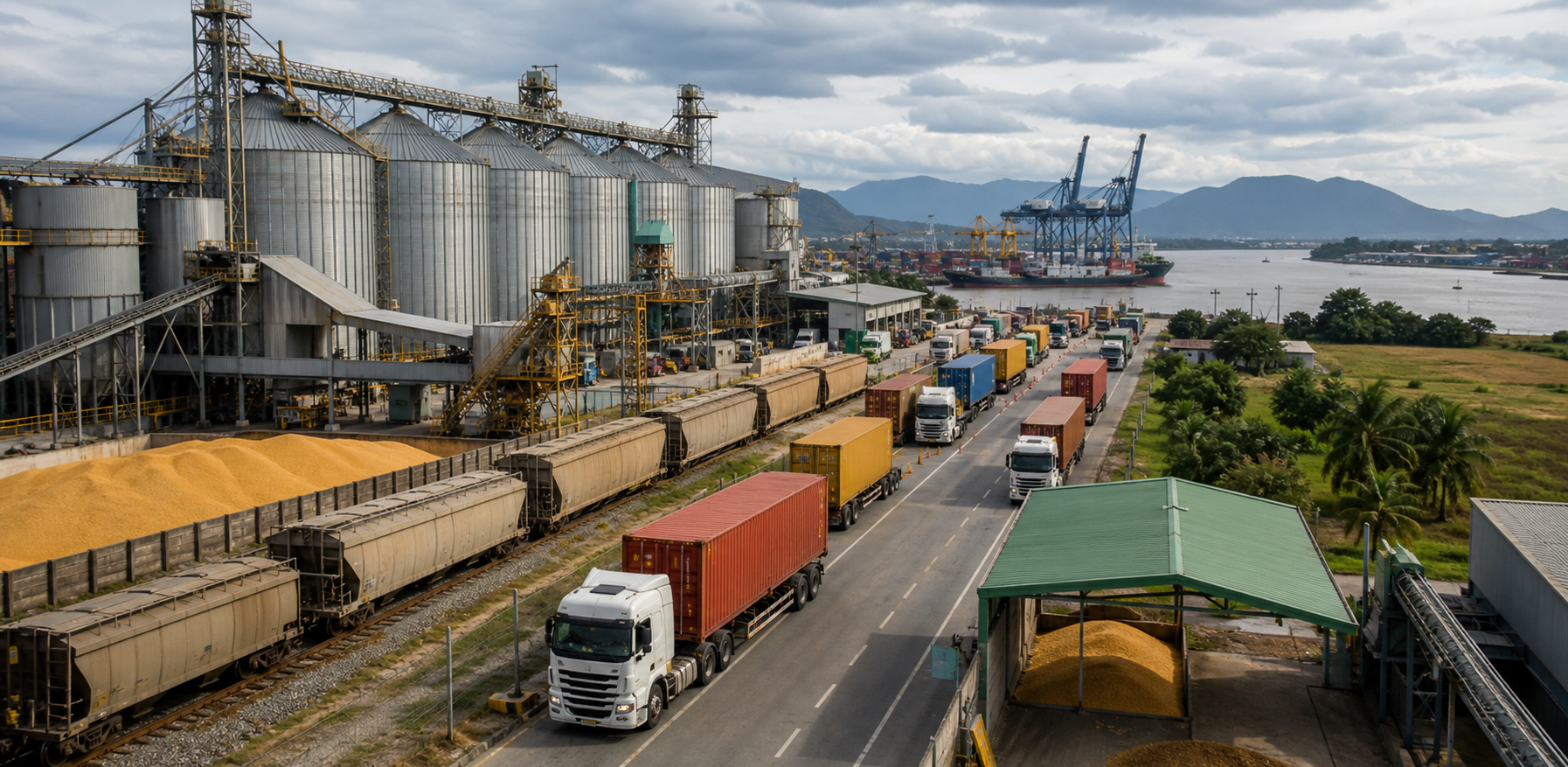
Brazil reported October exports plus imports of US$66.3 billion on November 9, a record. That figure measures trade value, not container availability or ocean rates on any particular lane. It combines different commodities, modes and directions, so it cannot tell a shipper whether a China-to-Brazil booking will cost more or be easier to secure.
Turn the headline into booking questions. What are the origin, discharge port, final destination, cargo-ready week and shipment mode? Ask a provider to check capacity, quotation validity and cargo restrictions for those conditions. If final packing is unfinished, label dimensions as estimates and set a date to confirm them.
Keep market observations separate by corridor and direction. An increase in Brazilian exports does not establish the same trend for imports. Even two Brazilian destinations can have different carrier options and inland costs; Chile needs its own check. Review the rates and service results on your actual lanes rather than applying a single national assumption.
Use the shipment's decision dates to manage preparation. Confirm when the factory can finish inspection and packing and when the buyer can receive. For FCL, match trucking and loading to the confirmed sailing. For LCL, verify the consolidation cutoff and the destination release arrangement. Strong trade activity is not a reason to bypass these checks.
When a backup route is needed, compare time, handling, destination readiness and total cost on matching terms. A lower sea rate or a closer port does not necessarily improve delivery. Record the plan and actual result, distinguishing market changes from a revised cargo quantity, added distribution or a new warehouse address.
Suppose a buyer adds two separate delivery groups after the first quote. Compare like-for-like market rates first and account for the added distribution separately. Record quote dates and real cargo conditions. In the next planning cycle, use your own factory readiness and receiving windows to allocate resources rather than adding the same arbitrary delay to every shipment.
Trade statistics are useful context for better questions, not a substitute for a booking confirmation. Base the Brazil freight decision on the cargo, the route and the services the provider can confirm for that particular shipment.




China——Brazil Trajectory Tracking



+86 532-85066033/34






 中文简体
 ENGLISH