Abstract
In 2026, Brazil's soybean export volume reached a historic peak, with Santos Port—the world's largest agricultural product export hub—facing unprecedented logistical pressure. According to the latest data from Brazil's Ministry of Agriculture, soybean cumulative exports from January to May 2026 reached 58 million metric tons, representing approximately 18% year-over-year growth, with Santos Port accounting for over 35% of total throughput. Amid sustained global grain demand growth, Brazil—already the world's largest soybean producer and exporter—has further solidified its position. However, port congestion, storage capacity saturation, and container shortages have emerged as critical challenges, creating new opportunities alongside obstacles for international logistics and freight forwarding service providers.
This article provides an in-depth analysis of the drivers behind Brazil's record soybean exports, the current logistics bottlenecks at Santos Port, and practical response strategies for freight forwarding companies and traders engaged in Brazilian soybean imports, helping clients optimize transportation costs and enhance supply chain efficiency.
Section 1: Brazil Soybean Export Data Review for 2026
1.1 Export Scale Reaches New Record
In 2026, Brazil's soybean production is projected to reach 165 million metric tons, ranking second globally only to the United States. Favorable climate conditions and expanded planting areas drove both per-unit yields and total output to their best levels in a decade. Mirroring the production growth, export volumes climbed in parallel—according to Brazil's Foreign Trade Secretariat (SECEX), soybean exports from January to May 2026 totaled 58.3 million metric tons, a 17.8% year-over-year increase; export value reached USD 28.5 billion, with an average FOB price of approximately USD 489 per metric ton.
Regarding export destinations, China remains Brazil's largest soybean buyer, accounting for approximately 72% of total Brazilian exports. The European Union follows at approximately 10%, Southeast Asia at 8%, and the Middle East at 5%. Chinese buyers' reliance on Brazilian soybeans continues to strengthen—partly because U.S. soybean supply has been unstable due to trade frictions and planting area fluctuations, and partly because Brazilian soybeans exhibit superior protein content and oil yield that better match the production requirements of Chinese crushing facilities.
1.2 Distinct Seasonal Fluctuation Patterns
Brazilian soybean exports exhibit pronounced seasonal characteristics, with the peak export season running from February to June each year. The seasonal complementarity with U.S. soybeans has created a global soybean trade "dual-peak" pattern. The 2026 export peak arrived earlier than in previous years, with March alone exceeding 12 million metric tons—this placed enormous short-term pressure on Santos Port, Paranaguá Port, and other major ports. Port berth waiting times extended from the normal 2 days to 5–7 days, with individual vessel waiting times exceeding 10 days.
This seasonal concentration of exports demands more from every link in the logistics chain—from inland transportation from producing regions to ports, and from ocean freight arrangements to buyer delivery. Delays at any node can trigger chain reactions, increasing transportation costs for importers. Therefore, rational logistics timing planning and selection of reliable freight forwarding partners are essential for importers seeking to control overall procurement costs.
Section 2: In-Depth Analysis of Santos Port Logistics Bottlenecks
2.1 Infrastructure Capacity Nearing Its Limit
Santos Port is Latin America's largest port, with annual cargo throughput exceeding 110 million metric tons, of which agricultural product exports account for over 80%. Serving as the sea gateway for São Paulo State's industrial corridor, Santos Port connects Brazil's Midwest soybean-producing regions with global markets. However, aging port infrastructure and the gap between design capacity and actual throughput were fully exposed during the 2026 export peak.
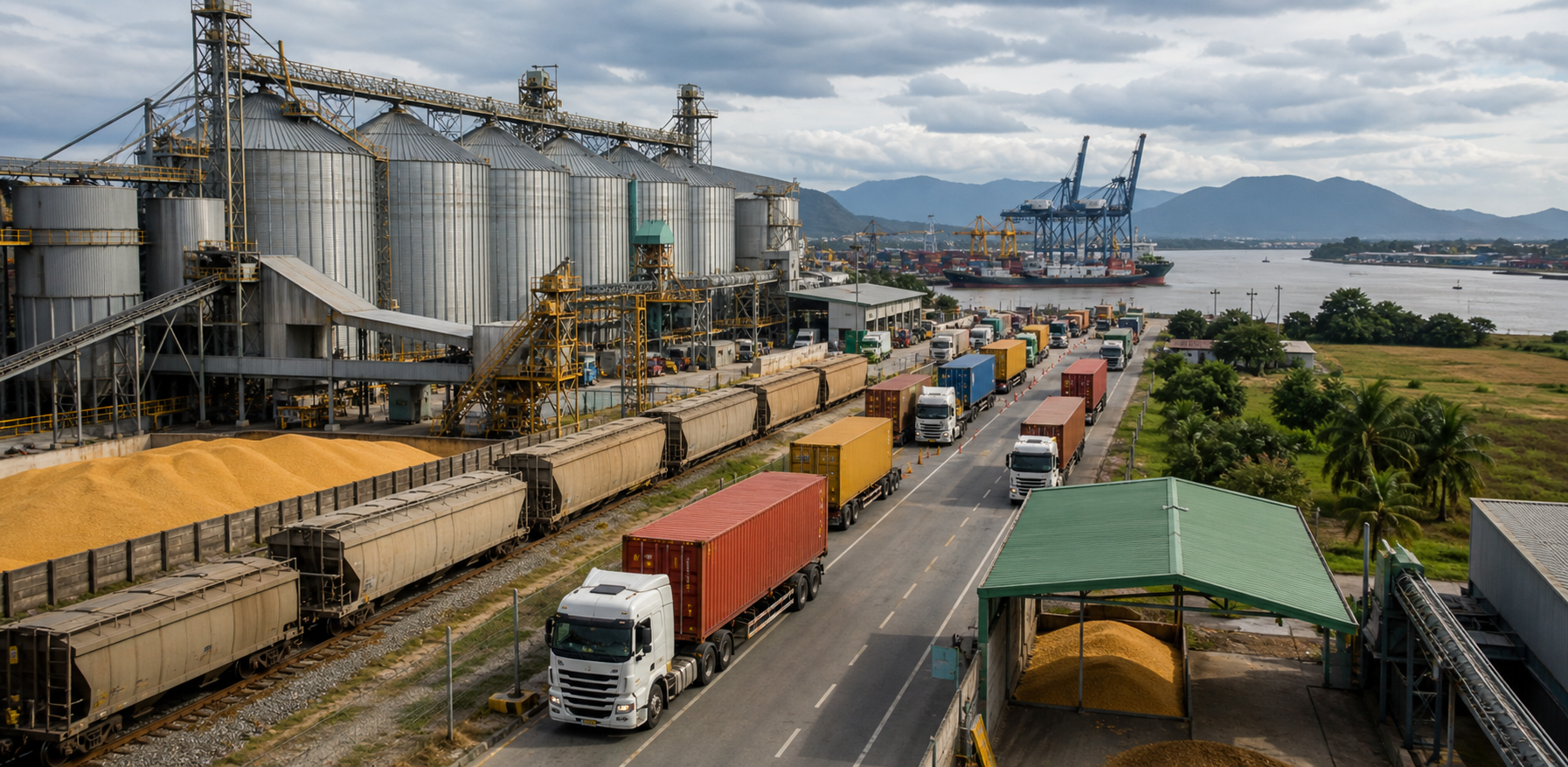
In March 2026, Santos Port's average daily cargo handling reached approximately 180,000 metric tons, exceeding the port's designed throughput capacity by 15%. Competition for berth resources between container and bulk cargo terminals was particularly intense—soybeans are primarily transported via bulk carriers, but container terminals remained busy handling imported industrial goods and exported meat products, increasing coordination difficulties between the two business types. Some soybean shipowners were forced to wait for berths or redirect to the adjacent Santos-Bacanga port area, further extending logistics transit times.
2.2 Inland Collection and Distribution System Under Pressure
Inland transportation from Brazil's Midwest soybean-producing regions (Mato Grosso, Goiás, South Mato Grosso) to Santos Port relies primarily on road transport (approximately 65%) and rail transport (approximately 30%). Road transport connects producing regions to ports via federal highway networks such as BR-364 and BR-267, with average transport distances of approximately 1,200 to 1,500 kilometers.
During the 2026 export peak, coinciding with the tail end of the Midwest rainy season, road transport efficiency was somewhat affected. Additionally, data from Brazil's National Transportation Agency (ANTP) shows that the national truck driver shortage rate reached approximately 12% in 2026, causing inland freight rates to rise阶段性. Using the route from Sorriso, Mato Grosso to Santos Port as an example, March 2026 quotes were approximately USD 145 per metric ton, representing a 22% increase from the beginning of the year, directly elevating soybean landed costs.
In rail transport, capacity on grain logistics dedicated railways—the Centro-Atlântica Railways and the Vitória-Minas Railway (EFVM)—is nearing saturation. Insufficient rail capacity forced some soybeans to shift to road transport, further intensifying road congestion and freight rate increases. This "last-mile" logistics bottleneck ultimately propagated to the ocean shipping segment, elevating transportation costs in international trade.
2.3 Storage Capacity and Berth Scheduling Challenges
Santos Port's total port warehouse capacity is approximately 4.5 million metric tons, but actual inventory demand during the 2026 export peak exceeded 5.2 million metric tons at peak, creating significant temporary storage pressure. Terminal operators had to activate emergency storage mechanisms, transferring some soybeans to off-port warehouses (such as logistics parks in suburban São Paulo), but this added secondary loading and unloading costs.
Regarding berth scheduling, Santos Port Authority (CODESP) introduced a digital berth management system (Sistema de Automação do Porto de Santos, SAPS) to improve berth allocation transparency. However, due to deviations between actual vessel arrival times and forecasted times (averaging approximately 1.5 days), the system still faces prediction accuracy challenges in actual operations. Some bulk carriers incurred demurrage and despatch charges due to berth waiting, costs ultimately borne by buyers or sellers, increasing importers' difficulty in controlling freight forwarding prices.
Section 3: Impact of Logistics Bottlenecks on Global Soybean Trade Patterns
3.1 Rising Transportation Costs and Supply Chain Restructuring
The direct consequence of Brazilian soybean export logistics bottlenecks is rising transportation costs. Using the Santos Port to Qingdao Port, China route via Panamax vessel as an example, March 2026 market quotes were approximately USD 52 per metric ton, representing approximately 28% increase year-over-year. Freight rate increases were driven by both fundamental supply and demand dynamics in the international shipping market and附加 costs from Brazilian port congestion.
For Chinese soybean importers, transportation costs account for approximately 8% to 12% of the Cost, Insurance and Freight (CIF) landed cost. Every USD 10/metric ton increase in freight raises landed costs by approximately 1% to 1.5%. Calculating based on 10 million metric tons of Brazilian soybean imports in 2026, freight increases resulted in additional costs of approximately USD 280 million. For Chinese soybean processing enterprises whose crushing margins are already thin, this is a non-negligible cost pressure.
3.2 Shifting Competitive Landscape and Weakening Buyer Bargaining Power
Logistics bottlenecks have also impacted the competitive dynamics of global soybean trade. In a seller-friendly market environment, Brazilian exporters hold stronger bargaining power in pricing and contract terms. In March 2026, the basis (premium/discount relative to CBOT futures) for Brazilian soybeans widened to 45–55 cents per bushel, the highest level in nearly three years, meaning importers need to pay higher spot premiums.
Meanwhile, some Chinese importers have begun reassessing their procurement strategies: diversifying into U.S. soybean purchases to spread single-source risk; signing longer-term cooperation agreements with Brazilian suppliers to lock in shipping capacity and pricing; and increasing direct investment in Brazilian producing regions (such as building inland purchasing stations and processing facilities) to reduce dependence on port logistics. These strategic adjustments will have profound long-term implications for future China-Brazil soybean trade logistics models.
Section 4: Value and Optimization Strategies of Freight Forwarding Services in Brazilian Soybean Exports
4.1 Core Role of Freight Forwarders in the Logistics Chain
In the complex logistics chain of Brazilian soybean exports, freight forwarding enterprises play a crucial role. From cargo pickup and export customs clearance to inland transportation coordination, port loading and unloading, ocean freight booking, and destination customs clearance, every segment of freight forwarding services directly affects cargo safety and timeliness. For Chinese importers, selecting a freight forwarding partner with local network advantages and operational experience in Brazil is key to ensuring supply chain stability.
Excellent freight forwarding enterprises can help importers realize the following value: providing real-time berth and storage information at Santos Port to help clients precisely grasp shipping timing; integrating inland transportation resources to coordinate alternative rail solutions when road capacity is tight, reducing transportation costs; leveraging scale advantages to negotiate more favorable ocean freight rates with shipowners, helping clients optimize freight forwarding expenses; and providing specialized temperature and humidity monitoring and moisture protection services for soybean transportation to ensure cargo quality remains undamaged during transit.
4.2 Practical Strategies for Transportation Cost Optimization
Targeting the specific logistics bottleneck situation during Brazil's 2026 soybean export peak, this article proposes the following transportation cost optimization strategies for importers and freight forwarding service enterprises:
Strategy 1: Flexibly Select Shipping Windows. Avoid the March–April export peak and schedule shipping for late May to June, when port pressure relatively eases and freight and port fee premiums are lower. Freight forwarding enterprises can develop "low-season priority, peak-season backup" shipping plans aligned with clients' demand rhythms.
Strategy 2: Diversify Export Ports. Beyond Santos Port, Brazil has multiple ports with soybean export capabilities, including Paranaguá Port, São Luís Port, and Ilhéus Port. Freight forwarding enterprises can assist clients in comparing freight cost differences and transit time performance across ports, selecting the most cost-effective shipping route. For example, Paranaguá Port's rail distance from Mato Grosso is approximately 200 kilometers shorter than Santos Port, saving approximately USD 8–10 per metric ton in inland freight.
Strategy 3: Leverage Flexible Combinations of LCL and Bulk Shipping. For importers with smaller procurement volumes, freight forwarding enterprise LCL (Less than Container Load) services can consolidate multiple small-lot shipments to reduce per-metric-ton transportation costs. For large-volume buyers procuring 50,000 metric tons or more, direct vessel chartering (CoA or own charter) offers better economies of scale.
Strategy 4: Lock in Shipping Space and Freight Rates in Advance. Before the export peak season arrives (recommended annually from December to January), importers can sign annual freight framework agreements with freight forwarding enterprises to lock in shipping capacity and preferential rates. 2026 market experience shows that clients who locked rates in advance saved approximately 15% to 20% in ocean freight costs compared to clients booking临时舱位 on short notice.
Strategy 5: Optimize Cargo Packaging and Loading Processes. Soybeans face risks of moisture absorption and quality deterioration during ocean transport. Freight forwarding enterprises should guide clients in adopting appropriate packaging materials (such as waterproof linings and desiccants) and loading techniques (such as layered stacking and breathable ventilation) to reduce cargo damage claim probabilities, thereby lowering hidden transportation costs.
Section 5: Industry Trends and Forward-Looking Predictions
5.1 Brazil's Logistics Infrastructure Upgrade Plan
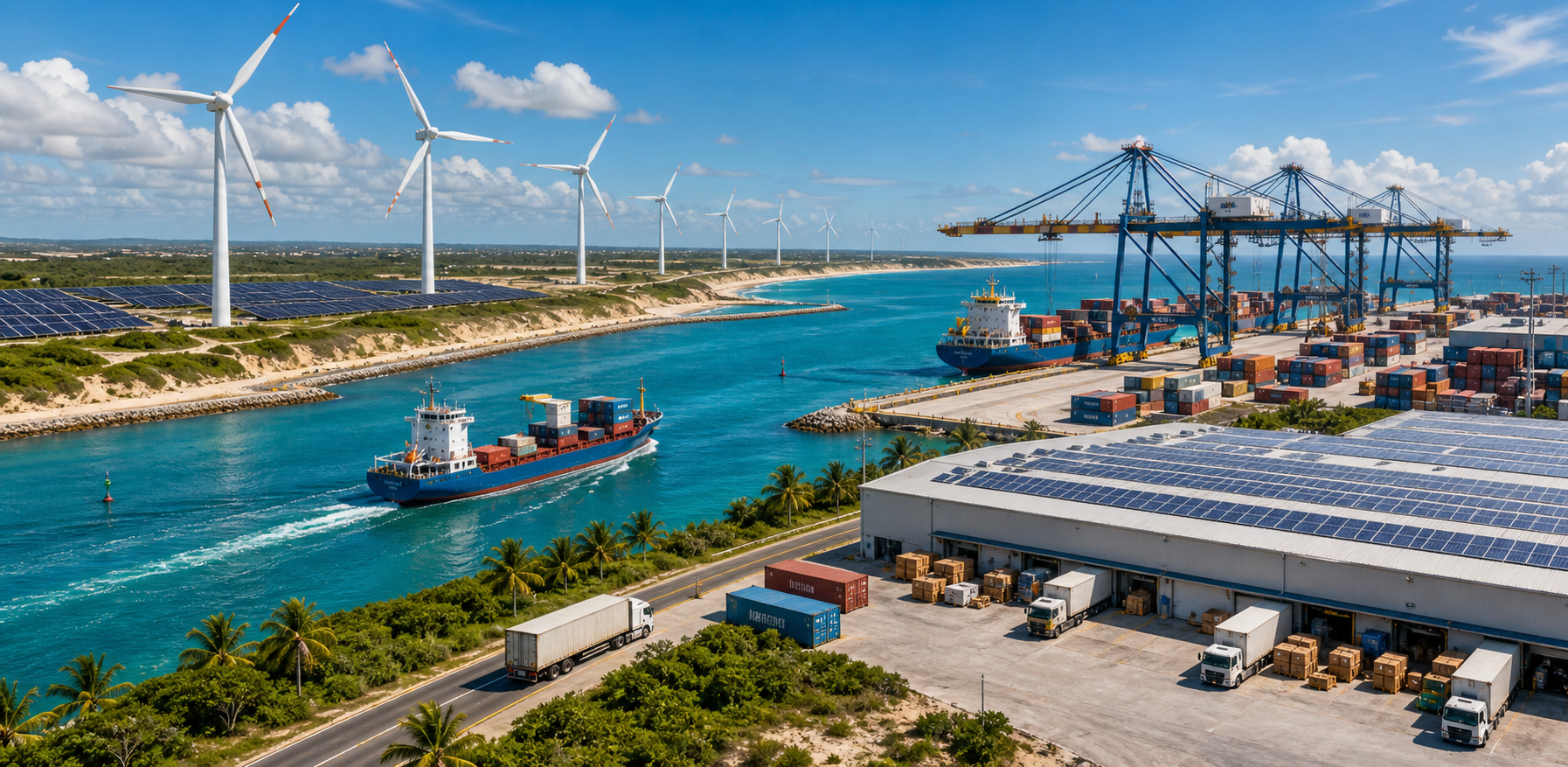
The Brazilian government has recognized the severity of agricultural export logistics bottlenecks and plans to invest approximately 42 billion reais (approximately USD 7.5 billion) in port and inland logistics infrastructure upgrades from 2026 to 2030. Among these, Santos Port's deep-water berth construction project (allowing larger-tonnage bulk carriers to berth directly) and Midwest rail capacity expansion project are the most critical. It is estimated that by 2028, Santos Port's soybean export throughput capacity will increase by approximately 25%, and the road-rail intermodal ratio will rise from the current approximately 30% to 40%, effectively alleviating current logistics bottlenecks.
5.2 Deep Integration of Digitalization and Intelligent Logistics
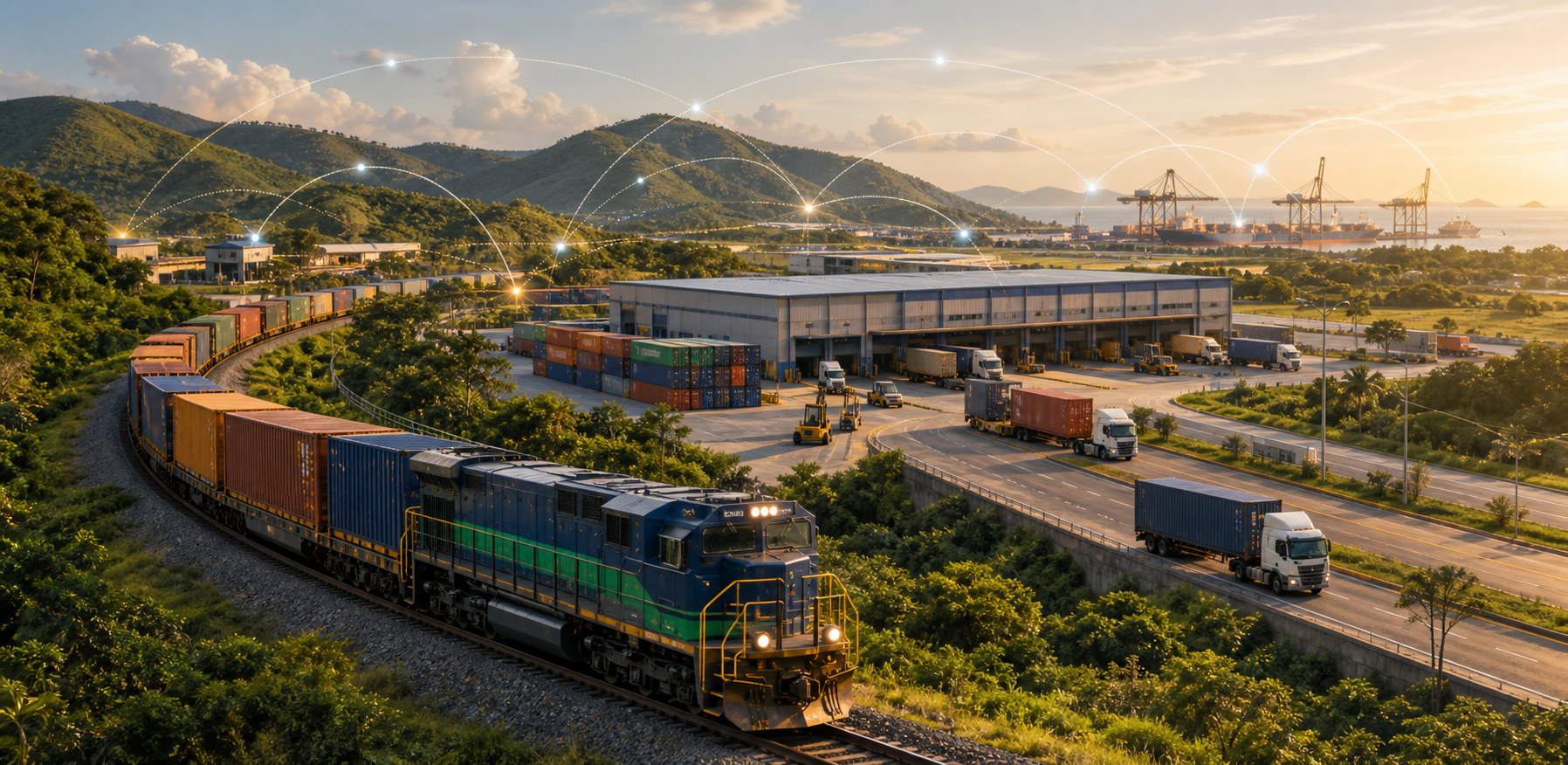
Artificial intelligence and Internet of Things technologies are profoundly transforming Brazilian agricultural product logistics operational models. Santos Port Authority, in collaboration with multiple technology enterprises, is deploying the "Digital Port" (Porto Digital) project, using real-time truck location tracking, optimized berth allocation algorithms, and vessel arrival time prediction to enhance port operational efficiency. In the future, importers will be able to track the entire logistics journey from producing regions to destination ports in real time through freight forwarding enterprise digital platforms, achieving supply chain visibility management.
Additionally, blockchain technology has begun being applied to soybean trade document management. Through digital bills of lading (eBL) and smart contracts, document circulation delays are reduced, further enhancing international logistics efficiency.
5.3 Outlook for China-Brazil Trade Logistics Facilitation
With the deepening of agricultural cooperation between China and Brazil, bilateral logistics facilitation continues to improve. In 2026, China and Brazil signed a memorandum of understanding on agricultural trade facilitation, planning to deepen cooperation in areas including customs mutual recognition, AEO (Authorized Economic Operator) enterprise customs clearance facilitation, and phytosanitary standard coordination. This means that future Chinese importers' partners in Brazil that obtain Brazilian customs AEO status will enjoy faster customs clearance services and lower inspection rates, further reducing overall transportation costs.
Trends and Outlook
The record-breaking soybean exports from Brazil in 2026 are both a manifestation of sustained growth in Brazilian agricultural production capacity and a stress test for the global agricultural product supply chain. While Santos Port's logistics bottlenecks have created阶段性 challenges, they have also driven freight forwarding service industry transformation toward digitalization, professionalization, and diversification. For Chinese importers, mastering shipping timing, selecting quality freight forwarding partners, and optimizing transportation cost structures are key to maintaining competitiveness in complex market environments.
In the medium to long term, Brazil's continued upgrades to logistics infrastructure, deepening of China-Brazil trade facilitation, and widespread application of digital technologies in logistics will provide more efficient, more stable, and more cost-effective logistics support for bilateral agricultural trade. Freight forwarding enterprises, serving as the critical link between buyers and sellers, must continuously enhance their professional service capabilities and digital operational levels to win long-term client trust amid fierce market competition.
In the context of sustained global grain demand growth, optimizing Brazilian soybean export logistics concerns not only the efficiency and cost of China-Brazil bilateral trade but also global food security and the long-term future of agricultural sustainable development. Freight forwarding service enterprises should view the Brazilian market's strategic value from a longer-term perspective, proactively building local network presence and providing international logistics solutions covering the entire supply chain for their clients.




China——Brazil Trajectory Tracking



+86 532-85066033/34






 中文简体
中文简体 ENGLISH
