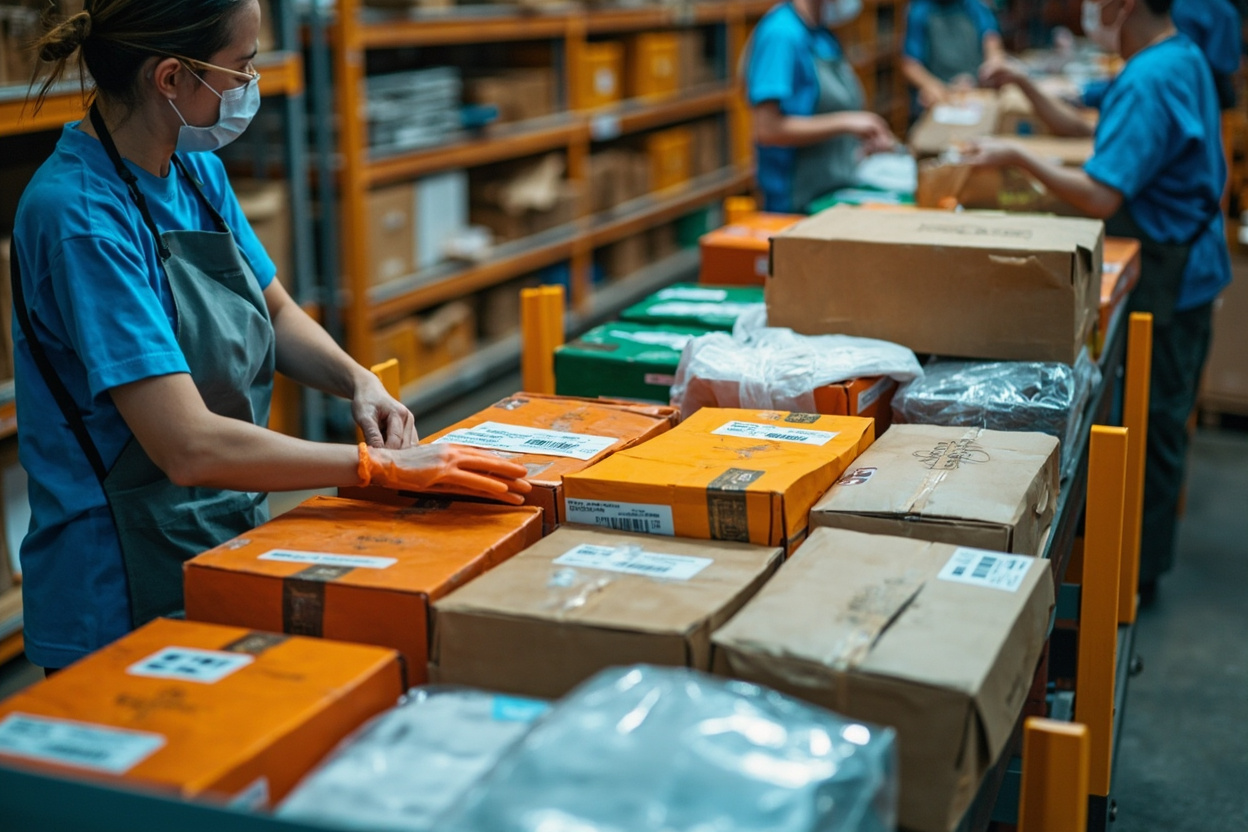
On May 13, 2026, Brazilian President Lula officially signed an interim decree announcing the cancellation of the 20% federal import tax on international online purchases under $50. This landmark measure marks a significant transformation in Brazil's cross-border e-commerce regulatory landscape and brings unprecedented market opportunities for global freight forwarders and cross-border e-commerce sellers.
For a long time, Brazil imposed relatively strict tax controls on imported small packages. Prior to this policy adjustment, Brazil levied a 20% federal import tax on international online purchases under $50, which severely weakened the competitiveness of many low-priced goods in the Brazilian market. Many Chinese cross-border e-commerce sellers and freight forwarders often shied away from entering the Brazilian market due to excessive tax costs.
With the Lula administration taking office, economic policies gradually shifted toward emphasizing consumption stimulus and digital economy development. The interim decree on May 13, 2026 was based on strategic considerations to boost domestic consumption and promote cross-border e-commerce development. After the policy implementation, international online purchases under $50 only need to pay the 17% ICMS tax (equivalent to VAT) in each state, with the 20% federal import tax formally abolished.
For freight forwarding enterprises engaged in cross-border e-commerce small package businesses, the abolition of the 20% federal import tax means each package's overall tax burden has dropped substantially. Taking an item valued at $40 as an example, previously it required paying approximately $8 in federal import tax. Now, only state ICMS taxes need to be borne, with a significant tax burden reduction. This change will directly pass through to end consumers, substantially enhancing the price competitiveness of Chinese goods in the Brazilian market.
When handling Brazilian small package customs clearance, freight forwarding enterprises will face efficiency improvements brought by streamlined processes. Since the federal level no longer imposes import taxes on packages under $50, the complexity of customs document preparation and tax calculation has decreased. This provides an institutional foundation for freight forwarding enterprises to optimize operational processes and shorten customs clearance time.
With a population exceeding 200 million and an e-commerce market annual growth rate of approximately 25%, Brazil is one of the most promising cross-border e-commerce markets globally. The reduction in tax costs will stimulate Brazilian consumers' enthusiasm for purchasing international goods, especially in frequently purchased consumer categories such as apparel, 3C accessories, and home furnishings. Freight forwarding enterprises should fully capitalize on this market opportunity and proactively arrange Brazilian small package logistics direct services.
Although the policy releases significant benefits, freight forwarding enterprises still need to focus on the following compliance points when conducting Brazilian cross-border small package business:
What was abolished was the federal import tax, but each state's ICMS tax is still calculated based on declared value. Freight forwarding enterprises must assist customers in truthfully declaring product values, avoiding compliance risks from under-declaring values.
Brazil's ICMS tax rates vary among states, with some states potentially having additional local regulations for cross-border goods. Freight forwarding enterprises should establish state tax rate databases to provide customers with accurate tax estimation services.
Some product categories may involve import licenses or special regulatory requirements. Freight forwarding enterprises need to improve product classification mechanisms, assist customers in preparing relevant documents such as certificates of origin, and ensure smooth customs clearance.
Tax dividends will drive rapid growth in Brazilian e-commerce package volumes, and last-mile delivery capacity will become a key competitive factor. Freight forwarding enterprises should proactively establish cooperation with Brazilian local delivery service providers, building last-mile delivery networks covering major cities.
The adjustment of Brazil's tax policy is an important component of its digital economy strategy and is expected to attract more global sellers to accelerate their layout of the Brazilian market. As the market scale expands, the Brazilian government may further improve the cross-border e-commerce regulatory framework in the future, including simplifying customs clearance procedures and enhancing customs facilitation levels.
For freight forwarding enterprises, this is a rare strategic window period. Seizing the Brazilian market dividend requires systematic investment in logistics network construction, compliance system improvement, and service capability enhancement. Only through proactive layout and decisive action can one gain the first-mover advantage in fierce market competition.
Keywords: Freight Forwarding Services, International Logistics, Ocean and Air Freight, Transportation Cost Optimization, Freight Rates, Brazil, Cross-Border E-Commerce, Import Tax, E-Commerce Small Packages, Customs Clearance






China——Brazil Trajectory Tracking



+86 532-85066033/34






 中文简体
中文简体 ENGLISH
