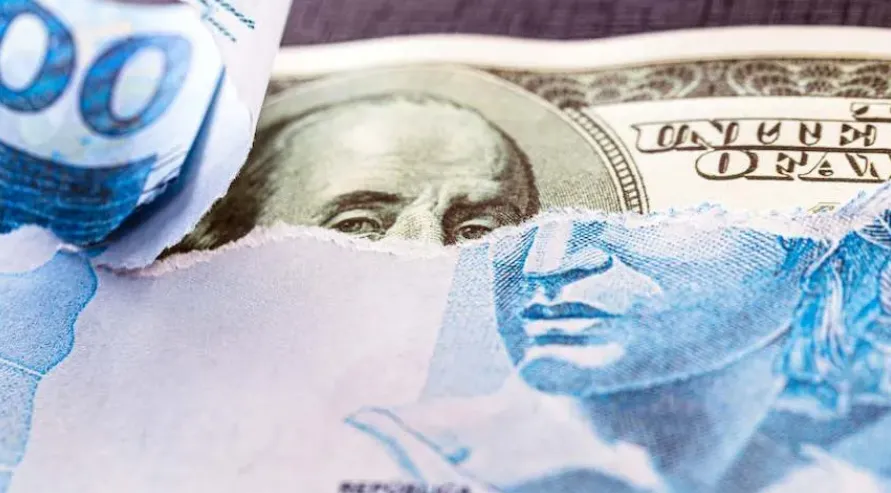
On the last trading day of 2025, the Brazilian real closed significantly higher by 1.47%, with the USD/BRL exchange rate falling to 5.489, marking the lowest point of the month. The real performed well in the emerging markets on that day, influenced by various factors, including the Brazilian Central Bank's Ptax pricing, economic data surpassing expectations, and insufficient market liquidity.
The intensification of the end-of-month Ptax pricing competition is one of the key factors affecting the exchange rate. Ptax is an important reference midpoint rate calculated by the Central Bank of Brazil, holding significant importance for financial institutions. Due to lower liquidity at year-end and reduced trading volumes, the impact of quotations on Ptax becomes more pronounced. Institutions often purposefully adjust spot exchange rates to manage futures market positions more favorably. This mechanism can lead to sharp short-term fluctuations in the market.
Simultaneously, market confidence was boosted by data released by the Brazilian Institute of Geography and Statistics. The national unemployment rate decreased to 5.2% in the three months leading up to November 2025, significantly lower than the market's expected 5.4%, marking the lowest level since 2012. Employment numbers and average income also reached new highs, indicating a healthier labor market condition than anticipated, enhancing investors' confidence in Brazil's economic fundamentals and partially offsetting the year-end pressure on USD demand due to risk aversion sentiment.
The Brazilian real showed a strong performance throughout 2025, with the USD/BRL exchange rate cumulatively decreasing by 11.18%, marking the largest annual decline in nearly a decade. This trend benefited from Brazil's maintenance of relatively high interest rates attracting foreign inflows, clarity in central bank policies, and marginal improvements in fiscal expectations. 2026 may face greater challenges as uncertainties surround whether the Federal Reserve will continue to cut interest rates, a strengthening US dollar may exert pressure on the real, especially against the backdrop of a new more hawkish nominee for the presidency.






China——Brazil Trajectory Tracking



+86 532-85066033/34






 中文简体
中文简体 ENGLISH
