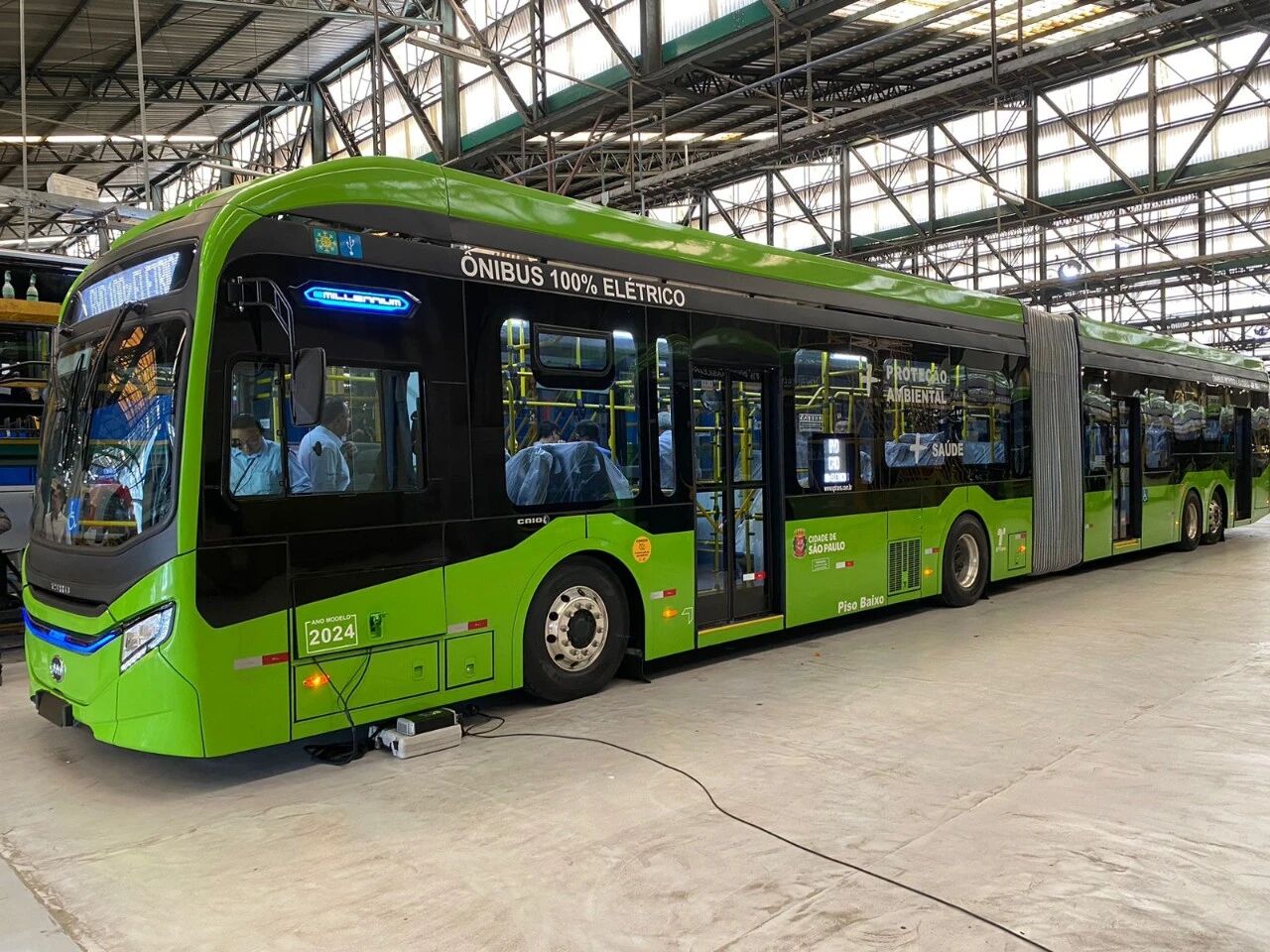
BYD plans to build a large factory in Brazil within the next three years, specifically dedicated to producing chassis for electric buses. This move aims to meet the rapidly growing market demand. BYD stated that the market demand has exceeded the company's current production capacity in Brazil. The project is expected to significantly increase annual production from around 600 chassis over the past decade to up to 7,000 chassis per year, while also creating hundreds of job opportunities. This initiative not only serves the domestic market in Brazil but also aims to export to other South American countries and potentially expand to the African market in the future.
Since 2015, BYD has been assembling electric bus chassis in the inland city of Campinas in the state of São Paulo. Marcello Schneider, Director of BYD's Commercial Vehicle Business in Brazil, mentioned that the company expects to produce approximately 1,200 chassis by 2026 alone, doubling the annual production scale of the previous decade. Currently, the company is almost fully booked for next year and cannot accept new contracts. Schneider noted that BYD's primary task is to gradually expand production capacity while prioritizing the fulfillment of signed procurement orders.
The growth in demand primarily stems from the post-pandemic renewal and replacement of urban bus fleets. In São Paulo, operators are replacing old vehicles on a large scale due to vehicles exceeding their service life during the pandemic. Additionally, local regulatory policies and subsidy programs are accelerating the adoption of electric buses. Apart from São Paulo, other major cities such as Curitiba, Goiânia, Belo Horizonte, and Rio de Janeiro have also begun introducing electric buses, although the overall scale remains relatively limited.
While the BYD Campinas factory theoretically has a production capacity of up to 2,000 chassis per year, the actual output falls below this level. This is mainly due to the factory simultaneously assembling multiple vehicle models, such as articulated buses, which require more time and resources for individual production. To avoid delivery delays, BYD has adopted a phased expansion strategy. In the short term, the company plans to establish a temporary production unit near Campinas, with the current capacity expected to nearly double within four to six months.
Furthermore, BYD plans to construct a permanent new factory in the state of São Paulo, with production expected to commence within two to three years. When operating at full capacity, the new factory can produce between 6,000 and 7,000 chassis per year and will also undertake local production of future electric trucks. Currently, BYD's electric trucks still rely on imports from abroad.
The new factory is estimated to occupy an area of approximately 180,000 square meters, while the current facility in Campinas covers only about 7,000 square meters. After the new factory is operational, it will consolidate various production activities currently scattered throughout the region, and the number of employees is expected to increase from the current 80 to 100 individuals to 700 to 800.
In addition to meeting domestic market demand in Brazil, this project is also geared towards exports. Schneider stated that BYD sees Brazil as a strategic hub for supplying electric buses to South American countries, especially members of Mercosur. After establishing production and logistics layouts in the region, the company is also considering exporting to the African market in its long-term planning.
BYD's expansion in Brazil aligns with its strategic progression in the field of new energy. The company first entered the Brazilian market in the commercial vehicle sector before venturing into passenger car operations. Initially focusing mainly on vehicle imports, BYD gradually transitioned to local assembly of chassis and collaborated with Brazilian bus body manufacturers such as Caio Induscar and Marcopolo to adapt vehicle models to local operating conditions.
As the business expanded, BYD further diversified into electric specialized trucks and battery solutions, including solar panels and energy storage systems. In 2023, the company officially entered the Brazilian passenger car market by taking over the former Ford factory in Camaçari, Bahia. This project represents BYD's largest investment in Brazil to date, with an investment of 5.5 billion reais and an estimated creation of up to 20,000 job opportunities. The Phase 1 annual production capacity of the factory is 150,000 vehicles, with plans to double the capacity in the second phase.
In October of this year, the Camaçari factory officially began production, marking a significant moment - among the first batch of vehicles to come off the production line, BYD's 14 millionth new energy vehicle worldwide was produced. Despite the relatively slow pace of electrification in the automotive sector compared to countries like Chile and Colombia, Schneider believes that Brazil, with its vast market size, has long-term growth potential once production capacity is gradually unleashed.




China——Brazil Trajectory Tracking


+86 532-85066033/34






 中文简体
中文简体 ENGLISH
