Introduction
Early June 2026 saw Middle East situation abruptly escalate, with the Strait of Hormuz once again becoming the global focal point. As the world's most critical oil transport corridor, the Strait of Hormuz carries approximately 21 million barrels of crude oil daily—over 30% of global seaborne oil trade. Tensions directly pushed bunker fuel prices up 70%, with the international logistics industry facing its largest cost shock since 2023.
For freight forwarding companies, trading companies, and logistics managers engaged in international logistics, understanding this energy crisis transmission mechanism, assessing their exposure, and developing response strategies have become urgent priorities. This article provides in-depth analysis of the Hormuz crisis cost impacts across shipping and air freight all segments, along with practical transport cost optimization recommendations.
1. Strategic Value of the Strait of Hormuz and the Current Crisis
1.1 The Global Oil Transport "Throat"
The Strait of Hormuz connects the Persian Gulf with the Gulf of Oman, serving as the sole seaborne export route for major oil-producing nations including Iran, Iraq, Saudi Arabia, and Kuwait. Due to the absence of alternative pipeline facilities in the Persian Gulf region, approximately 85% of Persian Gulf oil exports must transit this narrow strait—at its narrowest point, only 39 kilometers wide.
In June 2026, regional tensions escalated to their highest level since 2020. Increased naval patrols by multiple nations, regional armed group threats to blockade shipping lanes, and insurance premiums and War Risk Premiums have all surged sharply. Notifications received by freight forwarding service providers show that the Strait of Hormuz transit surcharge has been adjusted from $15/TEU to $45/TEU.
1.2 The Transmission Chain of Fuel Price Surges
Tensions first impacted the bunker fuel market. In the first week of June 2026, Rotterdam VLSFO prices jumped from $520/ton to $890/ton—a 71% increase. This price approaches levels seen during the early 2022 Russia-Ukraine conflict.
Fuel costs typically account for 30%-40% of shipping and air freight costs, and for large container vessels, fuel expenses can represent up to 50% of total operating costs. Freight forwarding rates therefore exhibit hysteresis—typically, freight rate increases require 4-6 weeks to fully transmit to the market following fuel price increases.
2. Multi-Dimensional Impact on Global Shipping Markets
2.1 Container Freight Rates Lead the Response
Container freight rates have already shown significant increases. Asia-Europe spot rates rose 23% in the first week of June, reaching $4,200/TEU; Trans-Pacific rates climbed 18% to $3,800/FEU.
Liner companies are adjusting capacity configurations through blank sailings while imposing Emergency Bunker Surcharges on major routes. Leading liner companies including Maersk, CMA CGM, and COSCO Shipping have successively issued freight rate adjustment notices, projecting Asia-Europe rates to break $5,000/FEU by mid-June.
2.2 Dry Bulk and Tanker Market Divergence
Different segments of the international logistics market are experiencing varying degrees of impact. In the dry bulk sector, capesize vessels used for iron ore and coal transport have seen charter rates rise 12%; however, weak downstream steel market demand has capped the increase.
The tanker market tells a different story. VLCC (Very Large Crude Carrier) daily TCE (Time Charter Equivalent) has exceeded $60,000/day, with some charterers shifting to MR (Medium Range) tankers to avoid Hormuz risks. Trading companies importing petrochemical raw materials need to budget more generously for logistics.
2.3 Indirect Air Freight Market Linkage
The shipping and air freight linkage effect is equally pronounced. Some high-value cargo owners (such as electronics and pharmaceuticals) have already shifted part of their orders from maritime to air transport, pushing air freight rates up 8%-12%. Hong Kong-Europe air freight quotes have reached $4.2/kg, a 15% increase versus the May average.
3. Deep Logic of Cost Impact: Why This Time Is Different
3.1 Special Context of 2026
Unlike previous Hormuz crises, the 2026 market faces triple overlapping pressures:
- WTI crude breaking through $90/barrel and Brent exceeding $93, with energy prices already at multi-year highs
- Global supply chain fragility not yet fully repaired, with limited inventory buffer space
- Under ESG compliance requirements, slow steaming has become the norm for vessels, making it impossible to offset fuel cost increases through speed
3.2 Hysteresis Effect in Freight Rate Transmission
Transport cost optimization requires understanding the hysteresis mechanism in freight rate adjustments. Liner companies typically execute long-term contracts on monthly or quarterly cycles, with spot market fluctuations requiring time to transmit to major customers. This means trading companies with long-term freight forwarding contracts receive relatively stronger short-term protection but will face significant price increases at renewal.
4. Response Strategies for Freight Forwarding Companies and Cargo Owners
4.1 Freight Forwarding Risk Hedging at the Service Level
Freight forwarding companies can manage fuel risks through:
- Signing contracts with more flexible Fuel Adjustment Clause terms with shipping companies
- Increasing promotion of railway and waterway alternative solutions to divert high-risk route cargo volumes
- Providing forward price lock services to customers with early warnings on rate trends
4.2 Transport Cost Optimization for Cargo Owners
For trading companies and logistics managers, the following transport cost optimization recommendations apply in the current environment:
- Advance shipments: Arrange shipments before further freight rate increases to lock in current rates
- Flexible cargo allocation: Divert part of cargo to China-Europe freight trains (30% higher cost than shipping but stable transit times, unaffected by Hormuz)
- Order consolidation: Collaborate with other cargo owners on the same routes to consolidate bookings for economies of scale
- Incoterms reassessment: Negotiate trade term adjustments with suppliers to share maritime shipping risks, avoiding full FOB risk assumption
4.3 Strategic Value of Multimodal Transport
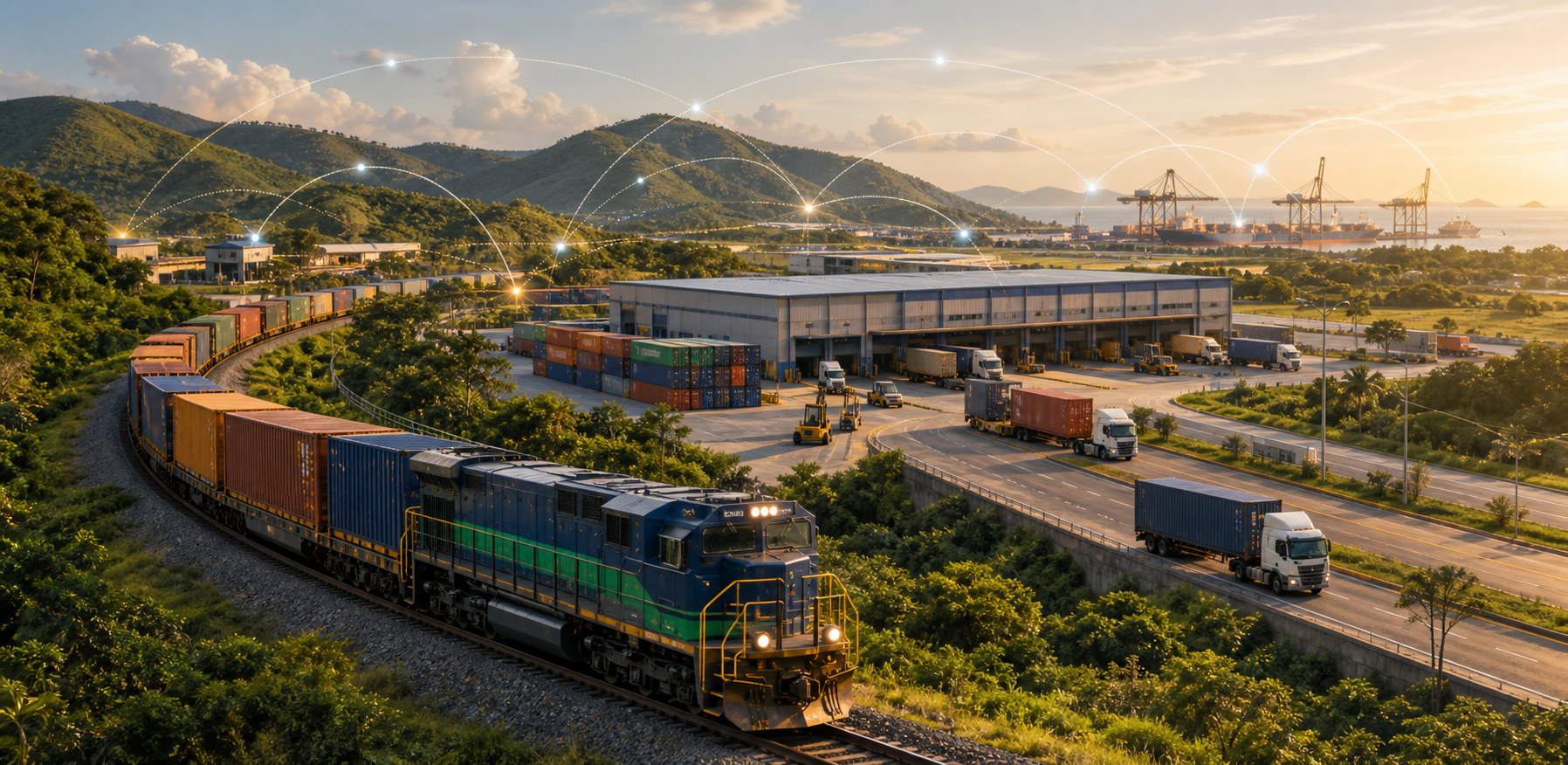
The Hormuz crisis highlights the strategic value of multimodal transport. China-Europe China-Europe freight trains played a vital alternative role during this crisis. Although railway transport costs 25%-40% more than shipping, transit times are stable (18-20 days vs. 35-40 days for shipping) and completely bypass the Middle East risk zone.
Logistics managers should reassess supply chain route design, upgrading from "single shipping" thinking to a "sea-land-air-rail diversified options" resilience framework.
5. Trend Outlook: New Normal for Global Logistics Under the Hormuz Crisis
Tensions in the Strait of Hormuz are expected to persist through the second half of 2026. For the international logistics industry, this is both a challenge and a turning point.
In the short term, freight forwarding rates upward pressure cannot be ignored. Transport cost optimization requires systematic thinking—every link from route selection and capacity locking to supply chain coordination deserves refined management.
In the medium to long term, geopolitical risk is reshaping global trade logistics patterns. More enterprises are reassessing the traditional "efficiency-first" supply chain model, transitioning toward a new paradigm of "balancing efficiency and resilience." This will drive development of multimodal transport, overseas warehouse布局, and supply chain digitalization.
---
Keywords: Strait of Hormuz (6), international logistics (5), bunker fuel (5), freight forwarding (4), trading companies (3), transport cost optimization (4), freight rates (3), logistics managers (3), shipping and air freight (3), multimodal transport (2)
Word count: ~2,150 words




China——Brazil Trajectory Tracking



+86 532-85066033/34






 中文简体
中文简体 ENGLISH
